
The Junior Age
for Schools
Bringing Real News Into the Classroom — Building Readers, Thinkers, and Confident Young Writers
Why News Belongs in the Classroom
Reading the news isn't just about staying informed — for children, it's one of the fastest ways to build the habits that matter most in school and beyond: reading fluency, general knowledge, and the confidence to form and defend an opinion.
When students read real news written for their level, they:
1) Build vocabulary and reading stamina faster than with fiction alone
2) Learn to separate fact from opinion — a core critical-thinking skill
3) Gain the general knowledge that helps in class discussions, quizzes, and competitive exams
4) Develop the confidence to write, question, and debate
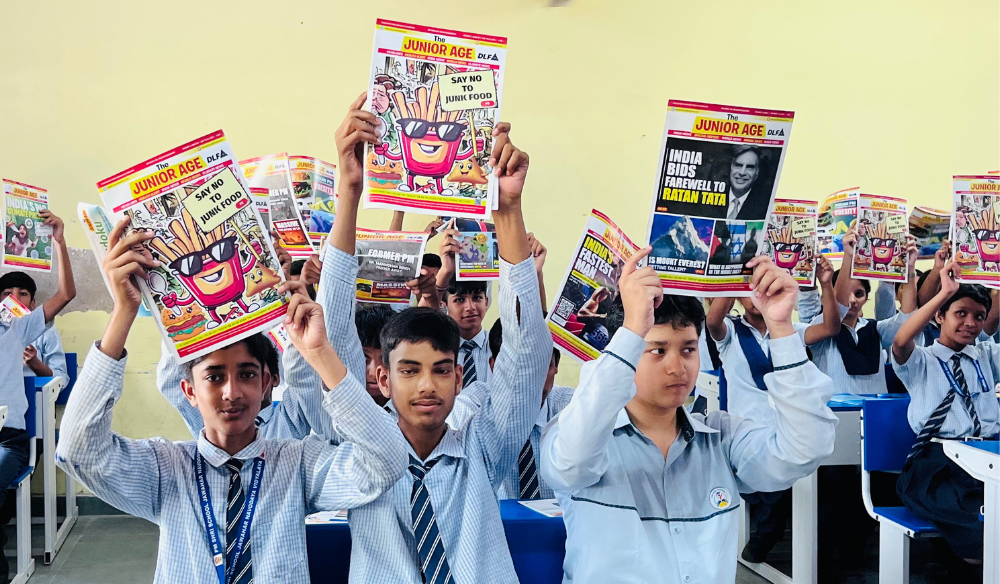
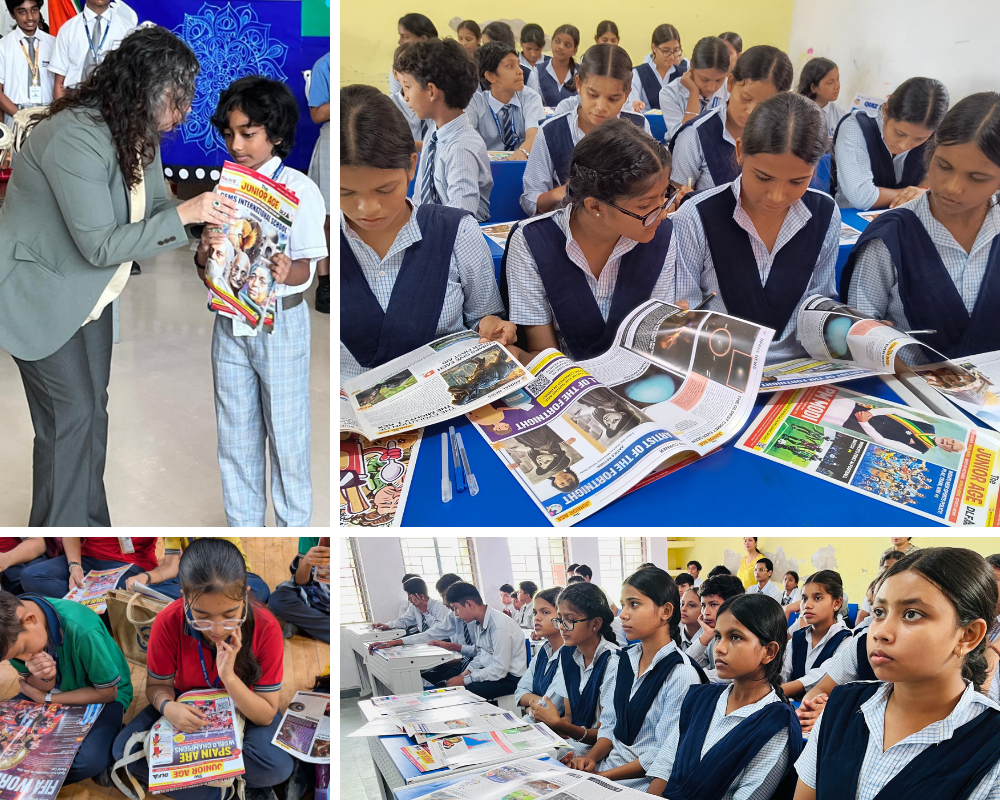
The Junior Age brings this into schools through a fortnightly, kid-friendly newspaper covering national and international affairs, sport, science, and animal news — written specifically for young readers and their teachers.
Why Schools Choose The Junior Age
What We Offer Schools

Workshops on News Literacy & Current Affairs
Interactive sessions run in partnership with school teachers, covering how to read news critically, tell facts from opinion, and discuss current events confidently.

A Publishing Platform for Student Voices
Students get a real byline. The Junior Age regularly features student-written articles, stories, poems, and artwork — giving young writers an audience beyond the classroom.

Custom School Editions
We create special editions in collaboration with teachers and students, written exclusively by students — distributed in print or digital copies to the school community.

The "My School" Edition
For partner schools, a dedicated issue can showcase school news, events, and student achievements, distributed to students and available for a set number of copies.

Current Affairs Quizzes
Quizzes run in-class or inter-school, with results and top scorers featured on the website

Art Competitions
Themed art competitions tied to news topics — sport, environment, festivals, current events — with winning entries published in The Junior Age.

Creative Writing Competitions
Story, poem, and opinion-writing competitions open to students, judged by the editorial team, with winning pieces given a byline in print or digital editions.

Fortnightly Worksheets
Alongside each issue, schools receive fortnightly worksheets built around that edition's news content — helping teachers turn reading into a structured classroom activity without extra prep work.
Trusted By
Schools across India trust The Junior Age to bring news into their classrooms.














Bring The Junior Age to Your School
Whether you're looking for a fortnightly print subscription, a custom school edition, or a one-off workshop, we'll work with your team to find the right fit.
Email us at info@thejuniorage.com