
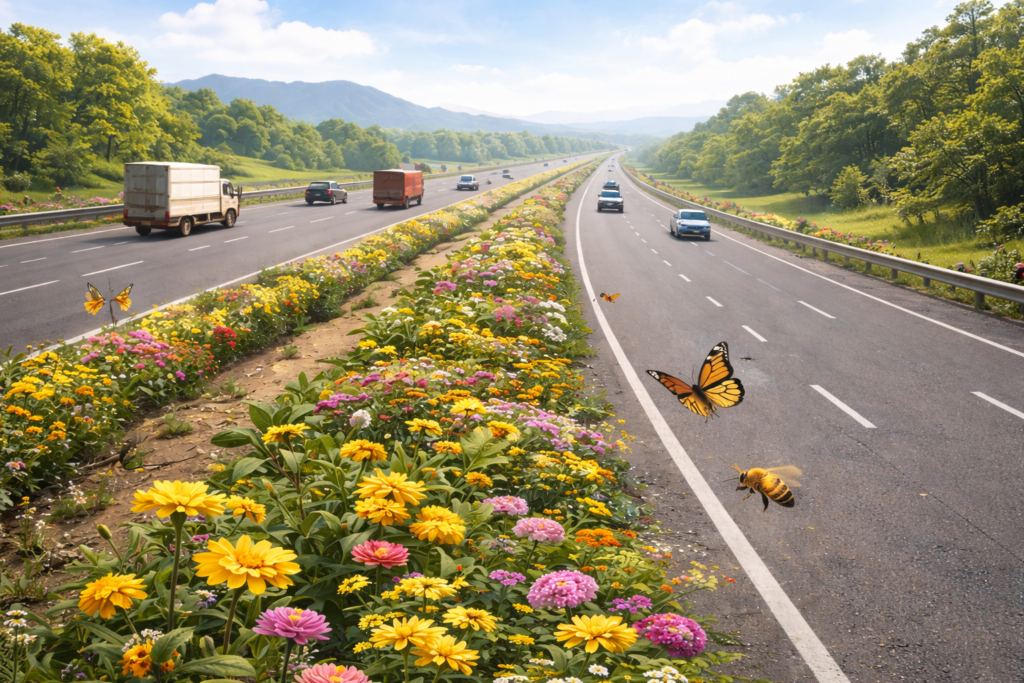
India is taking a fresh step towards protecting pollinators and strengthening biodiversity. The National Highways Authority of India’s ‘BeeCorridors’ plan aims to turn stretches of national highways into safe habitats for honeybees and other pollinating insects. These proposed green corridors will include flowering plants, shrubs and trees planted along roadsides to support pollination and ecological balance. With pollinators playing a crucial role in food production and ecosystem health, the move reflects a growing focus on sustainable infrastructure. As highway expansion continues across the country, the initiative is expected to combine development with environmental responsibility. By creating bee-friendly zones, authorities hope to support agriculture, improve green cover and raise awareness about the importance of pollinators.
What are ‘BeeCorridors’ and why they matter:
‘BeeCorridors’ – A green highway plan for pollinators and biodiversity
The National Highways Authority of India is planning to develop dedicated ‘BeeCorridors’ along selected national highways. These corridors will include nectar-rich flowering plants and native vegetation that provide food and shelter for bees and butterflies.
Pollinators such as bees are essential for the growth of many fruits, vegetables and crops. However, habitat loss, pollution and climate change have affected their populations. By planting pollinator-friendly species along highways, the initiative aims to restore habitats and support ecological balance while keeping roads green.
Key details of the initiative:
The bee corridor initiative will be led by the National Highways Authority of India in collaboration with environmental experts and horticulture teams. It focuses on developing bee-friendly green corridors along selected national highways across the country. The project is expected to roll out in phases over the coming months and years, especially along newly built or upgraded highway stretches.
The main aim is to protect pollinators such as bees and butterflies, support agriculture that depends on pollination, increase biodiversity and promote eco-friendly infrastructure. To make this possible, native flowering plants, shrubs and trees rich in nectar will be planted along highways. Scientific planning will ensure year-round blooms, proper maintenance and safe habitats for pollinators, turning highways into green ecological zones that benefit both nature and people.
The project also aligns with India’s broader push for sustainable development and green highways. Experts believe such corridors can help increase pollinator numbers, improve roadside greenery and create awareness about environmental conservation.
Subscribe to The Junior Age Newspaper – click here. Know more fun facts on The Junior Age’s YouTube!