
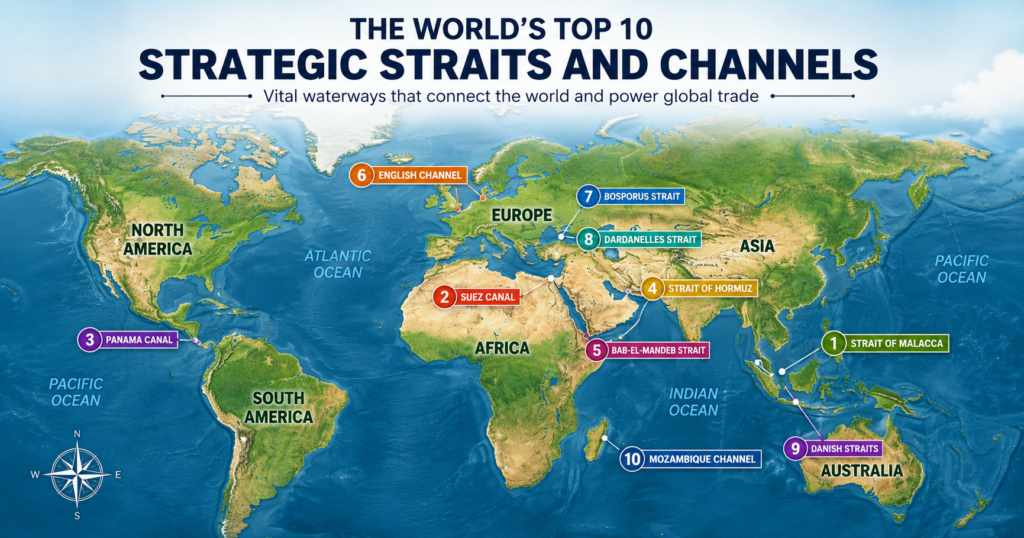
Recently, news reports around the world focused on the Strait of Hormuz after tensions in the Middle East raised concerns about shipping in the region. This narrow waterway, located between Iran and Oman, is one of the most important sea routes on Earth. Many ships carrying oil and natural gas travel through it every day. When problems arise in this area, countries pay close attention because it can affect trade, energy supplies, and fuel prices around the world. The Strait of Hormuz shows why a strait is much more than just a narrow stretch of water on a map. A strait connects two larger bodies of water and often provides an important route for ships. Every day, thousands of vessels carrying food, fuel, clothes, electronics, and other goods pass through these waterways, helping countries trade with one another. But the Strait of Hormuz is only one of many important waterways around the world. From the busy Strait of Malacca in Asia to the famous Suez Canal in Egypt, these routes act like highways on the sea, connecting continents and helping goods reach people everywhere. Let’s explore the world’s top 10 strategic straits and channels and find out why they matter so much.
What are straits and channels?
A strait is a narrow waterway connecting two larger bodies of water. A channel is a wider navigable route that may be natural or man-made and allows ships to travel between regions. These waterways help ships save time, fuel, and money by providing shorter routes between continents.
10 most critical strategic straits reshaping global trade:
1. Strait of Malacca
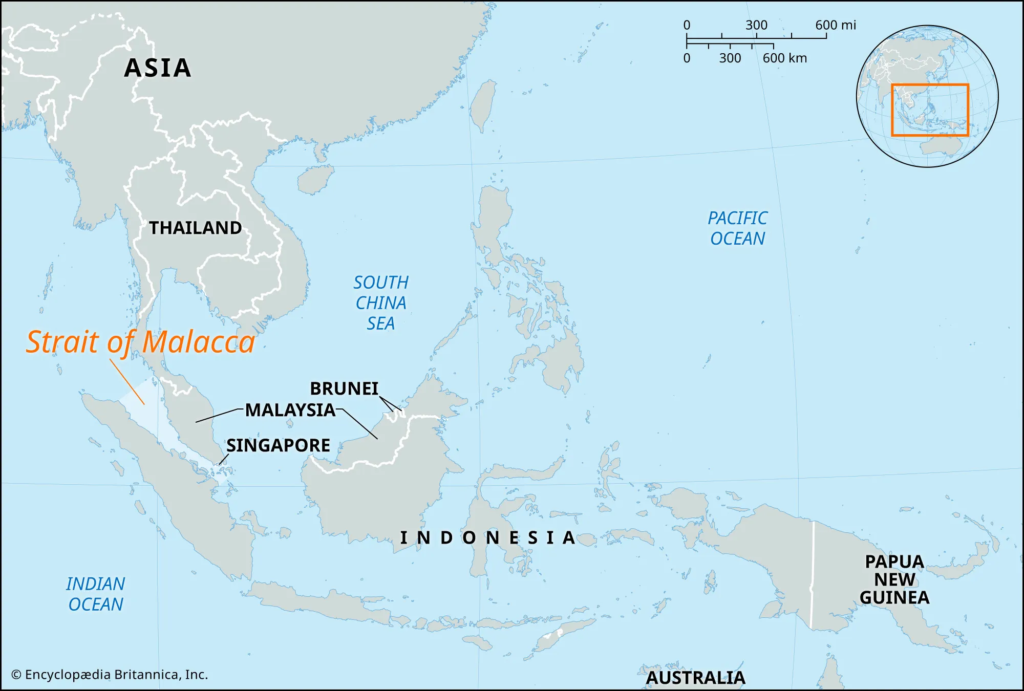
Located between the Malay Peninsula and the Indonesian island of Sumatra, the Strait of Malacca is one of the busiest shipping lanes in the world.
Why it is important
- Connects the Indian Ocean and the Pacific Ocean.
- Used by ships travelling between Asia, Europe, and the Middle East.
- Carries a large share of the world’s oil and trade cargo.
- Vital for countries such as China, Japan, South Korea, and India.
2. Suez Canal
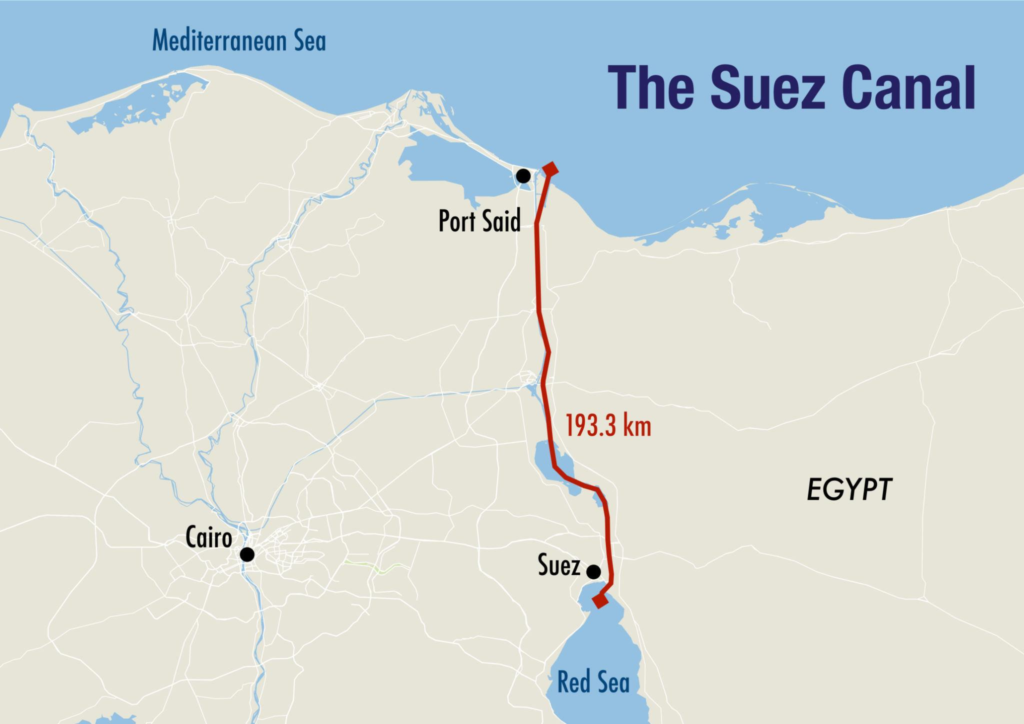
The Suez Canal in Egypt is a man-made waterway connecting the Mediterranean Sea and the Red Sea.
Why it is important
- Allows ships to avoid sailing around Africa.
- Shortens journeys between Europe and Asia.
- Around 12–15% of global trade passes through it.
- One of the world’s most important trade routes.
3. Panama Canal
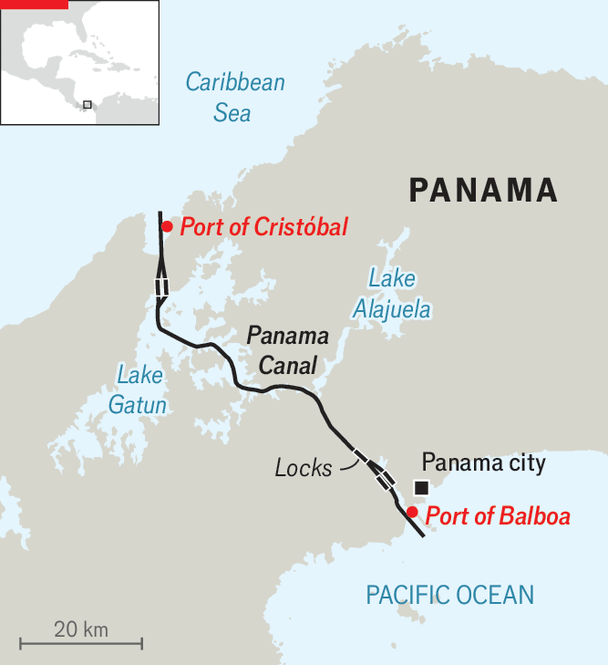
Located in Central America, the Panama Canal connects the Atlantic Ocean and the Pacific Ocean.
Why it is important
- Saves ships thousands of kilometres of travel.
- Uses a system of locks to lift and lower ships.
- A key route for trade between the Americas, Asia, and Europe.
- One of the greatest engineering achievements in history.
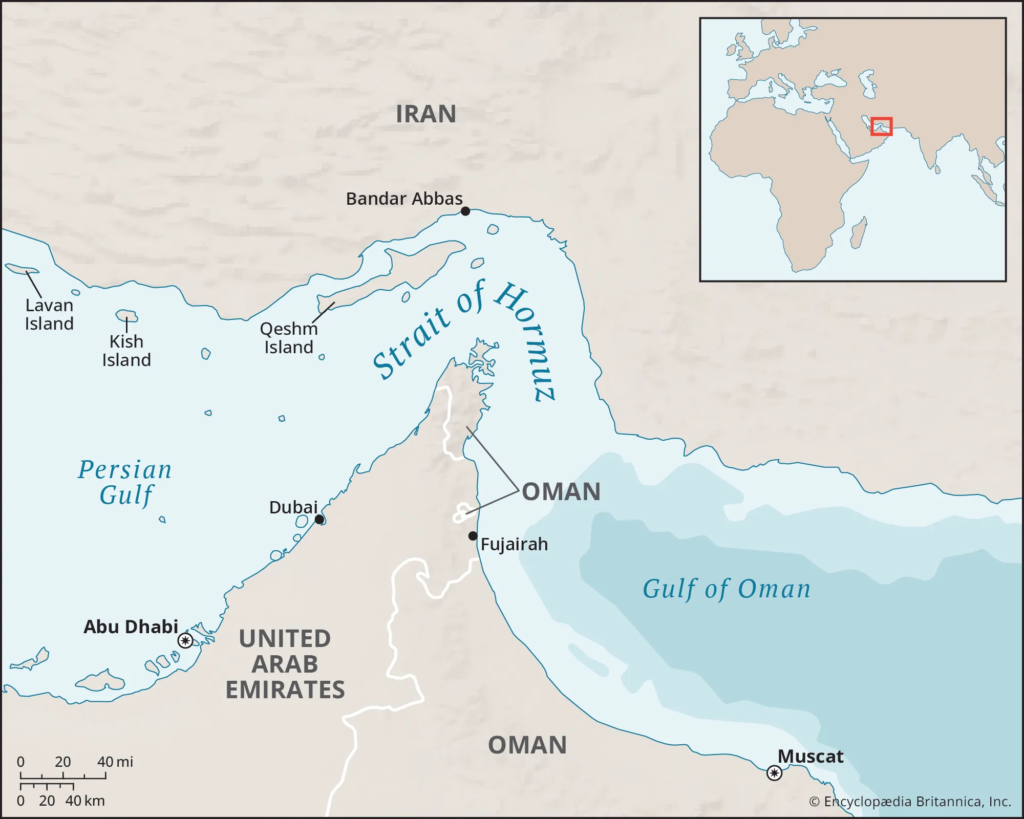
4. Strait of Hormuz – One of the most talked about straits
The Strait of Hormuz lies between Iran and Oman.
Why it is important
- Connects the Persian Gulf with the Gulf of Oman and the Arabian Sea.
- One of the world’s most important oil routes.
- Roughly one-fifth of global petroleum consumption passes through it.
- Crucial for energy supplies worldwide.
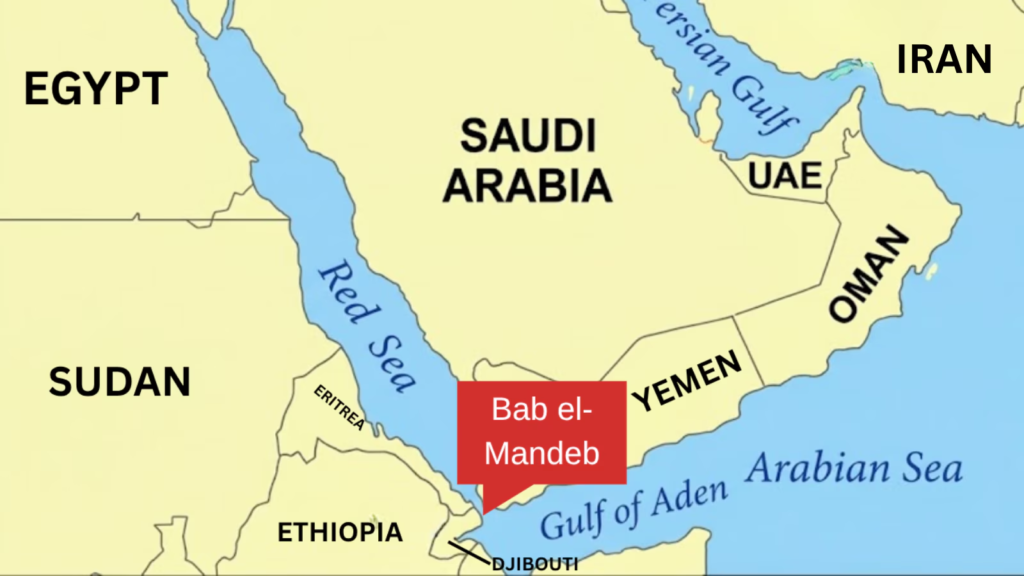
5. Bab-el-Mandeb Strait
Located between Yemen and countries in the Horn of Africa, this strait links the Red Sea with the Gulf of Aden.
Why it is important
- Forms part of the route to the Suez Canal.
- Connects Europe, Asia, and Africa.
- Essential for international shipping and oil transport.
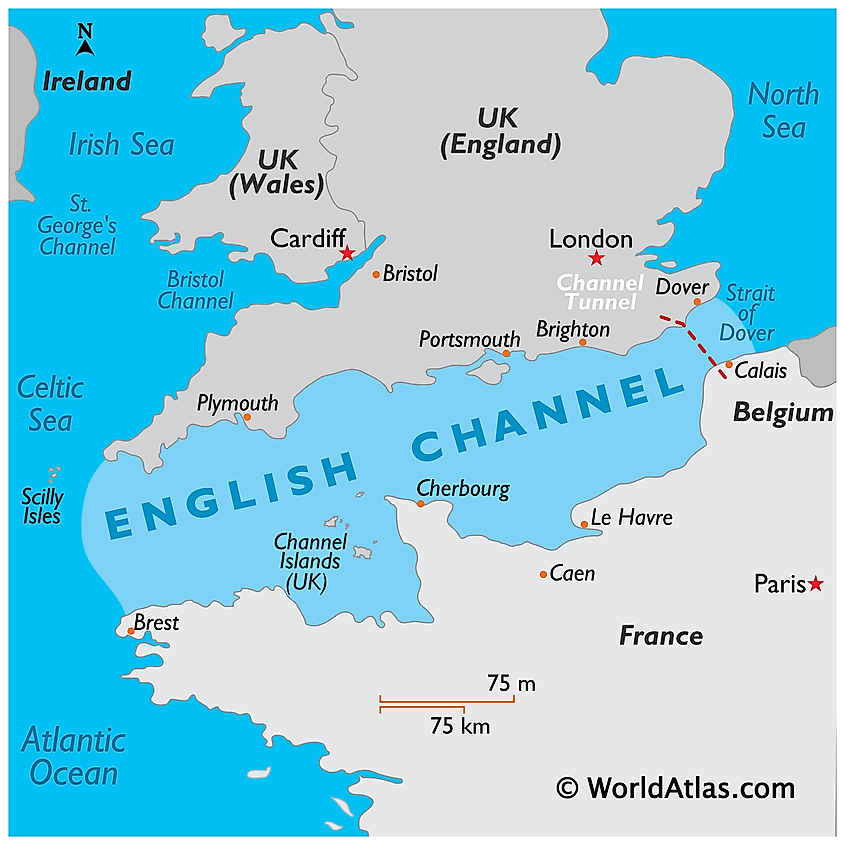
6. English Channel – One of Important Straits
The English Channel separates England and France.
Why it is important
- One of the busiest waterways in Europe.
- Supports passenger ferries, cargo ships, and fishing vessels.
- Home to the famous Channel Tunnel beneath the seabed.
- Important for trade between the United Kingdom and mainland Europe.
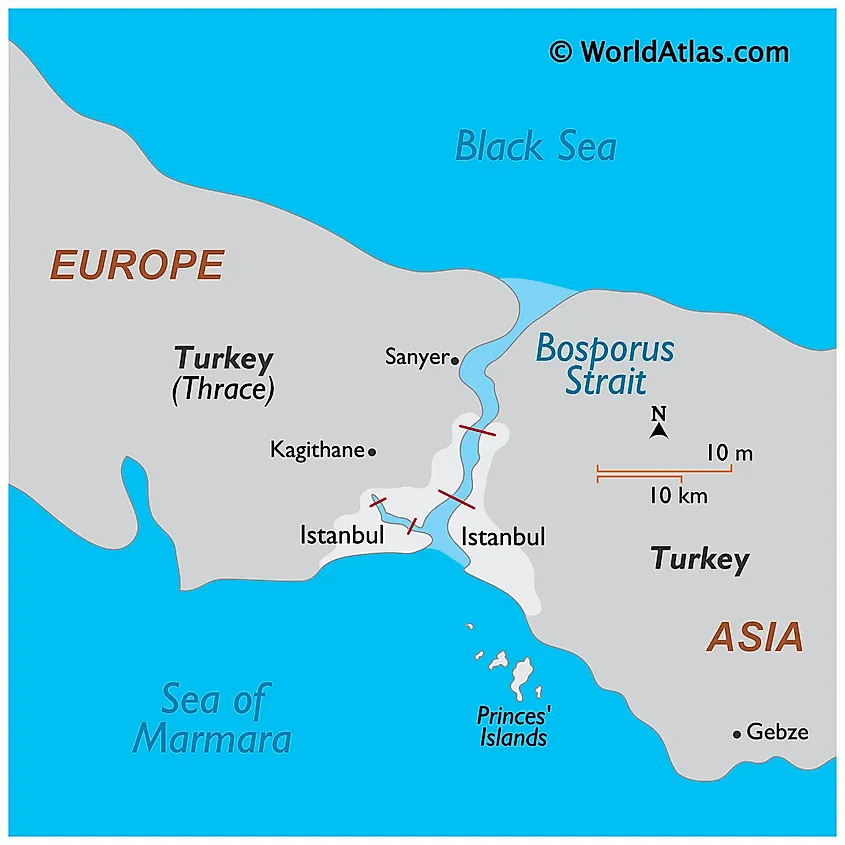
7. Bosporus Strait
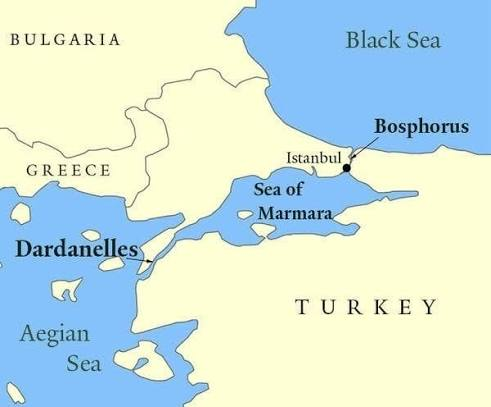
The Bosporus runs through the heart of Istanbul.
Why it is important
- Connects the Black Sea and the Sea of Marmara.
- Separates Europe and Asia.
- Important for trade from countries bordering the Black Sea.
- One of the world’s few waterways that crosses a major city.
8. Dardanelles Strait
Located in north-western Turkey, the Dardanelles connects the Aegean Sea and the Sea of Marmara.
Why it is important
- Works together with the Bosporus to link the Black Sea to the Mediterranean.
- Historically important in many wars and trade routes.
- Remains a key shipping corridor.
9. Danish Straits
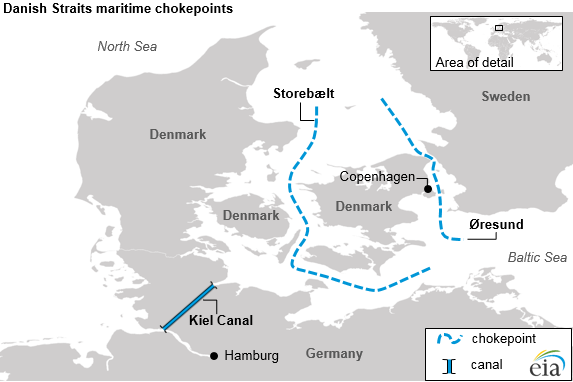
The Danish Straits are a group of waterways between Denmark and Sweden.
Why they are important
- Connect the Baltic Sea with the North Sea.
- Essential for northern European trade.
- Used by cargo ships travelling to and from Baltic nations.
10. Mozambique Channel
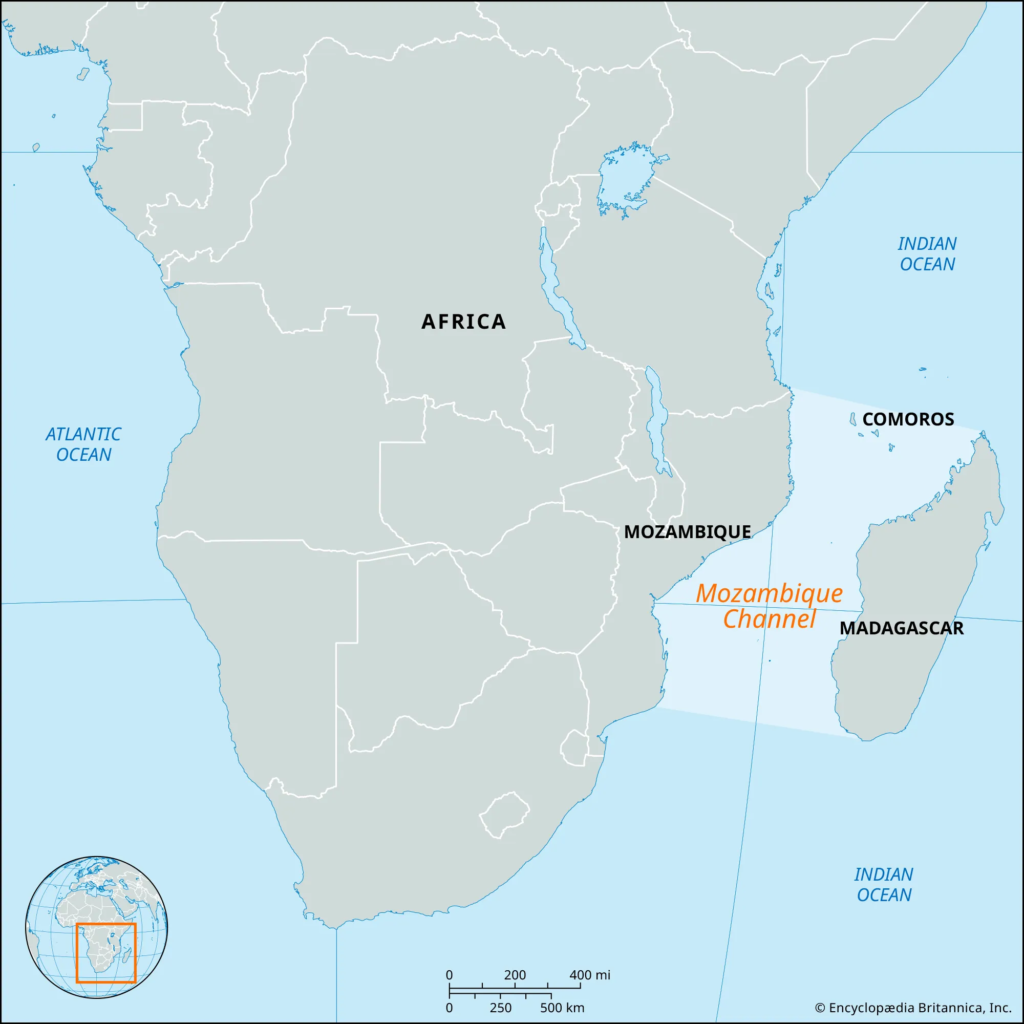
The Mozambique Channel lies between Madagascar and Mozambique.
Why it is important
- One of Africa’s key maritime routes.
- Important for shipping between Asia, Africa, and Europe.
- Rich in marine biodiversity and fisheries.
Why do these waterways matter?
These strategic straits and channels are like the highways of the oceans. Every day, they help move:
- Food and medicines
- Oil and natural gas
- Cars and electronics
- Clothing and household goods
If one of these routes becomes blocked, shipping costs can rise, deliveries can slow down, and prices can increase around the world.
Also read: Iran-Israel Conflict 2025: What You Need to Know
Quick facts about the straits
| Waterway | Connects |
|---|---|
| Strait of Malacca | Indian Ocean and Pacific Ocean |
| Suez Canal | Mediterranean Sea and Red Sea |
| Panama Canal | Atlantic Ocean and Pacific Ocean |
| Strait of Hormuz | Persian Gulf and Arabian Sea |
| Bab-el-Mandeb | Red Sea and Gulf of Aden |
| English Channel | Atlantic Ocean and North Sea region |
| Bosporus | Black Sea and Sea of Marmara |
| Dardanelles | Aegean Sea and Sea of Marmara |
| Danish Straits | Baltic Sea and North Sea |
| Mozambique Channel | Indian Ocean shipping route |
FAQs about world’s straits
Why are some waterways called maritime chokepoints?
They are narrow routes where a large number of ships must pass. If traffic is disrupted, global trade can be affected quickly.
How do ships know which route to take through busy waterways?
Ships follow designated shipping lanes, use navigation systems, and receive guidance from maritime authorities to travel safely.
Which countries benefit the most from strategic waterways?
Trading nations that import or export large amounts of goods, especially those with major ports, benefit greatly from these routes.
Can strategic waterways affect the prices of everyday products?
Yes. Delays or disruptions can increase transport costs, which may eventually raise the prices of goods in shops.
What happens if a major waterway becomes blocked?
Ships may need to take longer alternative routes, leading to delays, higher fuel costs, and slower deliveries worldwide.
Do strategic waterways play a role in national security?
Yes. Many countries monitor and protect important waterways because they are vital for trade, energy supplies, and defence.
How do canals differ from natural waterways?
Canals are built by people to create shorter or more convenient shipping routes, while natural waterways are formed by nature.
Are these waterways important for the environment too?
Yes. Many support marine ecosystems and wildlife, making their protection important for both nature and global trade.
What skills do people need to work on ships travelling through these routes?
Sailors, captains, engineers, and navigation officers need training in maritime safety, technology, and international regulations.
Could new shipping routes become important in the future?
Yes. Changes in technology, trade patterns, and climate conditions may create new routes that become strategically important.
Know all about: The US and Israel Strike Iran: All About What’s Happening!
Subscribe to The Junior Age Newspaper – click here. Know more fun facts on The Junior Age’s YouTube!