
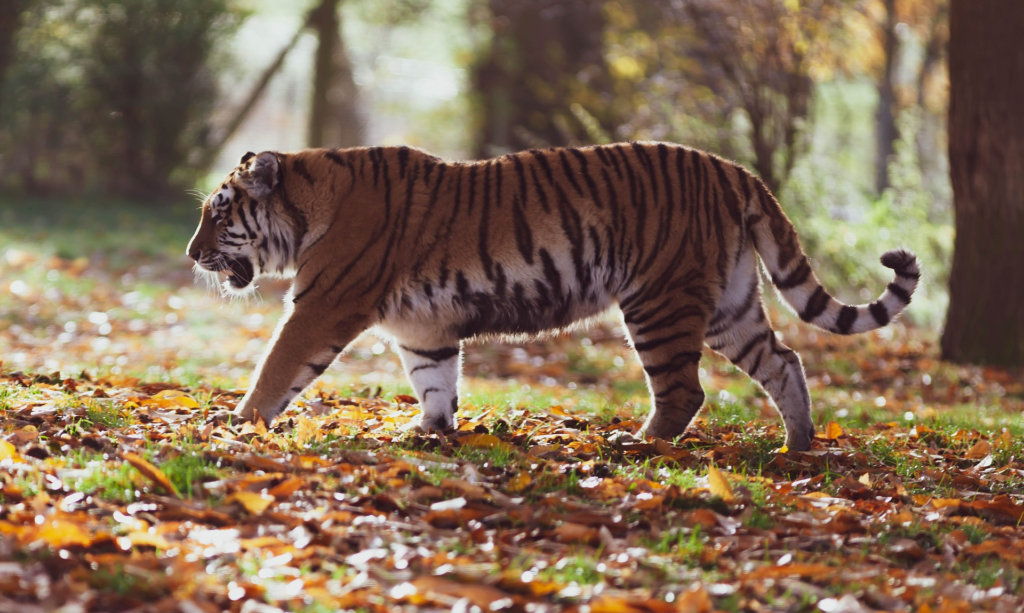
Across the world, conservationists are working to restore wildlife populations that once disappeared from their natural habitats. Large animals such as tigers need vast forests, plenty of prey, and careful protection to survive in the wild. Now, a major wildlife restoration effort is underway in Central Asia as Kazakhstan prepares to bring tigers back to its forests after more than seven decades. The government of Kazakhstan is rebuilding forest habitats and planning the return of wild tigers near Lake Balkhash, in what scientists describe as one of the world’s most ambitious wildlife restoration projects.
Kazakhstan Plans Return Of Tigers After 70 Years:
Tigers once lived across Central Asia, including Kazakhstan, where the Caspian tiger roamed river forests and wetlands. However, the species disappeared from the region in the 1940s because of large-scale hunting, destruction of forests, and the decline of animals that tigers prey on. To prepare for the return of big cats, Kazakhstan has been rebuilding forests and wildlife habitats. In 2025 alone, around 37,000 trees were planted, and since 2021 more than 50,000 trees have been added to restore the ecosystem. These growing forests will provide shelter and help increase populations of animals such as deer and wild boar, which form the main diet of tigers.
Instead of the extinct Caspian tiger, scientists plan to introduce the closely related Amur tiger, the largest living tiger species found mainly in Russia’s Far East. Several Amur tigers have already been brought from European breeding centres to support a breeding programme, and conservation experts say the first tiger could be released into the wild from the second half of 2026.
However, returning a tiger to the wild requires careful planning. These animals need large territories and sometimes come into contact with nearby human settlements. To reduce risks, scientists will track all of them using satellite collars and monitoring technology, while also working closely with local communities to ensure people and wildlife can coexist safely.
Subscribe to The Junior Age Newspaper – click here. Know more fun facts on The Junior Age’s YouTube!