
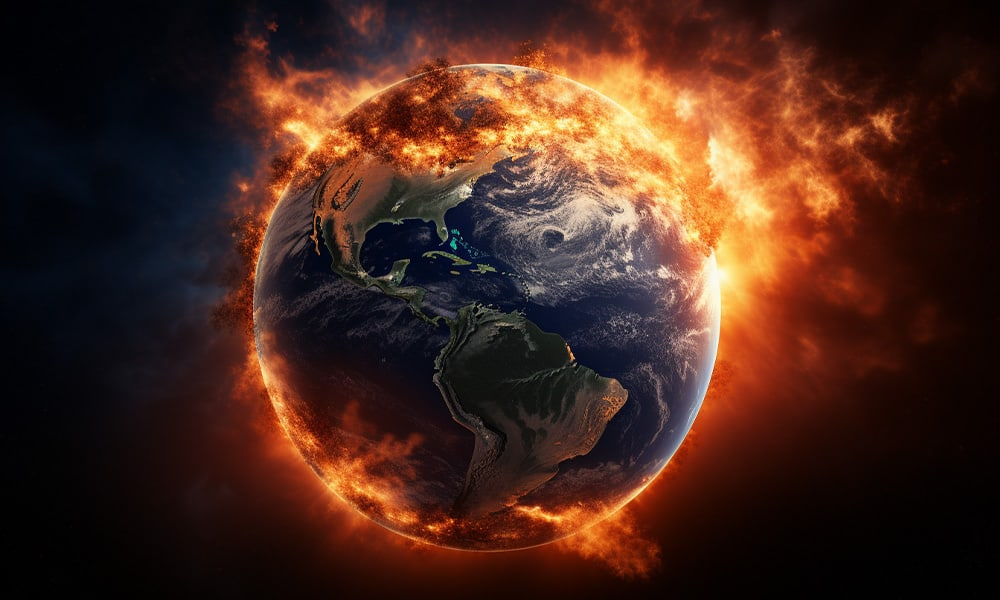
The Earth’s hottest decade ever has just been confirmed by scientists, raising serious concerns about the planet’s future. Climate experts say the Earth is heating faster than expected, and the signs are now visible across land, oceans and the atmosphere. Rising temperatures, melting ice and stronger storms are becoming more common, showing how quickly the planet’s climate is changing. In its latest State of the Climate report, the World Meteorological Organization warned that the Earth’s climate is entering a dangerous phase because the atmosphere is trapping more heat instead of allowing it to escape into space. Scientists say this trapped energy is causing the planet to warm steadily year after year.
What scientists discovered in the latest climate report:
Scientists from the World Meteorological Organization confirmed that the period from 2015 to 2025 was the hottest decade ever recorded on Earth. Even more striking, the 11 hottest years in modern history all occurred during this same period. According to the report, 2025 ranked among the top three hottest years ever recorded, with global temperatures reaching about 1.43°C above the average levels seen between 1850 and 1900, which scientists use as a reference for the pre-industrial climate.
Key facts about Earth’s rising temperatures
- Global temperatures are rising year after year.
- 2025 is among the three hottest years ever recorded.
- Oceans are warming faster than before, storing large amounts of heat.
- Extreme weather events such as heatwaves, floods and storms are becoming more frequent.
Why is Earth heating up?
Scientists say the main cause of the warming trend is human-driven climate change. Activities that release large amounts of greenhouse gases are trapping heat in the atmosphere.
Major causes include:
- Burning fossil fuels such as coal, oil and gas
- Cutting down forests, which normally absorb carbon dioxide
- Air pollution and industrial emissions
The United Nations has described the situation as a global climate emergency, warning that rising temperatures could lead to stronger heatwaves, heavier floods, more powerful storms, melting glaciers and rising sea levels in the coming decades.
Subscribe to The Junior Age Newspaper – click here. Know more fun facts on The Junior Age’s YouTube!