
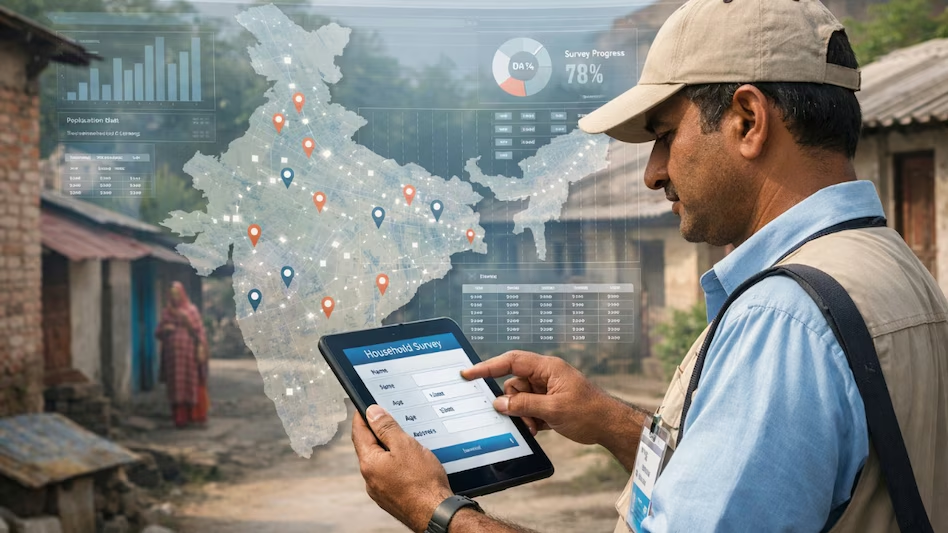
India has started preparations for its 16th National Census, the massive nationwide exercise carried out every 10 years to count the country’s population and collect important social and economic data. This time, the process is making history because it will be India’s first fully digital census, bringing technology into one of the world’s largest data collection exercises. The new system will allow people to provide their own details through a mobile application, making the process faster and more modern while helping officials collect more accurate information.
India’s 16th national census enters digital era:
The Government of India has launched the first phase of the 16th National Census, which will count the country’s population and gather detailed information about households across the nation. The exercise is organised by the Office of the Registrar General and Census Commissioner of India under the Ministry of Home Affairs.
For the first time, the census will include self-enumeration, allowing citizens to enter their own details using a mobile application instead of waiting for an enumerator to visit their home. Government officials say the digital system will help reduce paperwork, speed up data collection, and improve accuracy. Even with the digital option, trained census workers will still visit households across the country to ensure everyone is counted. India’s census is considered one of the largest administrative exercises in the world, covering more than a billion people across cities, towns, and villages.
The data collected through the census helps the government understand population growth, migration patterns, education levels, employment, and housing conditions. This information plays an important role in planning development programmes and allocating public resources.
What happens during a census?
During a census, the government collects key information about people and households, including:
- How many people live in each household
- Age and gender details
- Education levels and occupations
- Housing conditions and location
This information helps create an accurate picture of the country’s population.
Why is a census important?
Census data helps governments plan and manage public services across the country. It supports decisions such as:
- Planning schools, hospitals, roads, and public transport
- Allocating government funds and resources
- Understanding how the population is growing or changing
- Planning development programmes in different regions
Did you know?
- India’s last census was conducted in 2011. The next census was delayed because of the COVID-19 pandemic.
- The 2011 Census counted about 1.21 billion people, making it one of the largest data collection exercises ever carried out in the world.
Subscribe to The Junior Age Newspaper – click here. Know more fun facts on The Junior Age’s YouTube!