
Life on Earth began in the oceans long before dinosaurs, plants or humans existed. For many years, scientists believed the earliest animals appeared during the Cambrian Explosion, a period when many different animal groups suddenly began appearing in the fossil record. But new research now suggests that the first animals may have lived even earlier than scientists once thought. An international team of researchers led by Professor Jochen Brocks and Dr Ilya Bobrovskiy at the Australian National University has discovered chemical clues suggesting that some of Earth’s earliest animals lived more than 541 million years ago in ancient oceans.
Scientists found clues about the Earth’s earliest animals:
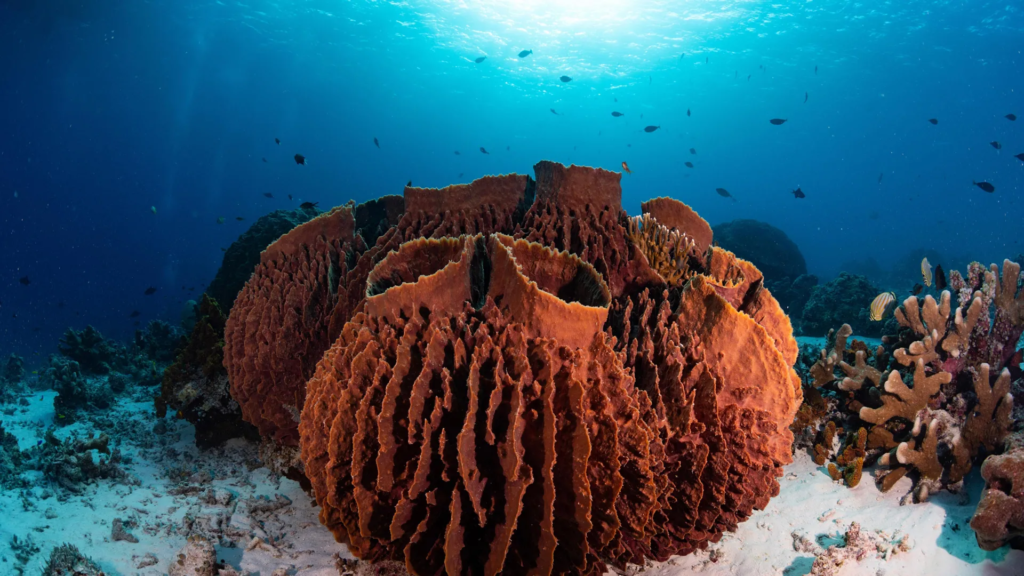
The researchers studied extremely old rocks and looked for biomarkers, which are chemical traces left behind by living organisms. These chemical fossils can stay trapped inside rocks for hundreds of millions of years, helping scientists study life that existed long before visible fossils formed. The team discovered biomarkers in rocks that closely match chemicals produced by modern sea sponges, suggesting that simple sponge-like animals may have lived in ancient oceans before the Cambrian Period.
The rocks examined by the scientists date to just before the start of the Cambrian Period, around 541 million years ago. This time in Earth’s history is famous for the Cambrian Explosion, when many different types of animals suddenly began appearing in fossils.
The discovery suggests that animal life may have started even earlier than the Cambrian Explosion, possibly in oceans with very low oxygen levels. These early animals were likely tiny, simple organisms without complex organs, very different from animals living today. Scientists say the finding helps researchers better understand how animal life first evolved on Earth and how simple ocean creatures eventually led to the wide diversity of animals seen today.
Subscribe to The Junior Age Newspaper – click here. Know more fun facts on The Junior Age’s YouTube!