
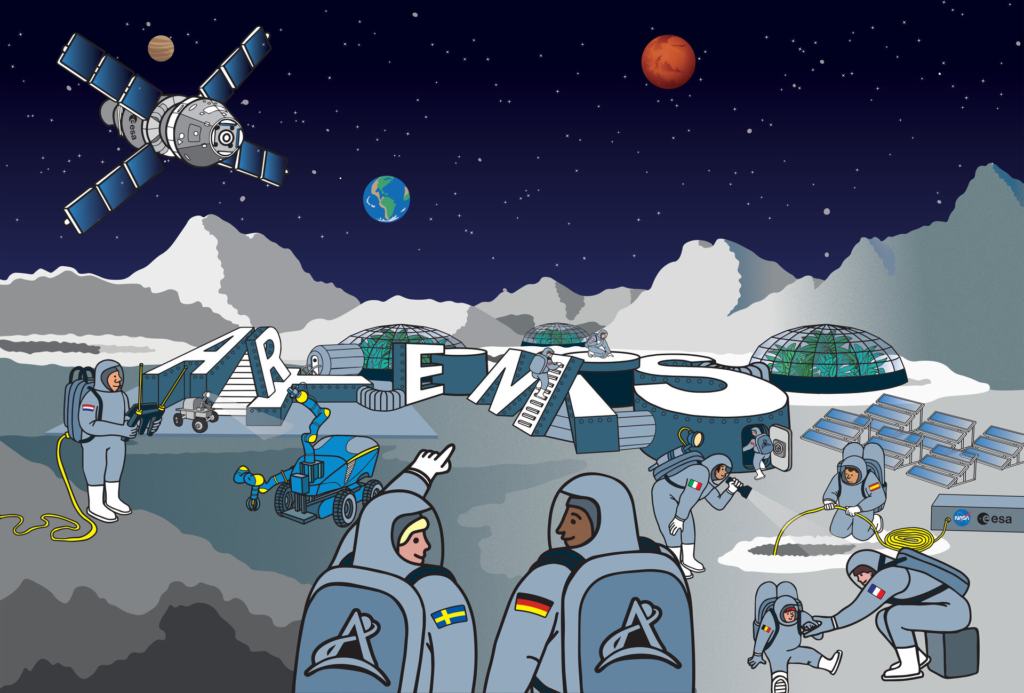
Space dreams just got real with a personal touch. Imagine your name travelling beyond Earth, looping around the Moon, and coming back with a digital space certificate. In 2026, NASA will send your name around the Moon, turning a simple online form into a thrilling cosmic keepsake for families everywhere. This is not science fiction. It is part of NASA’s effort to spark curiosity, excitement, and a love for space exploration among young minds. With a few clicks, names from classrooms, homes, and schools across the world can hitch a ride on a real Moon – Artemis mission.
NASA will send your name around the Moon with Artemis Mission
The opportunity comes from NASA’s Artemis programme, which is preparing the next chapter of human exploration of the Moon. As part of this programme, NASA is inviting people from around the world to send their names on a future Artemis mission that will travel around the Moon. Submitted names are stored digitally on a tiny chip that flies aboard the spacecraft. These chips can carry millions of names, all travelling together as the mission journeys through deep space and loops around the Moon before returning to Earth. This is not symbolic. The names physically go on the mission hardware.
NASA has used similar campaigns for Mars and Moon missions in the past, and each time, millions of participants have joined in. The Artemis name campaign continues that tradition, connecting people directly to real spaceflight.
How to send your name with Artemis:
The process is simple and completely free. Visit NASA’s official Send your name with Artemis webpage. Enter your name, submit the form, and you are officially registered.
Once submitted, you receive a personalised digital boarding pass. This pass includes your name, the Artemis mission badge, and details showing that your name will travel around the Moon. Many parents print the boarding pass or save it as a keepsake, while schools use it as a fun classroom activity linked to space lessons. NASA says these outreach programmes help children see space exploration as something they can be part of, not just something they read about. It builds excitement, curiosity, and a sense of connection to science and discovery.
Subscribe to The Junior Age Newspaper – click here. Know more fun facts on The Junior Age’s YouTube!