
Across the world, land quietly supports life in ways we often overlook. Beyond forests and farms lie vast open landscapes that feed animals, support communities, and help balance the planet’s climate. These lands rarely make headlines, yet they are essential to everyday survival, from the milk we drink to the clothes we wear. Recognising this hidden importance, the UN declares 2026 as the International Year of Rangelands and Pastoralists, bringing global attention to ecosystems and communities that sustain food systems, biodiversity, and rural livelihoods. The declaration aims to shift focus towards protection, sustainability, and respect for traditional ways of living with nature.
2026 Named International Year of Rangelands and Pastoralists by the United Nations:
The United Nations has officially designated 2026 as the International Year of Rangelands and Pastoralists. The move is meant to highlight the critical role rangelands play in global food security, climate resilience, and biodiversity, while also recognising the millions of pastoralists who depend on these landscapes for survival. Rangelands cover nearly half of the Earth’s land surface and are home to grazing animals, wildlife, and pastoral communities across Africa, Asia, the Middle East, and parts of Europe and the Americas. Despite their scale and importance, these ecosystems are among the most threatened due to climate change, land degradation, overuse, and shrinking access for traditional herding communities.
Through this international year, the UN will encourage countries to improve land management, support pastoral livelihoods, and restore degraded rangelands. Agencies such as the Food and Agriculture Organization will play a key role in research, awareness campaigns, and policy guidance.
A year-long focus: monthly themes for rangelands in 2026
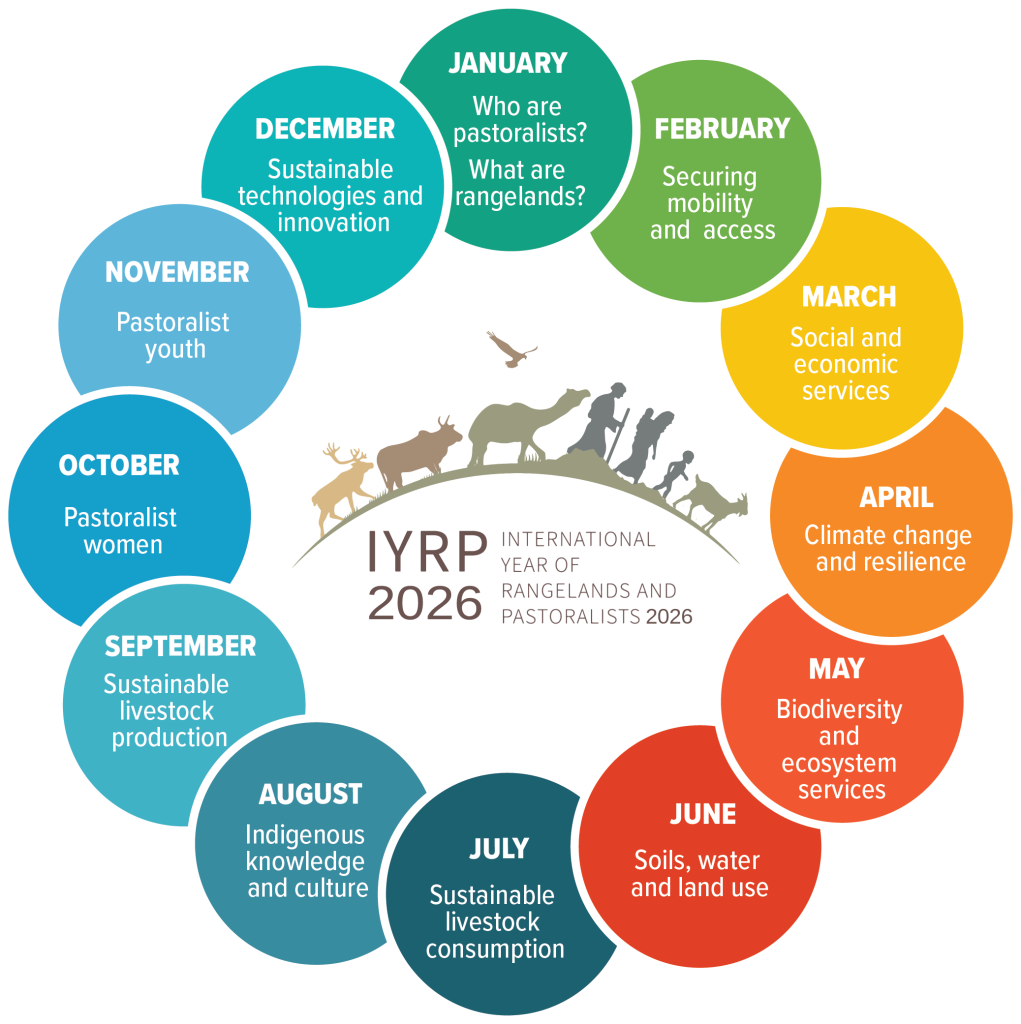
To keep global attention focused throughout the year, 2026 will also follow a month-by-month theme plan linked to rangelands and pastoral life. Each month will spotlight a specific area, such as healthy soils, water and drought resilience, wildlife and biodiversity, livestock and food systems, climate action, indigenous knowledge, women and youth in pastoral communities, innovation and technology, education, policy, and restoration of degraded lands. This structure allows governments, schools, scientists, and communities to explore one clear idea at a time, turning the international year into an ongoing learning journey rather than a one-day observance.
About rangelands and pastoralists
Rangelands include grasslands, savannas, shrublands, and dry open areas where farming crops is difficult but grazing animals is possible. Pastoralists are communities who raise livestock such as sheep, goats, cattle, camels, and yaks, often moving seasonally to find fresh grazing land and water. These traditional practices help maintain soil health, prevent overgrowth, and support wildlife movement when managed sustainably. Scientists now recognise that well-managed rangelands can store large amounts of carbon underground, making them important allies in the fight against climate change. The International Year of Rangelands and Pastoralists will focus on protecting indigenous knowledge, improving education and healthcare access for pastoral communities, and promoting policies that balance development with environmental care.
Subscribe to The Junior Age Newspaper – click here. Know more fun facts on The Junior Age’s YouTube!