
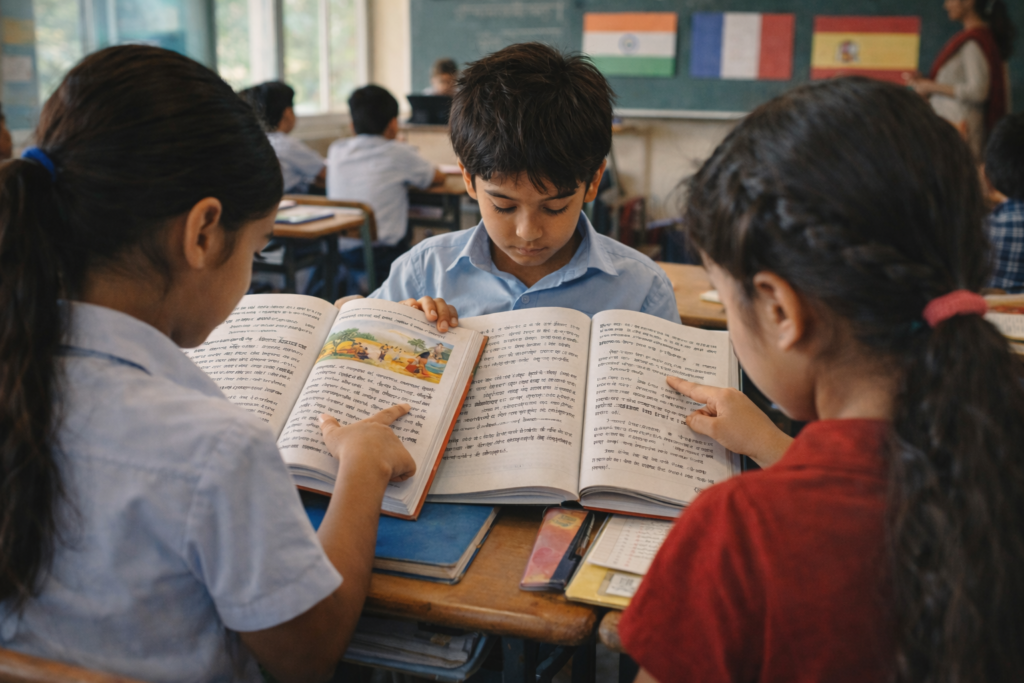
India is moving ahead with a major education reform aimed at strengthening language learning in schools. As part of the National Education Policy 2020, the country’s school system is gradually introducing changes designed to help children learn multiple languages from an early age. One of the key updates now announced focuses on the three-language system for CBSE Class 6 students. The Central Board of Secondary Education (CBSE) has announced that students in Class 6 will begin studying three languages from the 2026–27 academic year, marking a new step in implementing the National Education Policy 2020 across schools.
How will the new language CBSE plan work in Class 6:
Under the proposed system, Class 6 students will study three languages, with at least two required to be Indian languages. These could include languages such as Hindi, Tamil, Bengali, Marathi, Kannada or other regional languages, depending on the school and state.
Schools will also be allowed to offer foreign languages such as French, Spanish or German as an additional option. This means students may learn a mix of regional, national, and international languages, depending on what their school provides.
The aim of the policy is to encourage multilingual learning and help students understand India’s rich linguistic diversity, which includes hundreds of languages spoken across the country. Education experts say learning several languages at a young age can improve communication skills, cultural awareness, and cognitive development.
The CBSE has also indicated that schools will have flexibility in how they implement the language choices, allowing them to design language combinations that suit their region and student needs.
Subscribe to The Junior Age Newspaper – click here. Know more fun facts on The Junior Age’s YouTube!