
India’s Prime Minister, Narendra Modi, has asked people across the country to save petrol and diesel, use public transport more often, and avoid wasting fuel. At first, this may sound like a simple suggestion. But behind it is a much bigger global economic story that affects every household in India. He also suggested ideas like carpooling, working from home where possible, and using electric vehicles. Was this just a routine advisory, or was something bigger at play? As it turns out, there is a very real economic story behind this call to action, and it touches every Indian household, whether you own a vehicle or not. Let’s try to understand it.
The real reason behind PM Modi’s fuel appeal:
What is happening in the world right now?
A major reason is the ongoing conflict in West Asia, especially around the Strait of Hormuz, one of the world’s busiest oil shipping routes. Many countries, including India, buy crude oil from this region. When wars or tensions increase there, oil supplies can be affected and global oil prices can rise sharply.
India is one of the world’s largest consumers of crude oil. Currently, India imports roughly 85% of its crude oil from global markets, spending billions of dollars every year to keep fuel flowing. This means that whenever global prices rise or supply chains get disrupted, India feels the pinch almost immediately. If oil becomes more expensive, India has to spend even more money.
How global tensions increase prices in India?
When crude oil becomes expensive around the world, the effects are felt almost everywhere in daily life.
Petrol and diesel prices can rise, making transport more expensive. Trucks carrying vegetables, fruits, milk, and groceries across the country then cost more to operate. As a result, food prices may also increase in markets and supermarkets. Cab fares, auto-rickshaw rides, and delivery charges often become more expensive too. Flight tickets may rise because airlines spend heavily on fuel. Even online shopping deliveries can cost more during periods of high fuel prices.
This overall rise in prices is called inflation. Inflation means the same amount of money buys fewer things than before. In simple words, every rupee in your pocket loses some purchasing power.
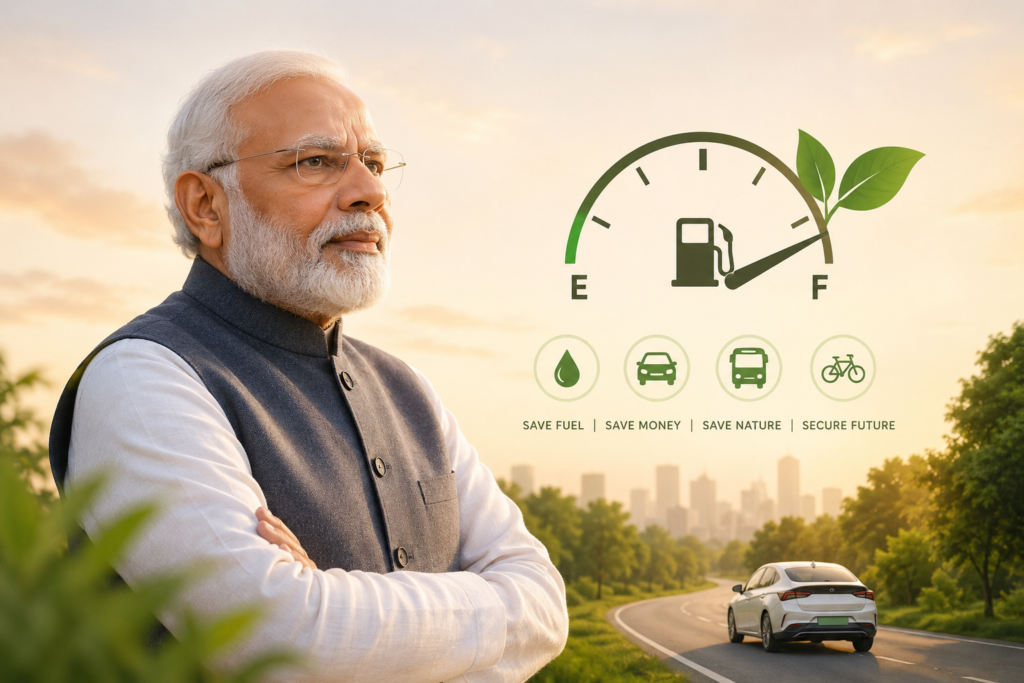
Why PM Modi’s appeal matters?
PM Modi’s request is not only symbolic. If millions of people make small fuel-saving changes together, it can create a real economic impact for the country. When people use less petrol and diesel:
- India imports less oil from other countries
- The country spends fewer US dollars on fuel purchases
- Pressure on India’s foreign exchange reserves reduces
- Inflation may slow down slightly
- The value of the rupee becomes more stable during uncertain global situations
The government also advised people to avoid unnecessary foreign travel for now. This is because India pays for most imported oil in US dollars. If too many dollars flow out of the country, the rupee can weaken further, making imports even more expensive. It is not a travel ban. It is an economic caution during a sensitive period.
What is foreign exchange?
Foreign exchange means the foreign currencies, mainly US dollars, that a country keeps to buy products from other nations. India uses foreign exchange to import crude oil, electronics, gold, machinery, and many other goods.
What families should avoid?
Fuel saving does not always mean making huge sacrifices. Small practical habits can make a difference when millions of families take part together.
- Frequent short solo car trips
- Keeping vehicle engines running while waiting
- Sudden speeding and harsh braking
- Ignoring tyre pressure checks
- Unnecessary long-distance driving when better options exist
- Combine errands into one trip instead of many short journeys
- Use buses, metros, or public transport sometimes
- Share school or office rides through carpooling
- Keep vehicles properly serviced
- Check tyre pressure regularly
- Consider CNG, hybrid, or electric vehicles in the future
- Walk or cycle for nearby places whenever possible
Parents can also explain to children why fuel conservation matters. When young people learn these habits early, they are more likely to carry them into adulthood.
Why this matters beyond money?
When people use less petrol and diesel, the country imports less oil. This helps India save foreign exchange reserves, which are the money and foreign currencies the country keeps for important international payments. Saving fuel can also:
- Reduce pollution in cities
- Lower traffic congestion
- Help families spend less money on fuel
- Reduce pressure on the economy during global crises
That is why PM Modi asked citizens to use metros, buses, electric vehicles, and public transport more often. He also encouraged companies to restart work-from-home practices whenever possible to reduce daily commuting.
FAQs: The real reason India is saving fuel
Why did PM Modi ask Indians to save fuel?
India imports roughly 85 per cent of its crude oil, making the country highly sensitive to global price shifts. With geopolitical tensions pushing up oil costs internationally, the Prime Minister called for fuel conservation to ease pressure on India’s import bill, protect foreign exchange reserves, and help control inflation at home.
How do rising global oil prices affect ordinary Indians?
When crude oil prices rise globally, the cost of transporting goods increases, which pushes up prices for vegetables, groceries, delivery services, and air travel. Even households without a vehicle feel the impact because fuel costs flow through to almost every product and service in the economy.
Does saving fuel actually make a difference at a national level?
Yes, when millions of people reduce unnecessary consumption even slightly, the combined effect on national oil imports can be significant. Lower demand reduces import costs, puts less pressure on the rupee, and helps keep inflation in check during periods of global uncertainty.
Why did the government mention avoiding unnecessary foreign travel?
India pays for most oil imports in US dollars. When large amounts of foreign currency leave the country through travel spending, it can weaken the rupee, which then makes imports more expensive. The advisory was an economic caution, not a restriction on travel.
What happens to the Indian economy if crude oil prices stay high for a long period?
Sustained high oil prices can lead to persistent inflation, slower economic growth, and pressure on government finances. The Reserve Bank of India may respond by adjusting interest rates, which can affect home loan EMIs, business borrowing, and consumer spending across the country.
Subscribe to The Junior Age Newspaper – click here. Know more fun facts on The Junior Age’s YouTube!