
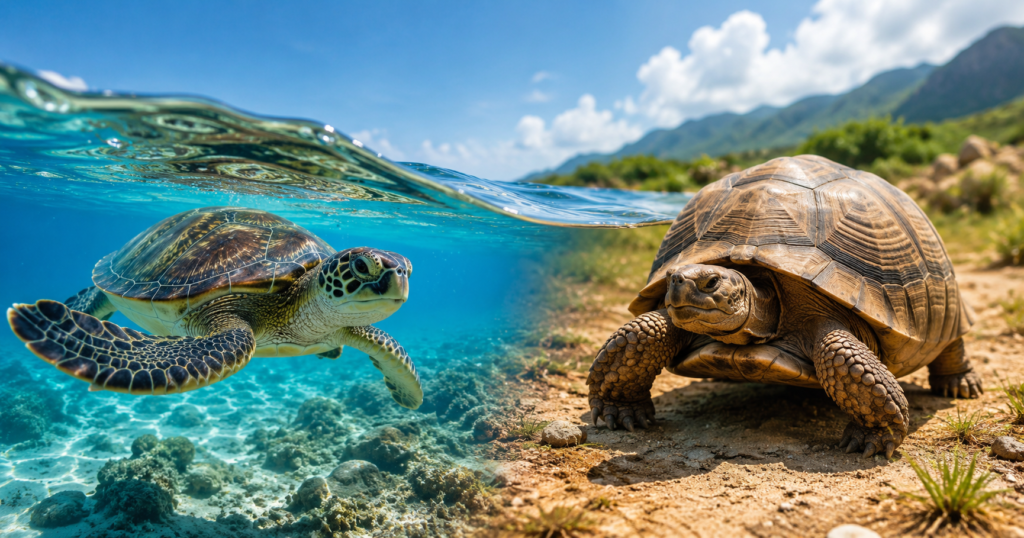
Turtles and tortoises may look similar at first glance, but they are actually quite different animals. Both belong to the reptile family, and both carry shells on their backs, yet the way they live, move, eat, and survive is very different. Some love swimming through rivers and oceans, while others enjoy slow walks across dry land. Understanding the difference between a turtle and a tortoise is a fun way for children to learn about animals, habitats, and adaptation. From webbed feet to dome-shaped shells, each feature helps these reptiles survive in their own environment. Here is an easy guide to help you understand – Turtle vs Tortoise – all the difference!
Turtle vs Tortoise: What Makes Them Different?
Where They Live:
Turtles
Turtles mostly live in water such as oceans, ponds, lakes, and rivers. Many turtles spend a lot of time swimming and come onto land mainly to rest or lay eggs.
Tortoises
Tortoises live mainly on land. They are commonly found in deserts, forests, grasslands, and dry habitats.
Feet And Body Shape – Turtle vs Tortoise
Turtle features
- Have webbed feet or flippers
- Good swimmers
- Usually flatter shells
- Move easily in water
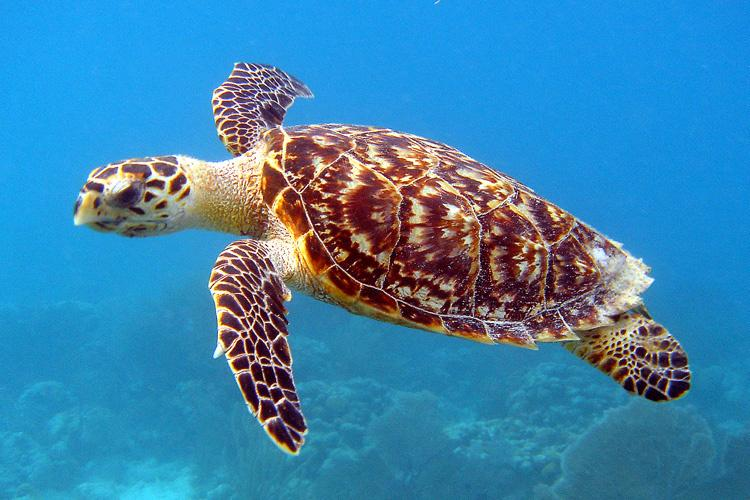
Sea turtles use flippers to glide through oceans, while freshwater turtles often have webbed feet to paddle through water.
Tortoise features
- Have strong, stumpy legs
- Slow walkers
- Usually dome-shaped shells
- Built for walking on land
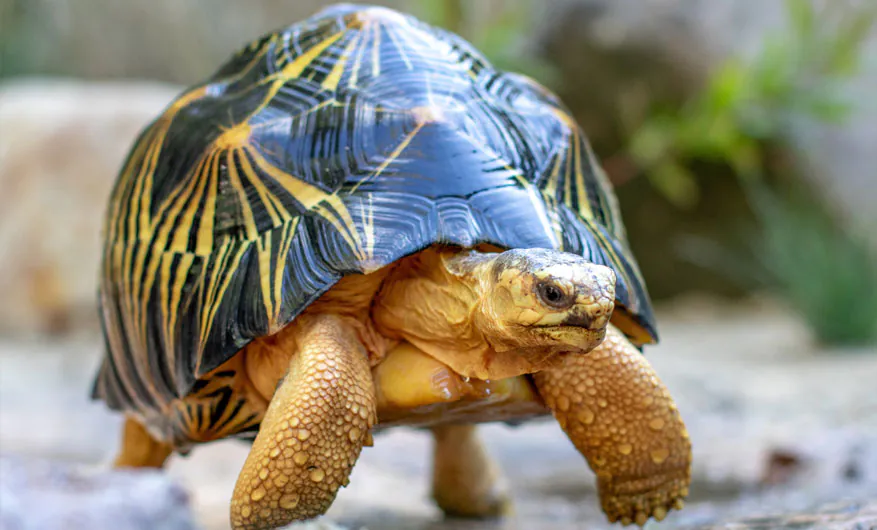
Their sturdy legs help them carry heavy shells and move across rough ground.
Read about – Interesting Facts About The World Turtle Day
Turtle vs Tortoise: Shell differences
A turtle’s shell is usually flatter, smoother, and lighter than a tortoise shell. This special shape helps turtles glide easily through water without creating too much resistance. Sea turtles, especially, have streamlined shells that help them swim long distances across oceans. Their shells are built more for speed and movement in water than for heavy protection on land.
A tortoise has a large, dome-shaped shell that looks much rounder and heavier. This shell acts like strong natural armour and helps protect the tortoise from predators. When danger appears, a tortoise can pull its head and legs inside the shell for safety. The heavy shell also supports its slow-moving body while living on dry land.
Know more about some amazing animals with – Animals And Their Young Ones flashcards!
How they move:
Turtles are excellent swimmers and spend most of their time moving through water. Sea turtles use powerful flippers to push themselves across oceans, while freshwater turtles paddle using their webbed feet. Some sea turtles migrate thousands of kilometres between feeding and nesting areas. Even though turtles can move quickly in water, many are slower and less comfortable when walking on land.
Tortoises move much more slowly because their bodies are designed for life on land. Their thick, sturdy legs help them walk steadily across rocky ground, sand, and grasslands. Unlike turtles, tortoises cannot swim well. Their heavy shells and strong legs are perfect for balance and support rather than speed. Some tortoises may appear slow, but they are built to travel safely over long periods without getting tired easily.
Food habits
Most turtles are omnivores, which means they eat both plants and animals. Depending on the species, turtles may eat algae, sea grass, fruits, insects, worms, jellyfish, shrimp, or small fish. Young turtles often eat more protein-rich foods to help them grow stronger. Sea turtles and freshwater turtles can have very different diets based on where they live.
Most tortoises are herbivores and mainly eat grasses, leaves, flowers, fruits, and vegetables. Their strong mouths help them chew tough plant material easily. Tortoises usually spend a large part of the day slowly searching for food on land. Because they eat fibre-rich plants, they can survive with less food and water for longer periods compared to many other animals.
Why are turtles and tortoises often confused?
People often confuse turtles and tortoises because both have shells and belong to the same reptile group called Testudines. However, their habitats, feet, shell shapes, and movement styles clearly set them apart.
Also, watch some – Fascinating Facts About Marine Turtles
Fun facts about turtles vs tortoises
- Some sea turtles can hold their breath underwater for several hours.
- Giant tortoises can live for more than 100 years.
- Tortoises cannot swim like turtles and may drown in deep water.
- Leatherback sea turtles are the largest turtles in the world.
Subscribe to The Junior Age Newspaper – click here. Know more fun facts on The Junior Age’s YouTube!