
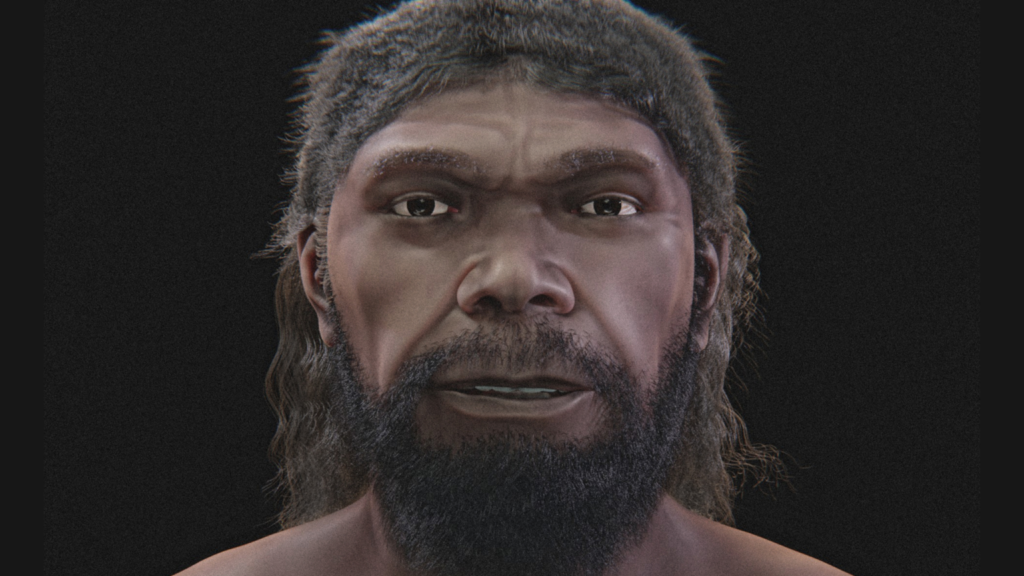
What did the earliest members of our species look like? Scientists have created a digital reconstruction of a human face belonging to an early Homo sapiens, using fossils discovered at Jebel Irhoud in Morocco. The fossils date back around 315,000 years and are among the oldest known remains of our species. The study, published in the journal Heritage in September 2026, used 3D modelling to estimate how the person’s face may have looked. The reconstruction shows a prominent brow, a broad face and a projecting jaw.
How did scientists recreate the human face?
Researchers started with a digital skull model made by combining fossil parts from different individuals found at Jebel Irhoud. The model was based mainly on a fossil known as Irhoud 1, which preserves much of the upper skull and face. The lower jaw came from another fossil.
Using 3D modelling, the team adjusted a digital model of a modern human skull to fit the ancient skull’s shape. They then estimated how facial muscles and soft tissues might have fitted over the bones.
The reconstructed skull had an estimated brain-cavity volume of 1,364 millilitres. This falls within the range found in modern humans, suggesting that brain size was already comparable in some early members of our species.
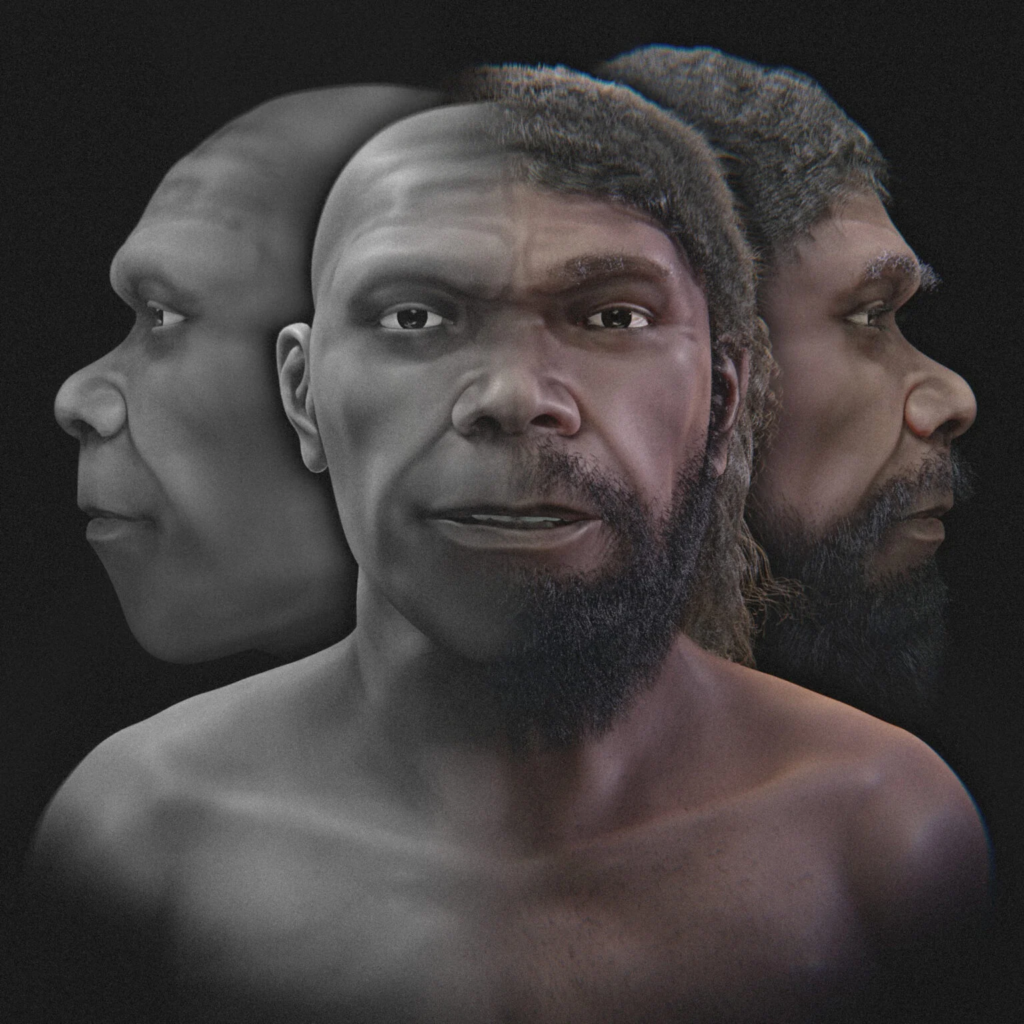
How accurate is the reconstruction of the oldest human face?
The face is a scientific approximation, not an exact portrait of one person. It is based on fossil parts from different individuals, and some details cannot be recovered from bones alone.
Scientists cannot determine features such as the person’s exact skin colour, hair colour or hairstyle from these fossils. These details in the coloured reconstruction are artistic interpretations.
FAQs on the recreated human face
Where were the 315,000-year-old human fossils found?
They were discovered at Jebel Irhoud, an archaeological site in Morocco, North Africa.
What is Homo sapiens?
Homo sapiens is the scientific name for modern humans. All people living today belong to this species.
How old are the Jebel Irhoud fossils?
They are approximately 315,000 years old. They provide some of the earliest known evidence of Homo sapiens.
What is a 3D facial reconstruction?
It is a digital model that estimates how a person’s face may have looked. Scientists use information from the skull and knowledge of human anatomy to build it.
Does the reconstructed face show exactly what early humans looked like?
No. It is an approximation based on available fossil evidence. Details such as skin and hair colour cannot be established from the bones.
What does brain-cavity volume tell scientists?
It measures the space inside the skull where the brain would have been. It helps researchers estimate brain size, but it does not reveal everything about how the brain worked.
Did you know? The Jebel Irhoud fossils helped scientists push back the known history of Homo sapiens. Before their age was established, some of the oldest known fossils of our species were thought to be much younger.
Subscribe to The Junior Age Newspaper – click here. Know more fun facts on The Junior Age’s YouTube!
Get to know everything about Human Body and The Amazing Inventions & Discoveries Flash Cards
Also read about: