
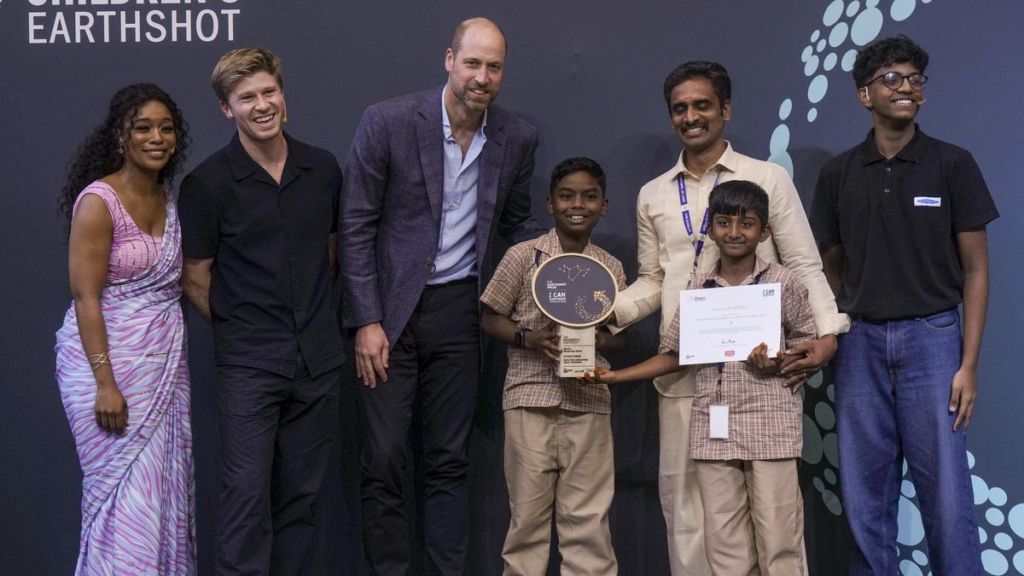
Five Indian student teams have won the first-ever Children’s Earthshot Awards for developing creative solutions to environmental problems. Prince William and Catherine, Princess of Wales, presented the awards at a ceremony in Mumbai on 17 November 2026.
The winning projects include a cooling crate that helps keep vegetables fresh in extreme heat, biodegradable lamps designed to reduce river pollution, an electricity-free air filter and innovative ways to reuse waste. Each winning team will receive a US$2,000 grant to develop its idea further.
What are the Children’s Earthshot Awards?
The Children’s Earthshot Awards recognise children who turn their ideas into practical solutions to protect the planet.
The awards are part of the I CAN Earthshot Challenge, organised by The Earthshot Prize in partnership with Brazilian organisation Alana and global youth movement Design for Change.
The challenge reached nearly one million students aged 9 to 17 across 15,000 schools in 24 Indian states. Students were encouraged to identify environmental problems in their communities and develop creative solutions.
The five winning teams were selected across five environmental themes:
- Protect and Restore Nature: Protecting forests, wildlife and natural habitats.
- Revive Our Oceans: Helping protect oceans, rivers and other water bodies.
- Clean Our Air: Finding ways to reduce air pollution.
- Build a Waste-Free World: Reducing waste and encouraging reuse and recycling.
- Fix Our Climate: Developing solutions to tackle climate change.
Each winning team will receive US$2,000 to improve its project and expand its impact in the community.
Meet the five Indian student teams
Here are the five winning projects and how the students are working to protect the environment.
1. Cool Crate: Keeping vegetables fresh in extreme heat
School: Satya Elementary School, Dhulka, Punjab
Roadside vegetable sellers often struggle to keep their produce fresh during hot weather. To address this problem, students developed a low-cost cooling crate using wood-wool pads and a small water pump.
The system uses water to create evaporative cooling, helping reduce the heat around the vegetables. The team tested and improved the design to make it more effective.
The idea could help small vegetable vendors reduce food spoilage and avoid losses during extreme heat.
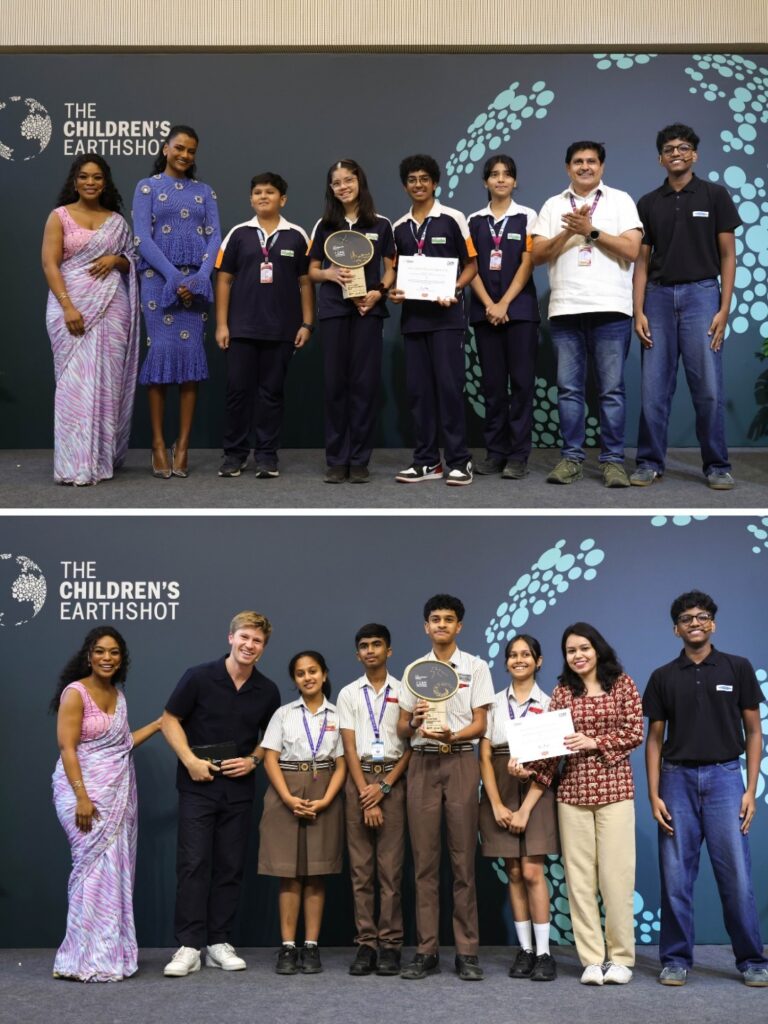
2. A Diya for the River, A Light for Life: Protecting the Godavari
School: Espalier The Heritage School, Nashik, Maharashtra
Traditional oil-filled diyas used during religious celebrations can leave oil and other waste in rivers. To address this problem, students developed oil-free, biodegradable diyas using natural, food-based materials and camphor.
The students experimented with different materials and produced around 200 diyas. They submitted 100 to the authorities preparing for the upcoming Kumbh Mela.
Their idea aims to encourage people to celebrate religious festivals while reducing pollution in the Godavari River.
3. PureVaYu: A Breath of Change: Creating cleaner indoor air
School: National Public School, Yeshwanthpur, Bengaluru, Karnataka
Air pollution is a serious concern, particularly in schools and homes located near industrial areas. Students developed a low-cost air filter that works without electricity.
The filter uses materials such as jute, activated biochar, bamboo silica, zeolite and cotton to help remove pollutants from indoor air.
During testing, the team recorded a fall in Air Quality Index (AQI) readings from approximately 156–160 to 96–98. The prototype was tested in a community hall and installed in more than four homes and the school.
The students hope to develop the filter further and introduce it in more schools and community spaces.
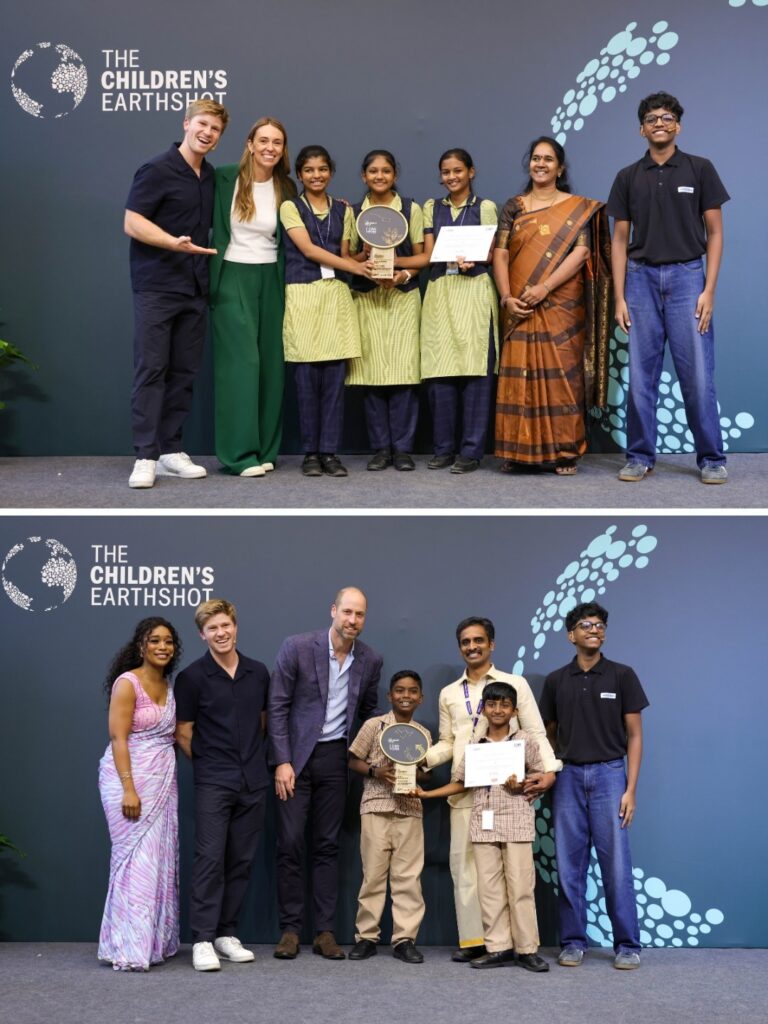
4. Decom POSSIBLE: Turning old newspapers into useful bags
School: SSATN Panchayat Union Middle School, Ammaiyappan (West), Tamil Nadu
Students found a creative way to reduce plastic waste by making reusable bags from old newspapers.
They added jute handles and a moisture-resistant coating made using discarded crayons. The team also encouraged households to separate their waste and established a composting pit at school.
The pit converts segregated organic waste into manure, which can be used to improve soil. The project also helped revive a community composting centre and encouraged better waste management practices.
5. Tiny Actions, Mighty Impact: Small steps towards a greener future
School: Kaligi Ranganathan Montford Matriculation Higher Secondary School, Tamil Nadu
Students launched a school-wide environmental initiative to address problems such as water wastage, plastic pollution, vehicle emissions and the loss of green spaces.
Their activities included:
- Reusing water collected from air conditioners.
- Separating different types of waste.
- Collecting plastic for recycling.
- Planting trees to increase green cover.
- Encouraging students to participate in environmental activities.
The initiative shows how small actions, when followed regularly by a community, can help protect the environment.
How can children make a difference?
The Children’s Earthshot Awards show that children do not have to wait until they grow up to contribute to environmental protection.
They can begin by identifying problems around them and finding practical ways to solve them. Saving water, planting trees, recycling paper, reducing plastic use and keeping neighbourhoods clean are some simple ways to get started.
Want to learn more about protecting the planet? Read our blog on Why Do We Celebrate World Environment Day?.
Children can also explore Sustainable Development Goal 11: Building Better Cities for the Future to understand how communities can become cleaner, greener and more sustainable.
The five winning teams have shown that young people can be more than just learners. They can also be thinkers, innovators and problem-solvers who help create a better future for everyone.
Frequently asked questions about Children’s Earthshot Awards
1. Who won the first-ever Children’s Earthshot Awards?
Five Indian student teams won the inaugural Children’s Earthshot Awards. The winning projects were Cool Crate, A Diya for the River, A Light for Life, PureVaYu: A Breath of Change, Decom POSSIBLE and Tiny Actions, Mighty Impact.
2. When and where were the Children’s Earthshot Awards presented?
The awards were presented on 17 November 2026 at a ceremony in Mumbai, Maharashtra. Prince William and Catherine, Princess of Wales, joined the young winners to celebrate their environmental innovations.
3. How much prize money did each winning team receive?
Each of the five winning teams will receive a grant of US$2,000. The money will help them develop their projects further and expand their solutions within their communities.
4. What is the I CAN Earthshot Challenge?
The I CAN Earthshot Challenge is an initiative that encourages children aged 9 to 17 to identify environmental problems and develop practical solutions. It is organised by The Earthshot Prize, Alana and Design for Change.
5. What are the five Earthshot environmental goals?
The five goals are Protect and Restore Nature, Revive Our Oceans, Clean Our Air, Build a Waste-Free World and Fix Our Climate. Each focuses on a major environmental challenge, from protecting wildlife to reducing pollution and tackling climate change.
6. How can students take part in protecting the environment?
Students can start with simple activities such as saving water, planting trees, recycling paper, avoiding single-use plastic and separating waste. They can also work with classmates and teachers to develop projects that address environmental problems in their schools and neighbourhoods.
Did you know?
The Earthshot Prize was founded by Prince William in 2020. Its name was inspired by the historic Moonshot mission, which aimed to send humans to the Moon. The prize supports innovative ideas that can help repair and protect our planet.
Read about: Interesting Facts About The World Environment Day
Subscribe to The Junior Age Newspaper – click here. Know more fun facts on The Junior Age’s YouTube!