
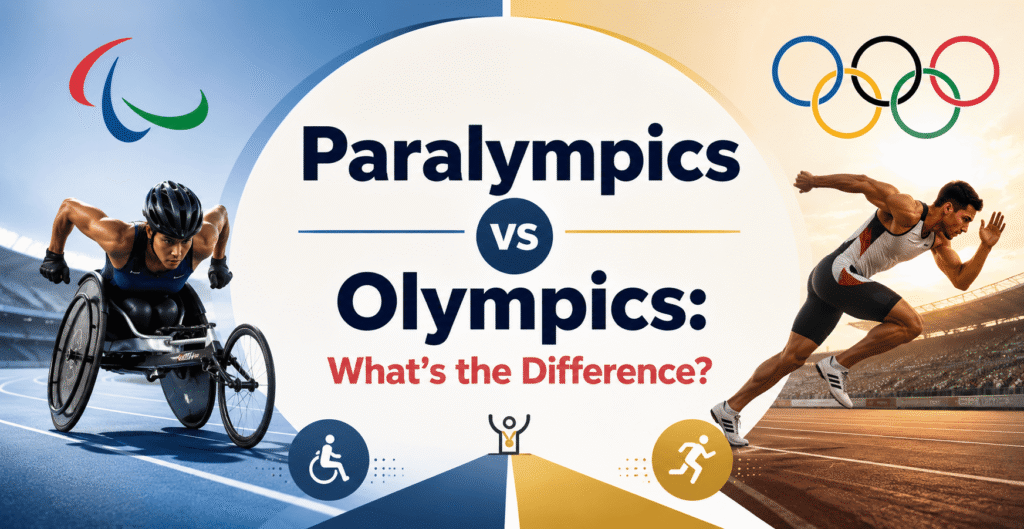
Every four years, the world’s greatest athletes come together to compete on the biggest sporting stage, the Olympic Games. Soon after, another incredible event begins, showcasing determination, skill and record-breaking performances by athletes with disabilities. This is the Paralympic Games. Many people wonder how the Paralympics are different from the Olympics. While both celebrate sporting excellence, the Paralympics are specially designed for elite athletes with eligible physical, vision or intellectual impairments. The Games use a classification system to ensure fair competition and feature sports that are adapted to suit different abilities. Let’s discover what makes the Paralympics unique and why they inspire millions around the world.
What Are the Paralympics? How Are They Different from the Olympics?
The Paralympic Games are an international multi-sport event for elite athletes with eligible disabilities. They are organised by the International Paralympic Committee (IPC) and are held every four years, shortly after the Olympic Games, using many of the same venues and facilities. The Paralympics include:
- Summer Paralympic Games
- Winter Paralympic Games
Athletes compete at the highest level, representing their countries just like Olympians.
Who can compete in the Paralympics?
Athletes must have an eligible impairment and meet the qualification standards for their sport. These may include:
- Limb deficiency, such as an amputation
- Vision impairment
- Spinal cord injuries
- Cerebral palsy and certain neurological conditions
- Short stature
- Intellectual impairment (in selected sports and events)
To make competition fair, athletes are placed into classification groups based on how their impairment affects performance in a particular sport, rather than on the medical condition alone.
How are the Paralympics different from the Olympics?
Although both events celebrate elite sport, there are several important differences.
| Olympics | Paralympics |
|---|---|
| Open to athletes without eligible disabilities. | Open to elite athletes with eligible disabilities. |
| Organised by the International Olympic Committee (IOC). | Organised by the International Paralympic Committee (IPC). |
| Standard sporting events. | Sports are adapted where needed for different impairments. |
| No athlete classification system. | Uses classification to create fair competition. |
| Held first. | Usually held in the same host city soon after the Olympics. |
Both events follow the same values of excellence, determination and fair play.
What is athlete classification?
One of the biggest differences is the classification system. Imagine two runners. One uses a prosthetic leg, while another has a vision impairment. Even though they both compete in athletics, they face different challenges.
The classification system groups athletes with similar levels of activity limitation so that success depends on skill, training and strategy rather than the type of impairment. Each sport has its own classification rules.
Which sports are played in the Paralympics?
Many Paralympic sports are similar to Olympic sports, including:
- Para athletics
- Para swimming
- Para cycling
- Wheelchair tennis
- Para badminton
- Para archery
- Para table tennis
Some sports are unique to the Paralympics, such as:
- Boccia, a precision ball sport for athletes with severe physical impairments.
- Goalball, played by athletes with vision impairments using a ball with bells inside it.
The Paralympics show that determination, talent and hard work matter more than limitations. The Games help to:
- Promote inclusion and equal opportunities.
- Challenge stereotypes about disability.
- Inspire young people to take part in sport.
- Encourage accessible sports facilities and programmes.
- Celebrate outstanding athletic achievements.
Millions of people around the world watch the Paralympics and cheer for athletes who break records and redefine what is possible.
India at the Paralympics
India has enjoyed remarkable success in recent Paralympic Games, winning medals in sports such as:
- Para athletics
- Para badminton
- Shooting Para sport
- Para archery
Indian Paralympians like Avani Lekhara, Sumit Antil, Pramod Bhagat, Manish Narwal and Harvinder Singh have inspired millions through their achievements on the world stage.
Did you know?
- The first official Paralympic Games were held in Rome, Italy, in 1960.
- The word Paralympic combines the idea of the Games being held alongside the Olympics.
- Goalball and boccia are Paralympic sports that do not have Olympic equivalents.
- The Paralympic Games now attract thousands of athletes from countries around the world, making them one of the largest international sporting events.
FAQs About the Paralympics
When are the Paralympics held?
Answer: The Paralympic Games are held every four years, shortly after the Olympic Games, in the same host city.
Who organises the Paralympics?
Answer: The International Paralympic Committee (IPC) organises and oversees the Paralympic Games.
Can the same athlete compete in both the Olympics and the Paralympics?
Answer: Yes. If an athlete meets the qualification requirements for both events, they may compete in both. This is rare but has happened.
Why do Paralympic athletes have different classifications?
Answer: Classification helps create fair competition by grouping athletes according to how their impairment affects performance in a particular sport.
What is the difference between the Paralympics and the Special Olympics?
Answer: The Paralympics are for elite athletes with eligible physical, vision or intellectual impairments who qualify through high-level competition. The Special Olympics provides year-round sports opportunities for people with intellectual disabilities across a wide range of ability levels. They are separate organisations with different eligibility rules and goals.
Also read about:
- Sumit Antil: Inside the Life of India’s Paralympic Javelin Champion
- Meet The Para Archer Of The Year: Sheetal Devi
- India Sweeps World Para Athletics Grand Prix with Record 208 Medals
Keep Exploring with The Junior Age!
At The Junior Age, we bring you inspiring sports stories, fascinating explainers and exciting facts that help young readers discover the world, one achievement at a time. Subscribe to The Junior Age Newspaper – click here. Know more fun facts on The Junior Age’s YouTube!