
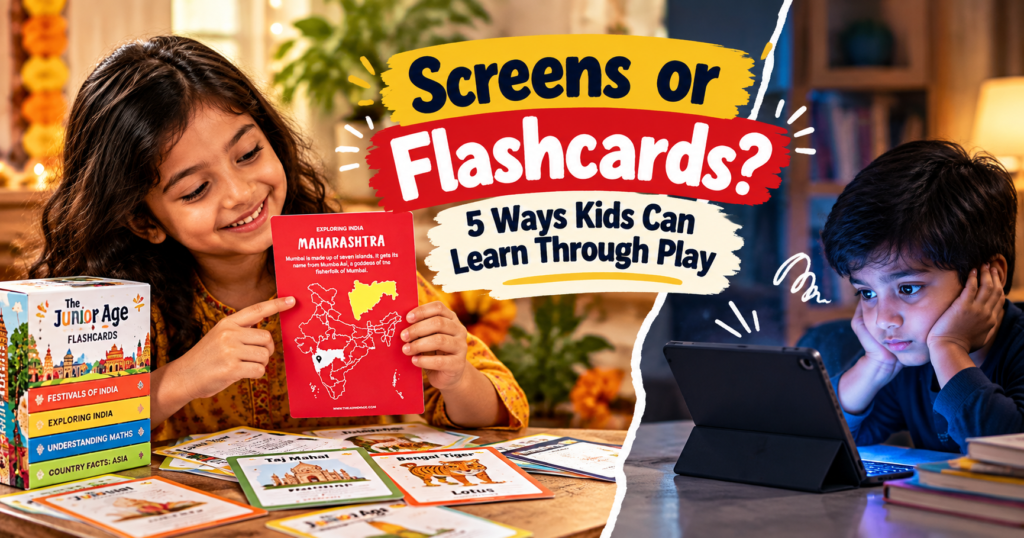
Screens have become part of everyday childhood, from homework and video calls to games, videos and entertainment. But flashcards vs screens for kids does not have to be an all-or-nothing debate. There is something wonderfully simple about picking up a card, studying a question, turning it over and discovering the answer. The Junior Age flashcards bring that hands-on feeling into learning, giving children a chance to step away from the screen while still exploring new ideas, facts and skills. So, what makes physical flashcards such a useful addition to a child’s day? Here are five reasons hands-on play deserves a place in the routine.
The Junior Age Flashcards vs. Screens: 5 Reasons Hands-On Play Wins
1. Sensory input: Learning you can actually hold
A screen gives children plenty to look at, but a physical card brings another element into the experience: the child gets to handle the learning material. They can hold it, turn it over, arrange it, sort it, pass it to someone else and decide what to do with it next. That may sound simple, but it changes the feeling of the activity. The child is not just watching information appear. They are interacting with it.
That is especially useful for younger learners, who often enjoy activities that involve movement and physical interaction. Imagine a child spreading a set of cards across the floor and trying to group them by theme. Suddenly, learning has become a little game. Add a sibling, parent or grandparent, and it can become a family challenge.
That is the charm of physical learning. The card is not the activity. The card starts the activity.
2. Memory effects: Turn learning into a game of remember and reveal
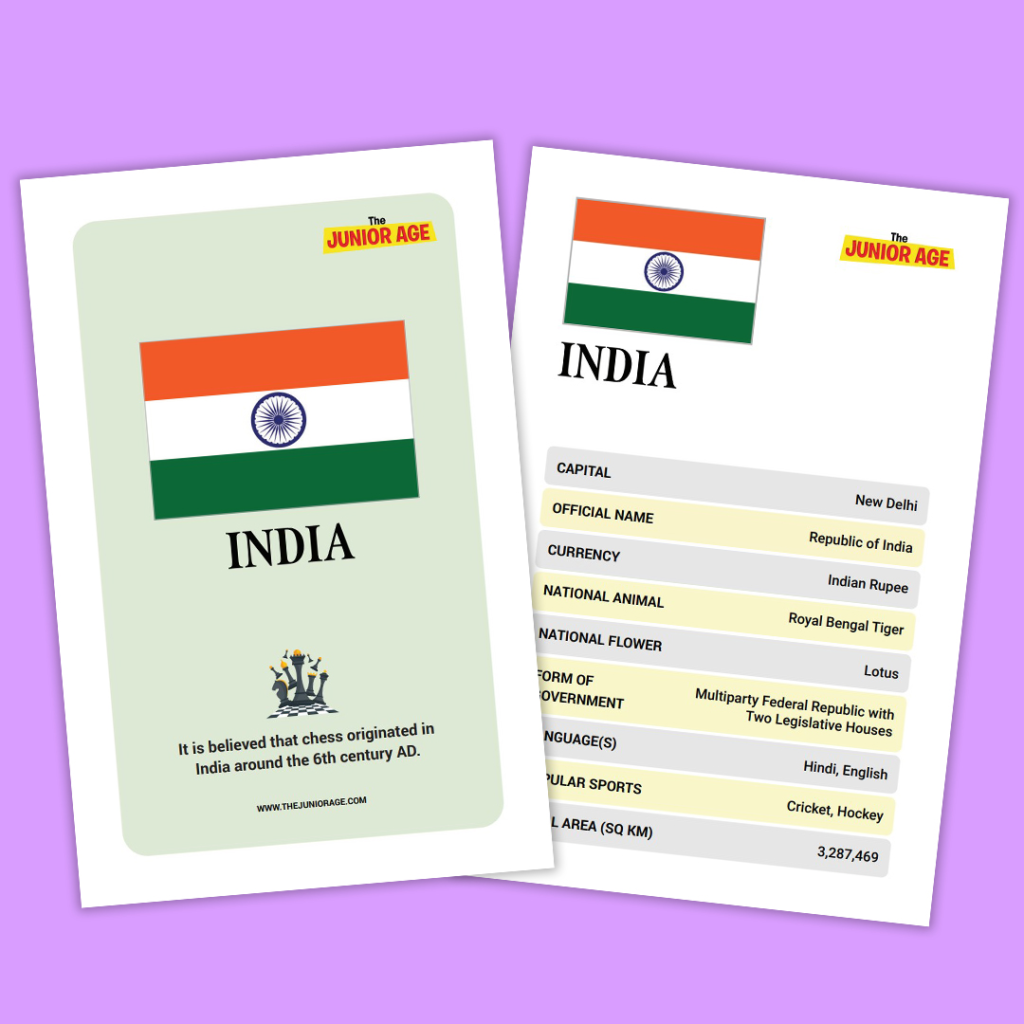
There is a satisfying little moment when a child sees a question, pauses and thinks, I know this! That is exactly what makes flashcards so much fun.
Instead of immediately showing the answer, a physical card gives children the chance to stop, think and retrieve what they know. They can test themselves, turn the card over, check the answer and then try again later. And because the deck can be shuffled, the questions do not always arrive in the same order. That keeps children from simply memorising where an answer appears.
You can make it even more playful. Give your child five cards and ask them to answer as many as they can. Then let them choose five for you. If they know the answer and you do not, they get to be the expert. Suddenly, revision does not feel quite so much like revision.
It feels like winning a tiny battle against your own memory.

3. Eye health: Give children a learning break from the screen
Not every learning activity needs a glowing rectangle. When children spend a lot of time looking at screens, switching to a physical activity gives their eyes and minds a break from the digital world. Flashcards offer an easy way to keep children learning without adding another screen session to the day.
Think about those small gaps in a child’s routine. After school. Before dinner. During a family trip. While waiting for a sibling. Before bedtime.
Instead of automatically reaching for a phone or tablet, a small deck of cards can become the go-to activity. And there is no charging cable, notification or battery percentage involved.
Just pick up a card and play.
4. Focus: one question, one challenge, no scrolling required
One of the best things about a physical flashcard is also one of the simplest.
It stays put.
There is no temptation to swipe to the next video. No notification pops up in the corner. No unrelated recommendation suddenly appears. No one starts with a five-minute activity and ends up wondering how an hour disappeared. A card gives a child one small challenge at a time.
- Look.
- Think.
- Answer.
- Turn it over.
- Move to the next one.
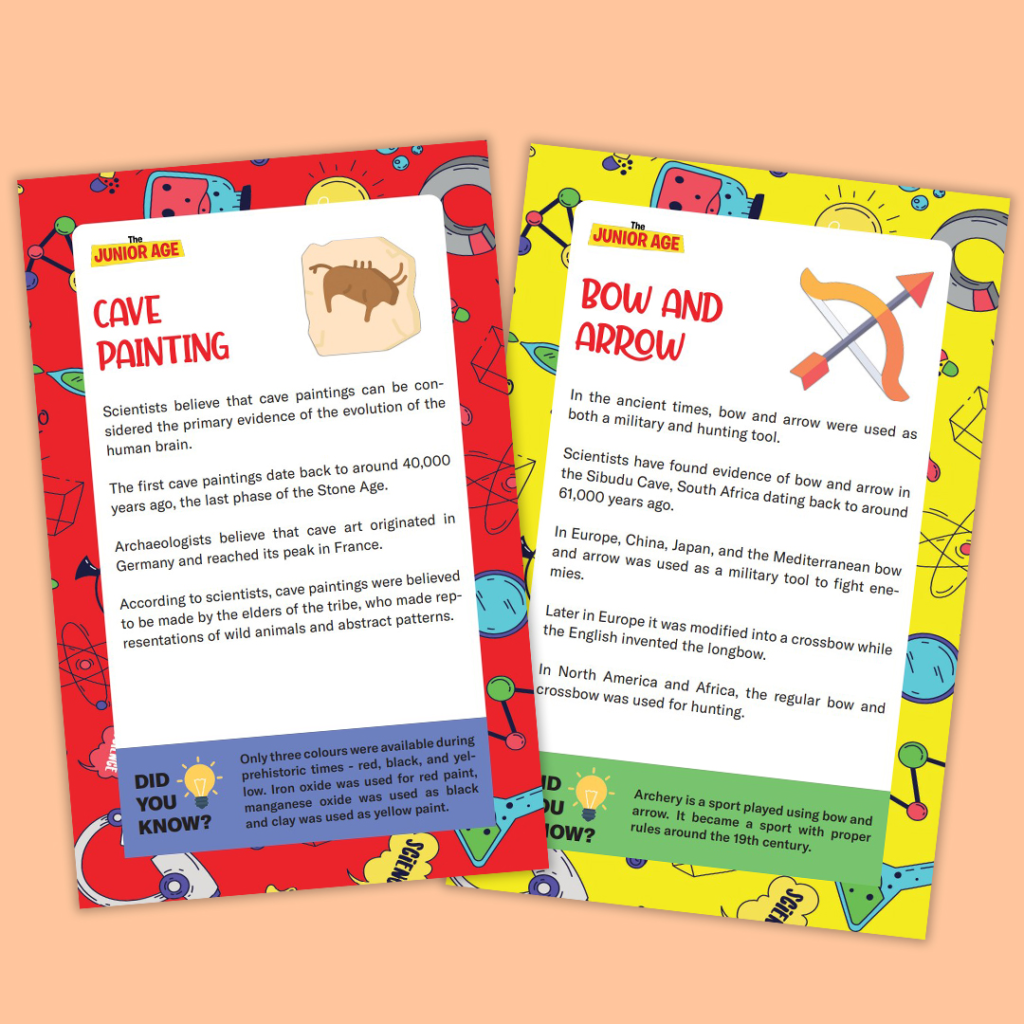
That simplicity can make learning feel manageable, especially when a child is tired or has already spent plenty of time online. The goal is not to make every screen-free activity serious. Quite the opposite. A focused activity can be playful, quick and competitive.
Try turning the cards into a family tournament. Give everyone a few questions and keep score. Or let your child become the quizmaster and challenge everyone else. The winner gets bragging rights. No trophy required.
5. Social skills: One little card can start a big conversation
Here is where flashcards can become something much bigger than a learning tool.
They can get people talking.
A child can ask a parent a question. A sibling can challenge them. A grandparent can add a story from their own childhood. A family can disagree about an answer and look it up together. The card becomes the conversation starter.
And that is particularly valuable when the subject is something children might naturally want to talk about.
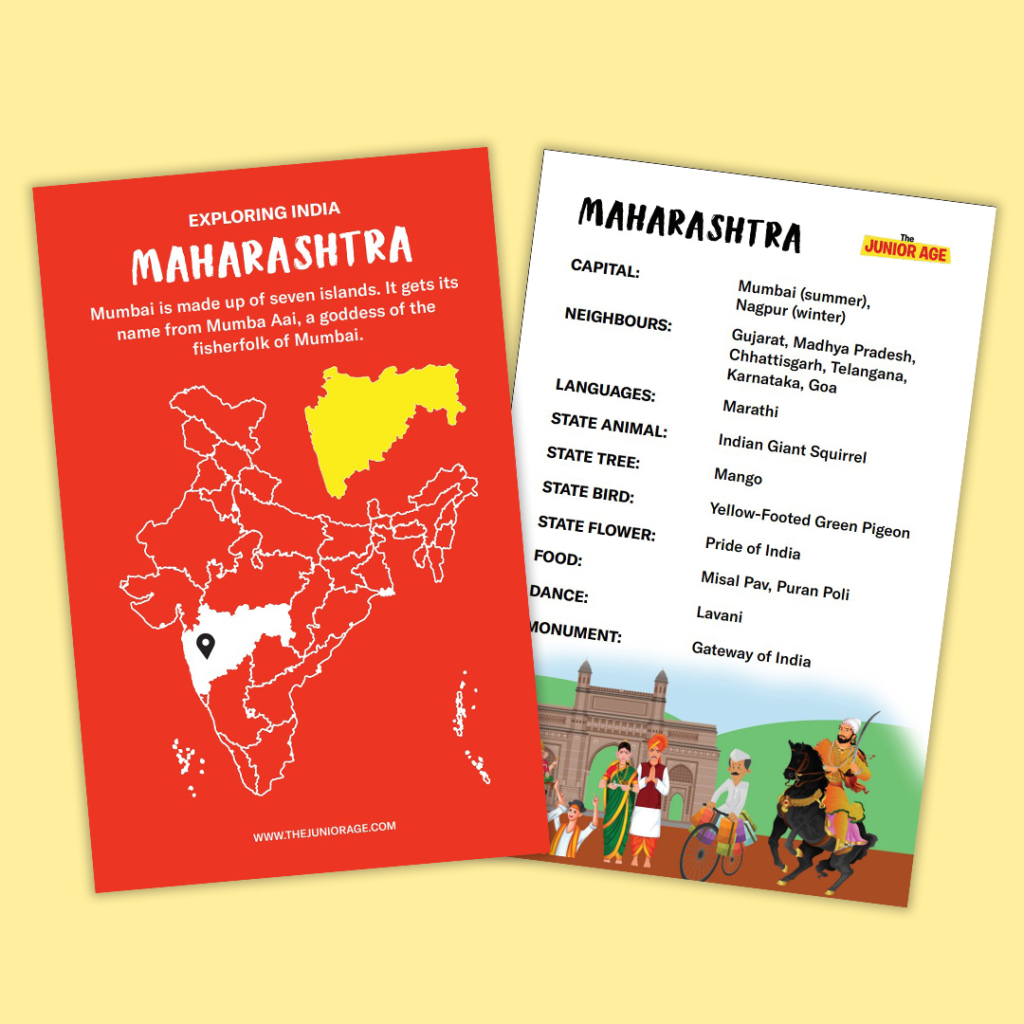
A card about a festival can lead to a discussion about family traditions. A maths card can turn into a puzzle-solving challenge. A card about a country can lead to questions about its food, landmarks, language or wildlife. One question can lead to another. Then another.
Before you know it, the five-minute card game has become a full conversation.
That is learning with a little human connection built in.
How can parents make flashcards more than a memorisation exercise?
The best way to use flashcards is not necessarily to sit down and make a child go through an entire deck from beginning to end. A little variety can make the activity far more engaging. Try asking your child to choose three cards and explain the answers in their own words. Turn the deck into a family quiz where everyone gets a turn. Ask your child to create a question for a parent using information from a card. Or pick one card and challenge your child to find three additional facts about the topic. You can even use the cards as conversation starters at breakfast, after school or during a family evening.
The aim is not to turn every spare minute into a lesson. It is to make learning something that can happen naturally, away from the glow of a screen.
Are flashcards better than screens?
Not necessarily. They do different things.
A well-designed educational app can provide animation, audio, instant feedback and interactive experiences that a physical card cannot. Screens can also give children access to information and creative tools that would be impossible to fit into a card deck. But physical flashcards offer something different: simplicity, tactile interaction, easy repetition and the opportunity to learn without another device competing for attention.
The better question for parents is not whether children should choose screens or flashcards every time. It is whether their day has enough variety.
A child can watch a documentary, read a book, play outdoors, solve a puzzle, talk with a parent and then spend ten minutes testing themselves with flashcards. That balance gives children different ways to think, move, remember and explore.
This festive season, give children something they can actually pick up and play with
Dussehra and Diwali are filled with stories, traditions, questions and family time. That makes the festive season a perfect opportunity to bring more hands-on learning into the home. And if you are looking for a gift that does not need batteries, Wi-Fi or a charging cable, The Junior Age flashcards make a thoughtful addition to the festive bookshelf.
Better still, they can be paired with a regular newspaper subscription through The Junior Age Festive Bundles, giving children both bite-sized news and hands-on learning throughout the year.
- Festive Starter Bundle: 6-month subscription + 2 flash card packs, ₹1,800
- Festive Value Bundle: 6-month subscription + 3 flash card packs, ₹2,100
- Grand Festive Bundle: 1-year subscription + 4 flash card packs, ₹3,100
Also read:
- How To Reduce Screen Time For Kids At Home?
- Fun and Easy Screen-Free Weekend Activities for Kids
- 30 Screen-Free Holiday Activities for Kids
- 10 Modern Ravanas in Every Child’s Daily Routine
- Why Reading Short Stories Every Day Helps Children Become Better Learners
- 8 Powerful Online Courses For Kids To Explore During Summer Holidays
Subscribe to The Junior Age Newspaper – click here. Know more fun facts on The Junior Age’s YouTube!