
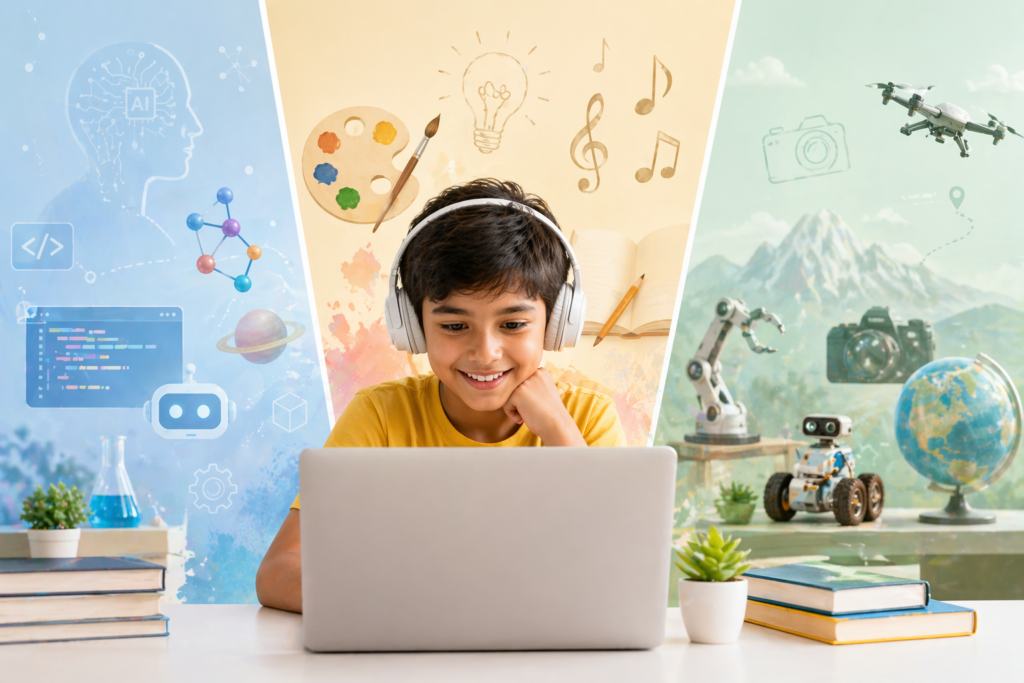
Summer holidays arrive with excitement, freedom, and long days of possibility. Children finally have time away from school routines, homework, and early mornings. Yet many parents quietly wonder how to keep their children curious, engaged, and learning during these weeks. This is where online courses for kids during summer holidays can make a real difference. The right course turns screen time into discovery. Children explore new interests, build useful skills, and often uncover talents they never realised they had. Even better, these courses allow kids to learn at their own pace while still enjoying plenty of play, outdoor time, and relaxation.
From coding and artificial intelligence to art, storytelling, and science experiments, today’s digital classrooms are creative spaces where curiosity grows. If you are looking for ways to keep young minds active this summer, these online courses for kids during summer holidays are a fantastic place to begin.
Top skill-building online courses kids can try this summer holidays:
1. Coding and game design courses
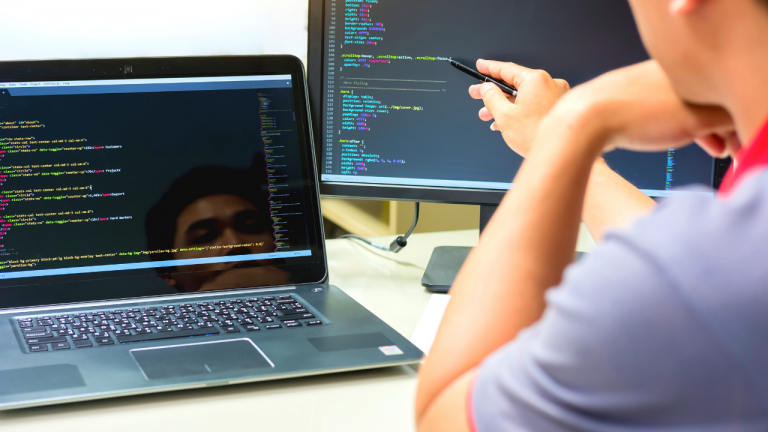
Coding teaches children how technology works rather than simply how to use it. Many beginner courses introduce platforms such as Scratch, where kids create animations, interactive stories, and simple games. As children learn basic programming logic, they also develop patience and problem-solving skills. By the end of the course, many kids proudly show their own mini games or digital projects.
2. Artificial intelligence and machine learning basics
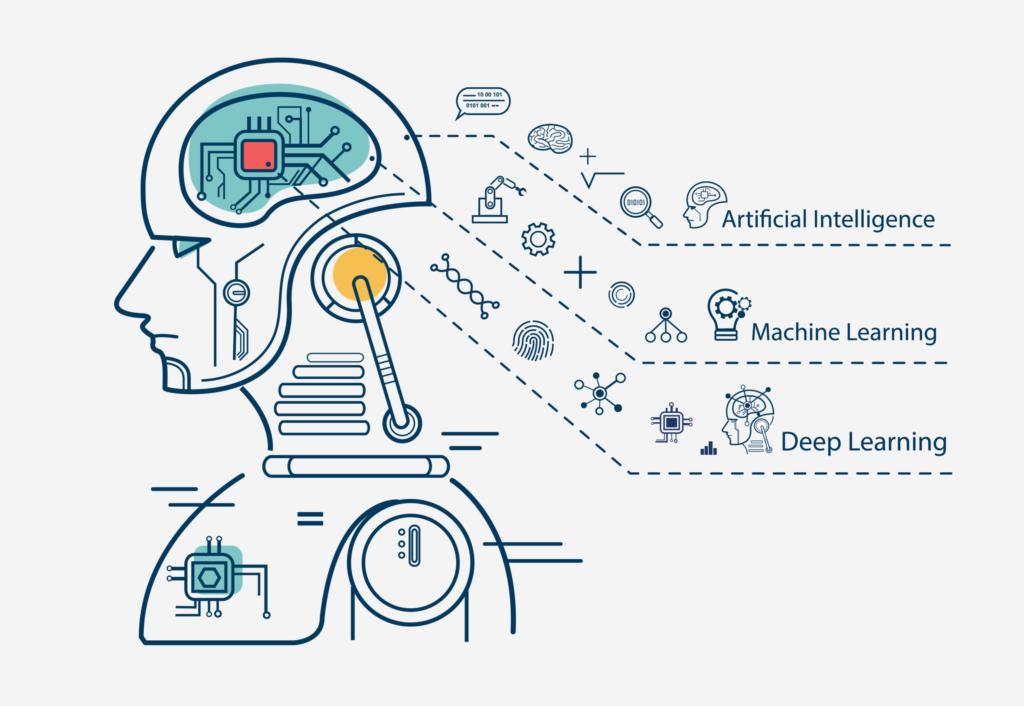
Artificial intelligence is shaping the future, and children are increasingly curious about how it works. Beginner AI courses introduce simple ideas such as pattern recognition, chatbots, and smart assistants. Kids may experiment with training simple AI models, creating mini recommendation systems, or understanding how machines learn from data.
Skills kids gain: Logical thinking, digital awareness, and early understanding of AI technology.
3. Creative writing and storytelling classes

Summer is a wonderful time for imagination. Storytelling courses help children create characters, design magical worlds, and build exciting plots. Some programmes guide children in writing short stories, comic strips, or even mini novels. Writing workshops often include fun prompts and collaborative activities that spark creativity.
What children develop: Vocabulary, confidence, and imaginative thinking.
4. Art, illustration, and digital drawing
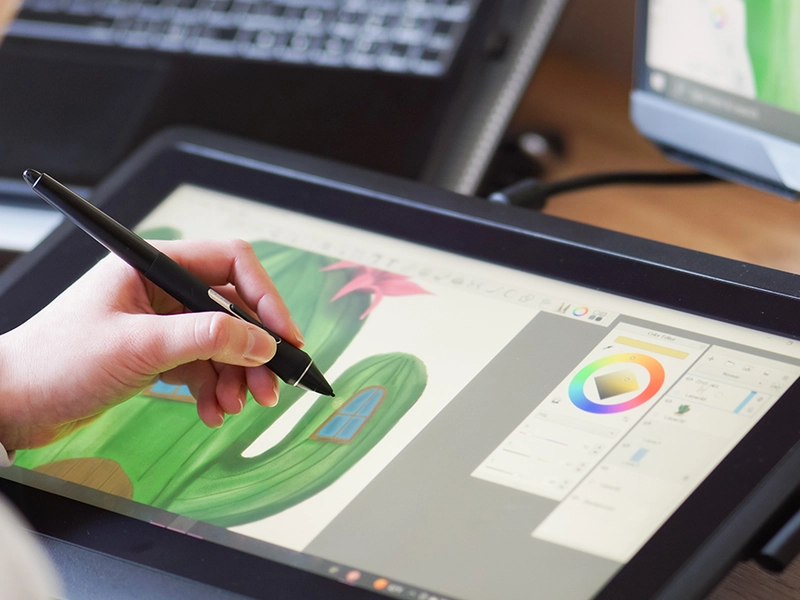
Art courses give children the chance to express themselves freely. Online classes often include drawing basics, watercolour techniques, cartoon design, and digital illustration. Some kids even learn how to create their own comic characters or simple animated scenes.
Why kids love it: They get to experiment, create, and proudly display their artwork.
5. Science experiments and STEM discovery
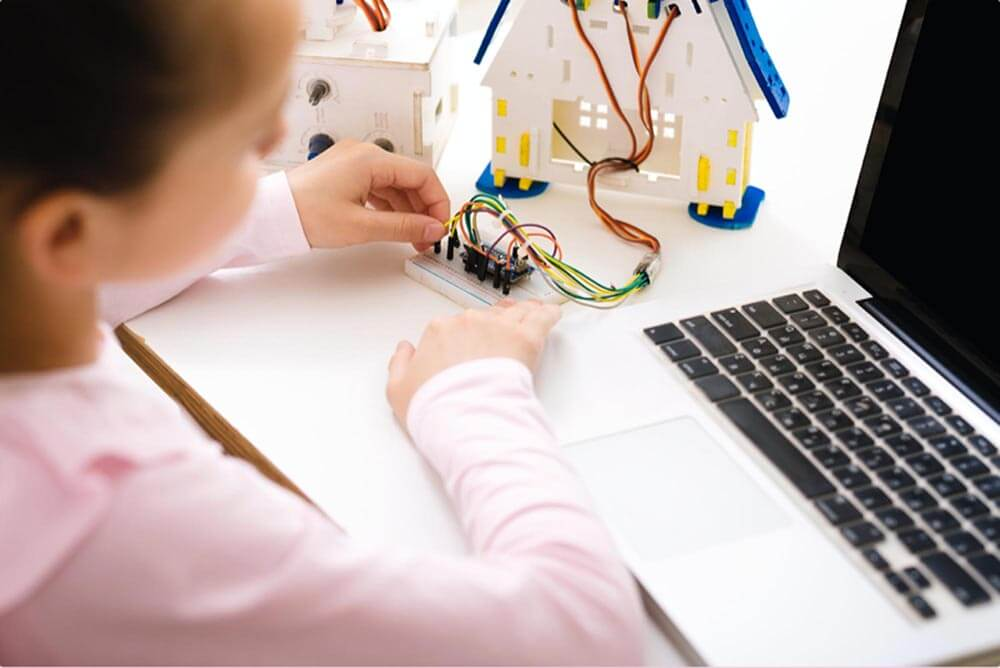
Many children are natural scientists who constantly ask questions about the world. STEM courses combine science, technology, engineering, and maths with exciting hands-on experiments. Children might explore electricity, simple robotics, space science, or chemistry experiments using everyday household materials.
Why it works well: Learning feels like an adventure of discovery.
6. Music and instrument learning
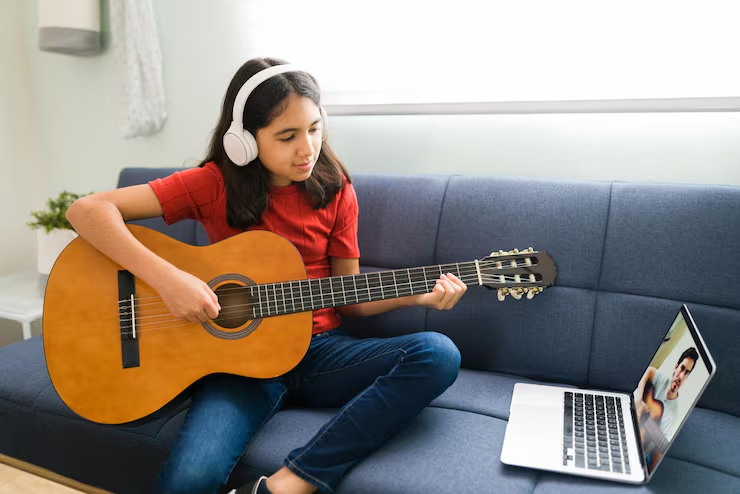
Online music classes allow children to explore rhythm, melody, and performance. Kids can learn keyboard, guitar, singing, or even digital music production. Many platforms include practice tools and fun challenges that help children stay motivated.
Benefits beyond music: Improved focus, creativity, and emotional expression.
7. Robotics and beginner engineering
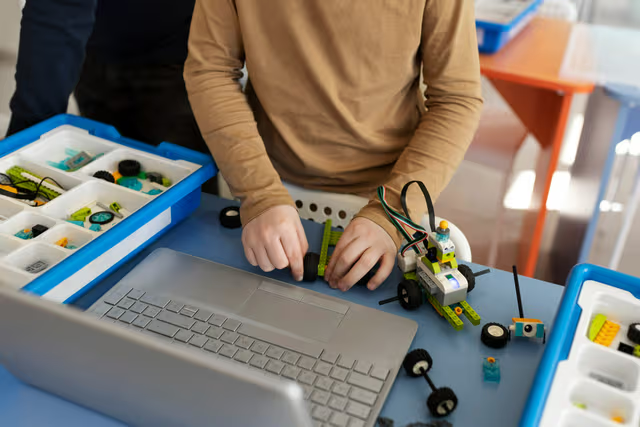
Robotics courses combine coding, electronics, and creativity. Children learn how machines move, how sensors work, and how to design simple robots. Even beginner robotics kits allow kids to build moving models and solve engineering challenges.
What they learn: Problem solving, innovation, and teamwork.
8. Public speaking and confidence building course during summer holidays

Confidence is one of the most valuable life skills. Public speaking courses help children organise ideas, express themselves clearly, and speak comfortably in front of others. Through storytelling exercises, debates, and mini presentations, kids slowly become more confident communicators.
A skill for life: Children learn how to share ideas with clarity and courage.
How parents can choose the right course during summer holidays
Choosing the right summer course does not mean filling every day with lessons. Even one meaningful course can spark a passion that lasts for years. A balanced approach works best. Parents can consider three simple questions:
1. What interests your child the most?
A curious child learns far better when the topic excites them.
2. Is the course suitable for their age?
Look for programmes designed specifically for children, with interactive learning.
3. Does it allow time for play and rest?
Summer holidays should still feel like holidays.
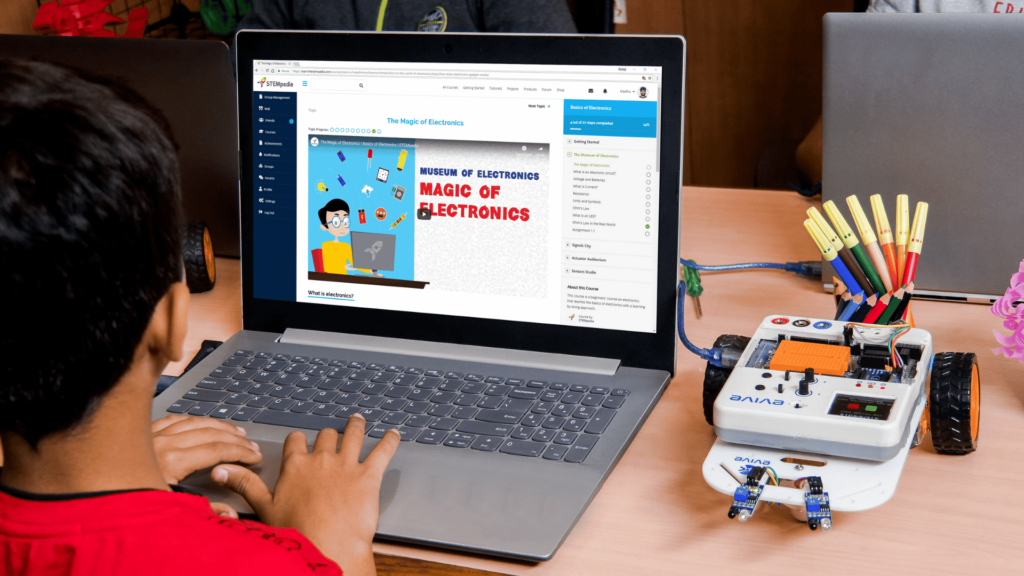
FAQs about online courses for kids during summer holidays
Parents often have a few common questions before enrolling their children in online courses during summer holidays. Here are some simple answers that can help you decide.
1. What is the right age for kids to start online courses?
Many platforms offer courses for children as young as 5 or 6 years old. Younger kids usually enjoy art, storytelling, or beginner coding, while older children can explore AI, robotics, or science courses.
2. How many courses should a child take during summer holidays?
One or two courses are usually enough. The aim is to spark curiosity without overloading children during their holiday break.
3. Are online courses safe for children?
Most trusted platforms design their courses specifically for kids with moderated classes, trained instructors, and safe learning environments. Parents should always check reviews and age suitability.
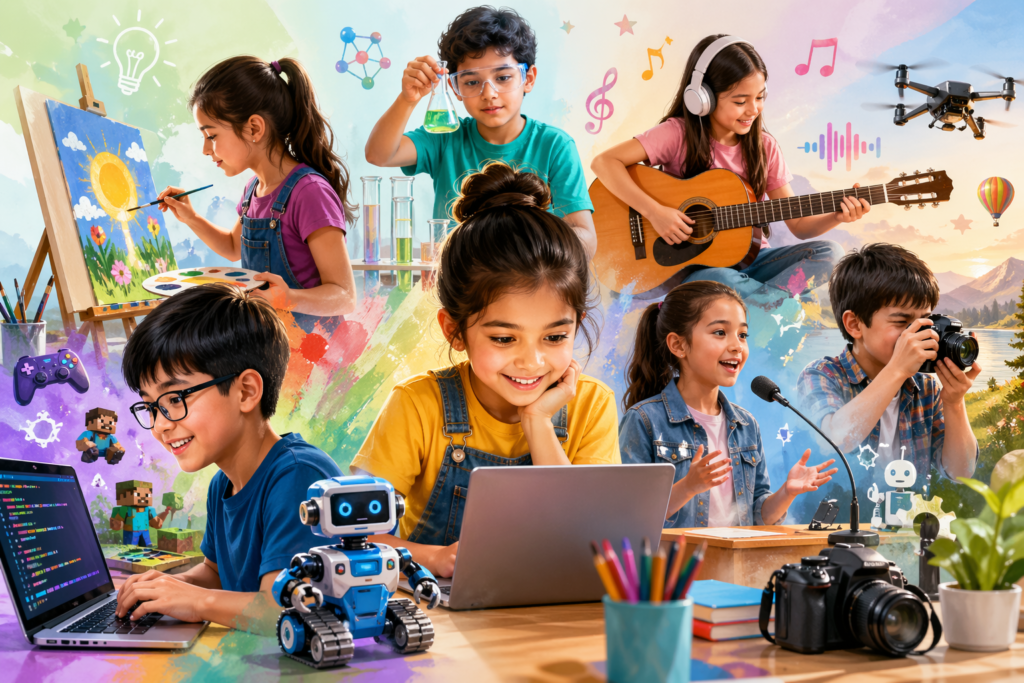
4. Can children really learn skills like coding or AI online?
Yes. Many courses use interactive projects, games, and guided lessons that make complex topics easier for children to understand.
5. How long should an online class be for kids?
Short sessions work best. Classes between 30 and 60 minutes usually keep children focused and engaged.
6. Do kids need special equipment for these courses?
Most courses only require a computer or tablet with internet access. Some programmes like robotics or science experiments may suggest simple kits.
7. How can parents keep online learning balanced?
Combine online classes with outdoor play, reading, hobbies, and family activities so summer still feels relaxed and fun.
Summer holidays are a rare time when children have the freedom to explore ideas beyond school subjects. The right online courses for kids during summer holidays can turn boredom into creativity and curiosity into real skills. Whether a child learns to code a game, design a robot, create artwork, or understand artificial intelligence, these experiences help shape confident and curious learners for the future.
Subscribe to The Junior Age Newspaper – click here. Know more fun facts on The Junior Age’s YouTube!