
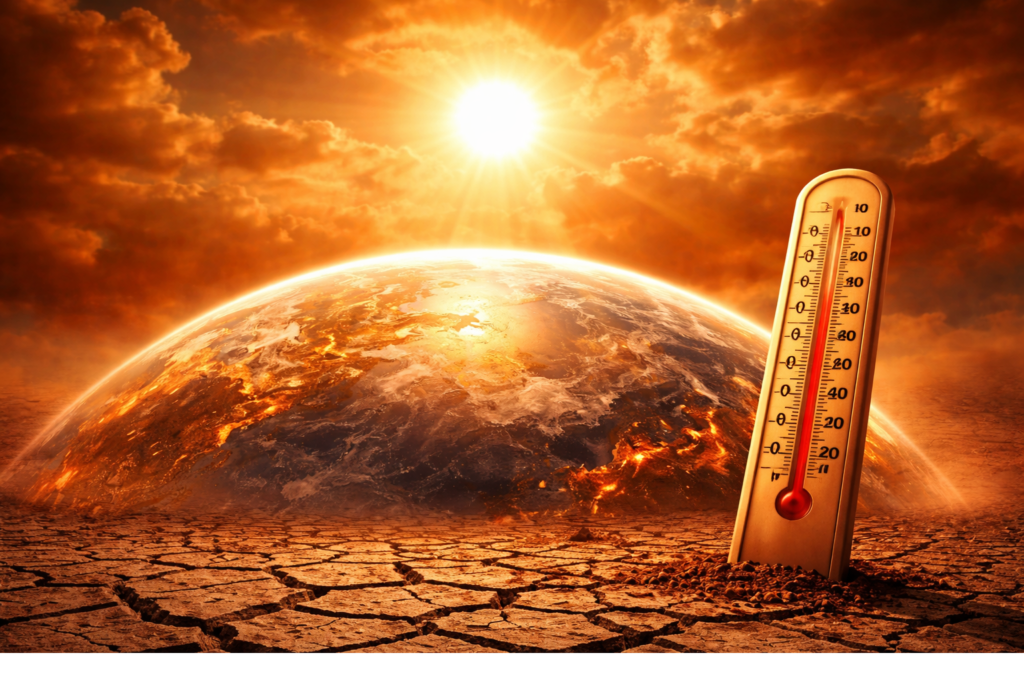
Weather shapes our everyday lives in quiet but powerful ways. It decides how hot playgrounds feel, how strong monsoons become, and how often heatwaves make headlines. Scientists confirmed something important about our planet’s health. 2025: the third-warmest year ever recorded has officially entered the climate history books, reminding the world that rising temperatures are no longer distant warnings but a present-day reality. While 2025 did not break the all-time heat record, it stayed alarmingly close, continuing a clear warming trend that scientists have been tracking for decades.
2025 confirmed as the third-warmest year ever recorded:
According to climate scientists at the European Centre for Medium-Range Weather Forecasts, 2025 ranked as the third-warmest year globally since records began. The findings were confirmed through the Copernicus Climate Change Service, which analyses billions of climate data points every year.
Global average temperatures in 2025 remained well above pre-industrial levels. Prolonged heatwaves affected large parts of Asia, Europe, and North America. Oceans also recorded unusually high surface temperatures, contributing to stronger storms and disrupted marine ecosystems. Scientists explain that this warming is mainly driven by human-caused greenhouse gas emissions, combined with natural climate patterns that can temporarily raise global heat levels.
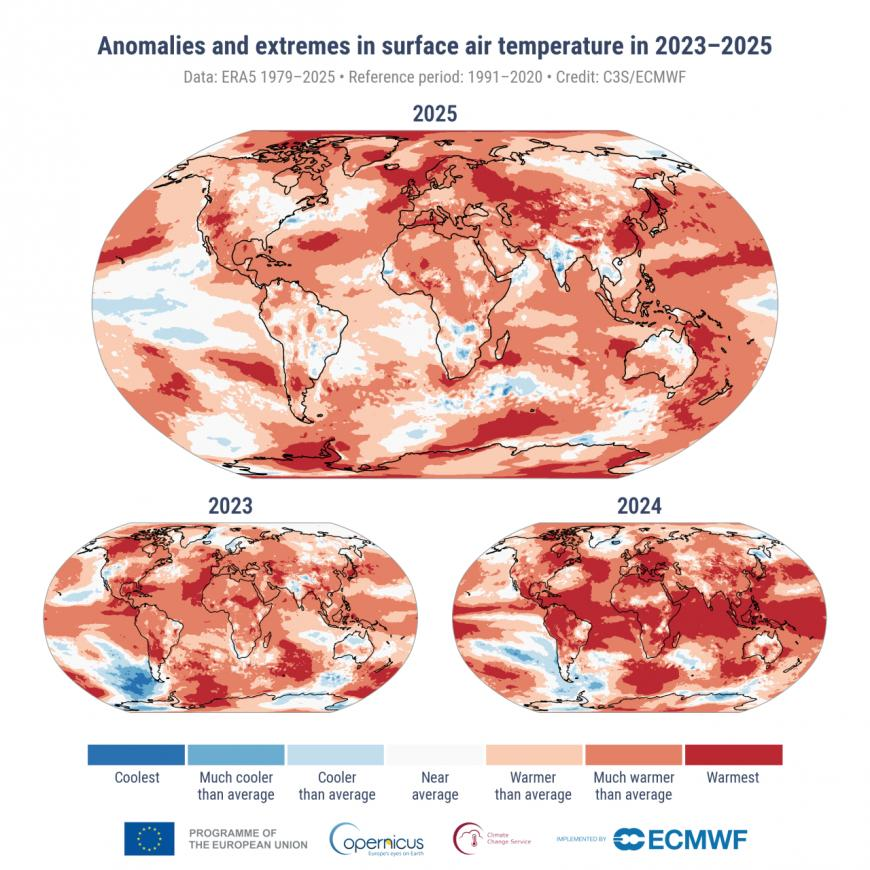
Why was 2025 so warm?
Several factors came together to push global temperatures higher in 2025. Greenhouse gases like carbon dioxide continued to trap heat in the Earth’s atmosphere. Warmer oceans released additional heat into the air, while reduced ice cover reflected less sunlight back into space. Climate researchers also point out that warmer years now occur more frequently than cooler ones. In fact, most of the warmest years on record have all happened since 2010. This pattern helps scientists understand how climate change is accelerating rather than slowing down. The data collected by Copernicus and other climate agencies is crucial for governments, schools, and communities. It helps improve weather forecasting, disaster planning, and long-term climate solutions.
Did you know? Scientists use thousands of weather stations, and even combine data from many sources, including satellites and ocean sensors, to measure Earth’s average temperature.
Subscribe to The Junior Age Newspaper – click here. Know more fun facts on The Junior Age’s YouTube!