
Around the world, billions of people still struggle to access safe drinking water and proper sanitation facilities. In many communities, children walk long distances to collect water that may not even be clean enough to drink. Dirty water, poor hygiene, and unsafe toilets continue to spread diseases and affect education, health, and daily life. Water is one of the most important resources on Earth. Every person, animal, and plant depends on it to survive. Yet rivers, lakes, groundwater, and oceans are increasingly under threat from pollution, waste, and overuse. Without clean water and safe sanitation systems, communities face serious health risks, economic difficulties, and environmental damage. Access to clean water is not only a basic human need but also a human right recognised by the United Nations. To help solve this global challenge, the United Nations created Sustainable Development Goal 6 as part of the 17 Sustainable Development Goals adopted in 2015. Sustainable Development Goal 6 focuses on ensuring clean water and sanitation for all people by 2030. Let’s read about it.
SDG 6: Clean Water and Sanitation For All
What are the Sustainable Development Goals?
The Sustainable Development Goals are 17 global goals adopted by all United Nations member countries in 2015. These goals aim to make the world fairer, safer, healthier, and more sustainable by the year 2030. The 17 goals focus on important world issues such as:
- Poverty
- Hunger
- Education
- Clean water
- Climate change
- Gender equality
- Peace and justice
Each goal focuses on solving a different global problem. Together, the goals encourage countries, organisations, schools, businesses, and individuals to work towards a better future for people and the planet.
Sustainable Development Goal 6 focuses specifically on clean water and sanitation. It aims to ensure that every person has access to safe drinking water, hygienic sanitation facilities, and better water management systems.
Read more about 17 Sustainable Development Goals Explained: How The World Plans A Better Future By 2030
Sustainable Development Goals – Goal 6
United Nations created Sustainable Development Goal 6 to ensure the availability and sustainable management of water and sanitation for all people by 2030. The goal recognises that clean water is essential for health, education, food production, economic growth, and environmental protection.
The main purpose of Sustainable Development Goal 6 is to improve access to safe drinking water, proper toilets, hygiene facilities, and clean freshwater systems. It also focuses on reducing water pollution, increasing water-use efficiency, protecting rivers and wetlands, and encouraging responsible water management.
This goal is globally important because water affects nearly every part of human life. Hospitals need clean water for healthcare. Schools need safe toilets and handwashing stations. Farmers rely on water for crops and livestock. Industries need water for manufacturing and energy production. Healthy ecosystems also depend on freshwater sources to support wildlife and biodiversity.
Key sectors involved in Sustainable Development Goal 6 include:
- Governments
- Environmental organisations
- Schools and universities
- Public health systems
- Scientists and researchers
- Water management authorities
- Non-governmental organisations
- Local communities
Read about – Sustainable Development Goal 4: Equal Learning Opportunities For All
Why is Sustainable Development Goal 6 important?
Sustainable Development Goal 6 is important because clean water and sanitation directly affect people’s health and quality of life. Unsafe drinking water can spread dangerous diseases such as cholera, diarrhoea, and typhoid. According to the World Health Organization and the United Nations Children’s Fund, billions of people worldwide still lack safely managed drinking water or sanitation services.
Children are especially affected by water shortages and poor sanitation. In some regions, children miss school because they must collect water for their families. Schools without proper toilets and hygiene facilities can also make learning difficult and unsafe, particularly for girls.
Water problems also affect the environment and economy. Polluted rivers harm fish and wildlife. Droughts reduce crop production and increase food insecurity. Floods can damage homes, roads, and farmland. As populations grow and climate change intensifies, managing water resources responsibly is becoming even more important.
Some major global challenges linked to SDG 6 include:
- Water pollution from factories and waste
- Droughts caused by climate change
- Lack of sanitation systems in rural areas
- Overuse of groundwater resources
- Poor wastewater treatment
- Unequal access to clean drinking water
And, read more about – Sustainable Development Goal 2: Ending Hunger For A Better Future
Main targets of SDG 6
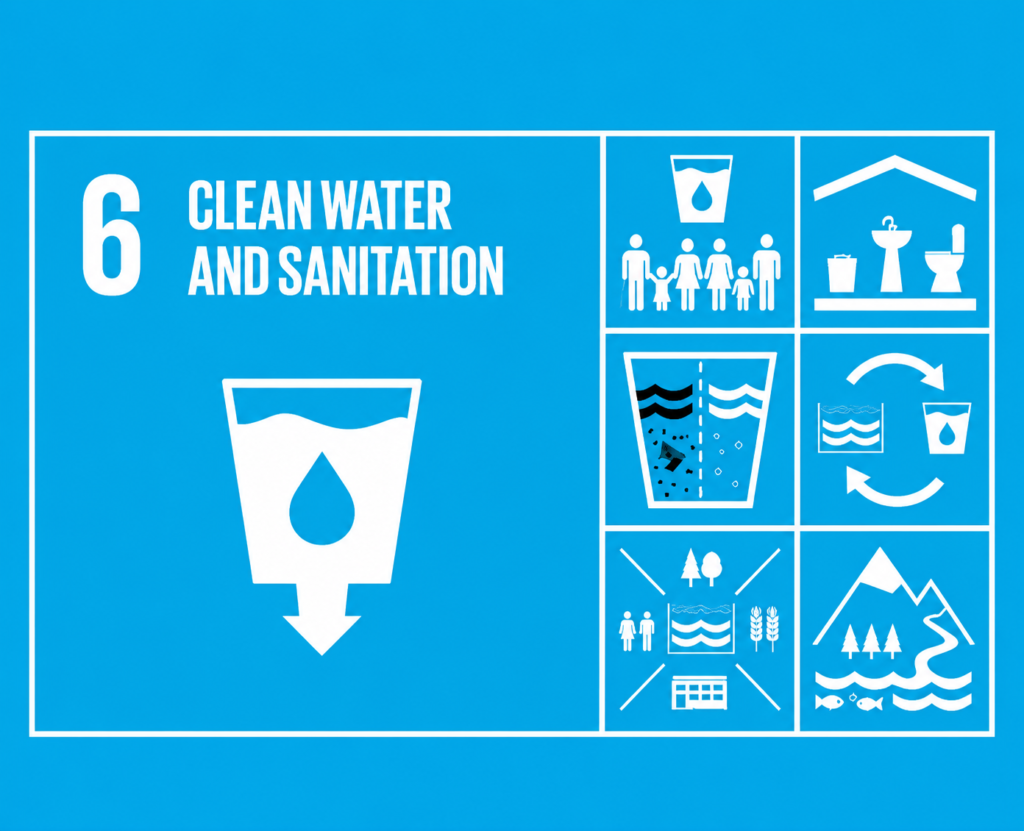
Sustainable Development Goal 6 includes several official United Nations targets that guide countries and organisations towards improving water access, sanitation, hygiene, and water sustainability.
1. Safe and affordable drinking water
This target aims to ensure that everyone has access to safe and affordable drinking water. It focuses on improving water supply systems and protecting water sources.
2. End open defecation and improve sanitation
This target works towards providing proper sanitation and hygiene facilities for all people. It also aims to end open defecation and improve public health conditions.
3. Improve water quality and reduce pollution
This target encourages countries to reduce dumping, chemical pollution, and untreated wastewater in rivers, lakes, and oceans. Cleaner water helps protect both people and nature.
4. Increase water-use efficiency
This target focuses on using water more carefully in homes, farming, and industries. It promotes sustainable water use to prevent shortages in the future.
5. Integrated water resources management
This target encourages countries to manage water resources in a coordinated and sustainable way. It supports cooperation between regions and communities sharing water systems.
6. Protect water-related ecosystems
This target aims to protect rivers, wetlands, forests, lakes, and groundwater systems. Healthy ecosystems are important for maintaining clean and reliable water supplies.
7. Expand international cooperation and support
This target encourages countries and international organisations to support water and sanitation projects through funding, technology, and training.
8. Strengthen local community participation
This target promotes the involvement of local communities in improving water and sanitation management. Community participation helps create long-term solutions.
Also, read about – All About Sustainable Development Goal 3: Good Health And Well-Being
How are countries trying to improve clean water and sanitation?
Countries and organisations around the world are working in different ways to achieve Sustainable Development Goal 6.
Government actions
- Building pipelines, reservoirs, and sanitation systems
- Introducing laws to reduce water pollution
- Expanding wastewater treatment plants
- Promoting rainwater harvesting and water conservation
International organisations
- The United Nations supports global water programmes and awareness campaigns
- UNICEF helps schools and communities improve hygiene and sanitation
- The World Bank funds water and sanitation projects in developing countries
Schools and communities
- Schools teach children about handwashing and hygiene
- Communities organise river-cleaning drives and water-saving campaigns
- Local groups help repair wells and water pumps
Scientists and technology experts
- Developing water purification technologies
- Creating smart irrigation systems for farming
- Using satellites and data to monitor droughts and water quality
Non-governmental organisations
Many NGOs work with rural and vulnerable communities to improve access to clean water, build toilets, and spread awareness about hygiene and sanitation.
What can children do to help?
Children can also play an important role in protecting water and supporting Sustainable Development Goal 6.
- Turn off taps while brushing teeth
- Avoid wasting drinking water
- Report leaking taps or pipes
- Use water carefully during bathing and cleaning
- Learn about water conservation in school
- Participate in local clean-up drives
- Encourage friends and family to save water
- Avoid throwing rubbish into rivers or drains
- Reuse water when possible for gardening or plants
Small actions by millions of people can make a big difference in protecting water resources for future generations.
Frequently asked questions about SDG Goal 6
- What does SDG stand for?
SDG stands for Sustainable Development Goals. These are 17 global goals created by the United Nations.
- What is Sustainable Development Goal 6 about?
Sustainable Development Goal 6 focuses on ensuring clean water and sanitation for everyone by 2030.
- Why is clean water important?
Clean water is important for drinking, cooking, farming, hygiene, healthcare, and protecting the environment.
- What is sanitation?
Sanitation refers to safe toilets, sewage systems, waste management, and hygiene facilities that help keep communities healthy.
- How does climate change affect water?
Climate change can increase droughts, floods, and water shortages, making access to clean water more difficult in many regions.
- Can children help save water?
Yes. Children can save water at home, spread awareness, and develop good habits that protect water resources.
- Why do some people still lack clean water?
Some communities face poverty, poor infrastructure, pollution, droughts, or limited government support, making clean water difficult to access.
- What happens if water pollution increases?
Water pollution can harm human health, damage ecosystems, reduce safe drinking water supplies, and affect farming and wildlife.
Also read – Sustainable Development Goal 5: Know All About Gender Equality
Subscribe to The Junior Age Newspaper – click here. Know more fun facts on The Junior Age’s YouTube!