
Gender inequality continues to affect millions of people across the world every day. In many countries, girls are still denied equal access to education, healthcare, sports, leadership opportunities, and even basic safety. Women and girls often face discrimination at home, in schools, workplaces, and public spaces simply because of their gender. These inequalities can limit opportunities, reduce income, increase poverty, and slow down the progress of entire communities. Around the world, governments, schools, charities, and international organisations are working to create fairer opportunities for everyone. Experts believe that when girls and women receive equal rights, societies become healthier, safer, and more successful. This is why the United Nations included Sustainable Development Goal 5 as one of the 17 Sustainable Development Goals adopted in 2015. Sustainable Development Goal 5 focuses on achieving gender equality and empowering all women and girls by 2030. Let’s know about it.
Understanding Sustainable Development Goal 5: Gender equality
What are the Sustainable Development Goals?
The Sustainable Development Goals are 17 global goals adopted by all United Nations member countries in 2015. These goals aim to make the world fairer, safer, healthier, and more sustainable by the year 2030. The 17 goals focus on important world issues such as:
- Poverty
- Hunger
- Education
- Clean water
- Climate change
- Gender equality
- Peace and justice
Each goal focuses on solving a different global problem. Together, the goals encourage countries to work towards a better future for people and the planet. Sustainable Development Goal 5 specifically focuses on achieving gender equality and empowering women and girls everywhere.
Read more about 17 Sustainable Development Goals Explained: How The World Plans A Better Future By 2030
Sustainable Development Goals – Goal 5
Sustainable Development Goal 5 aims to achieve gender equality and empower all women and girls. The goal focuses on ending discrimination, violence, harmful practices, and unequal treatment based on gender. It also supports equal access to education, healthcare, leadership roles, jobs, and economic opportunities.
Gender equality means that all people, regardless of gender, should have the same rights, responsibilities, and opportunities. SDG 5 does not only help women and girls. It benefits families, communities, economies, and future generations as well.
This goal is connected to many important sectors, including:
- Education
- Healthcare
- Employment
- Politics and leadership
- Technology
- Law and justice
- Social welfare
The United Nations believes that true sustainable development cannot be achieved unless women and girls are treated equally and safely across all parts of society.
Read about – Sustainable Development Goal 4: Equal Learning Opportunities For All
Why is Sustainable Development Goal 5 important?
Gender inequality affects millions of people worldwide. In some regions, girls are forced to leave school early, marry at a young age, or work instead of continuing their education. Women may also face unequal pay, limited job opportunities, or violence and harassment.
These problems can affect families and entire countries. When girls cannot study or work safely, economies lose talent and innovation. Children in unequal societies may also face poorer health, lower education levels, and fewer opportunities.
Sustainable Development Goal 5 is important because it helps create fairer societies where everyone can contribute equally. Studies by organisations such as the United Nations and the World Bank show that countries with greater gender equality often experience stronger economic growth, better education outcomes, and improved public health.
Some major global challenges related to gender equality include:
- Child marriage
- Gender-based violence
- Unequal pay
- Limited political representation
- Lack of education for girls
- Workplace discrimination
- Unsafe public spaces
- Limited healthcare access for women and girls
Improving gender equality can help reduce poverty, strengthen communities, and improve opportunities for future generations.
And, read more about – Sustainable Development Goal 2: Ending Hunger For A Better Future
Main targets of SDG 5
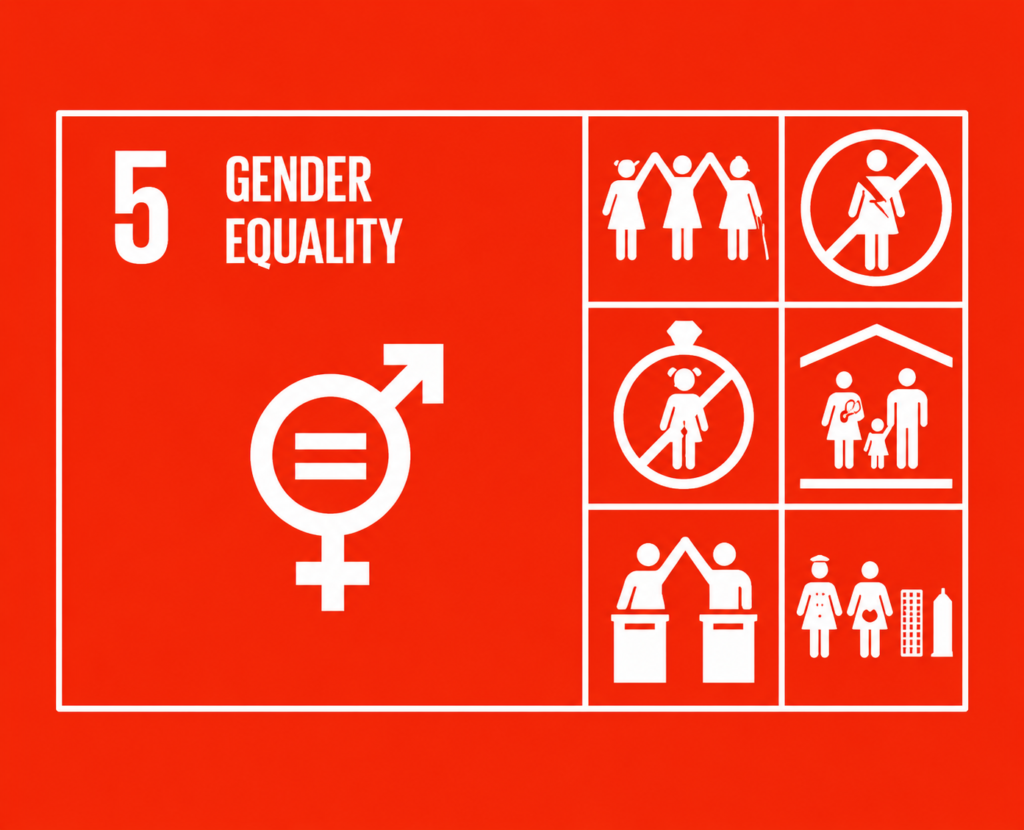
Sustainable Development Goal 5 includes official United Nations targets designed to improve equality and safety for women and girls worldwide.
1. End discrimination against women and girls
This target aims to remove unfair laws, practices, and social barriers that prevent women and girls from having equal rights and opportunities.
2. End violence against women and girls
This target focuses on stopping domestic violence, trafficking, abuse, harassment, and exploitation in both public and private spaces.
3. Eliminate harmful practices
This includes ending child marriage, forced marriage, and female genital mutilation that harm the health and rights of girls and women.
4. Recognise unpaid care and domestic work
This target encourages countries to value household work and caregiving responsibilities often carried out by women and girls.
5. Ensure equal participation in leadership
Women should have equal opportunities to participate in political, economic, and public decision-making roles.
6. Ensure access to reproductive health and rights
This target supports access to healthcare services, education, and information related to reproductive health.
7. Equal rights to economic resources
Women should have equal rights to property, financial services, inheritance, and natural resources.
8. Promote technology for women’s empowerment
This target encourages better access to technology and digital tools for women and girls.
9. Strengthen laws and policies for gender equality
Countries are encouraged to create stronger laws and policies that support equal rights and opportunities.
Also, read about – All About Sustainable Development Goal 3: Good Health And Well-Being
How are countries trying to improve gender equality?
Countries and organisations around the world are taking different steps to support Sustainable Development Goal 5.
Government actions
- Creating laws against discrimination and violence
- Improving girls’ education programmes
- Increasing maternity and workplace protections
- Supporting equal pay policies
International organisations
- The United Nations promotes global gender equality programmes
- UN Women supports women’s rights and leadership projects worldwide
- The World Bank funds education and healthcare programmes for girls and women
Schools and communities
- Encouraging equal participation in sports and leadership
- Teaching respect and inclusion from a young age
- Supporting girls in science, technology, engineering, and mathematics subjects
Scientists and technology experts
- Developing safer digital spaces
- Creating healthcare technologies for women
- Expanding internet access for girls in remote regions
NGOs and charities
Many non-governmental organisations work to protect girls from violence, improve education access, and provide skill training for women.
What can children do to help?
Children can also support gender equality in simple but meaningful ways.
- Treat everyone with fairness and respect
- Speak up against bullying or discrimination
- Encourage equal participation in games, sports, and activities
- Support classmates and friends equally
- Learn about women leaders, scientists, athletes, and inventors
- Avoid gender stereotypes
- Share opportunities fairly with others
- Promote kindness and inclusion in school and at home
Small actions can help create more respectful and equal communities for everyone.
Frequently asked questions about Sustainable Development Goal 5
1. What does SDG stand for?
SDG stands for Sustainable Development Goals. These are 17 global goals created by the United Nations.
2. What is Sustainable Development Goal 5 about?
Sustainable Development Goal 5 focuses on achieving gender equality and empowering all women and girls.
3. Why is gender equality important?
Gender equality helps create fair opportunities, stronger economies, safer communities, and better futures for children and families.
4. Does SDG 5 only help women and girls?
No. Gender equality benefits everyone by creating fairer societies and equal opportunities for all people.
5. What are some examples of gender inequality?
Examples include unequal pay, lack of education opportunities, child marriage, discrimination, and violence against women and girls.
6. How can schools support gender equality?
Schools can provide equal opportunities, encourage respect, support girls’ education, and prevent bullying or discrimination.
7. What year do the Sustainable Development Goals aim to achieve their targets by?
The Sustainable Development Goals aim to achieve their targets by 2030.
8. Which organisation created the Sustainable Development Goals?
The Sustainable Development Goals were adopted by the United Nations in 2015.
Subscribe to The Junior Age Newspaper – click here. Know more fun facts on The Junior Age’s YouTube!