
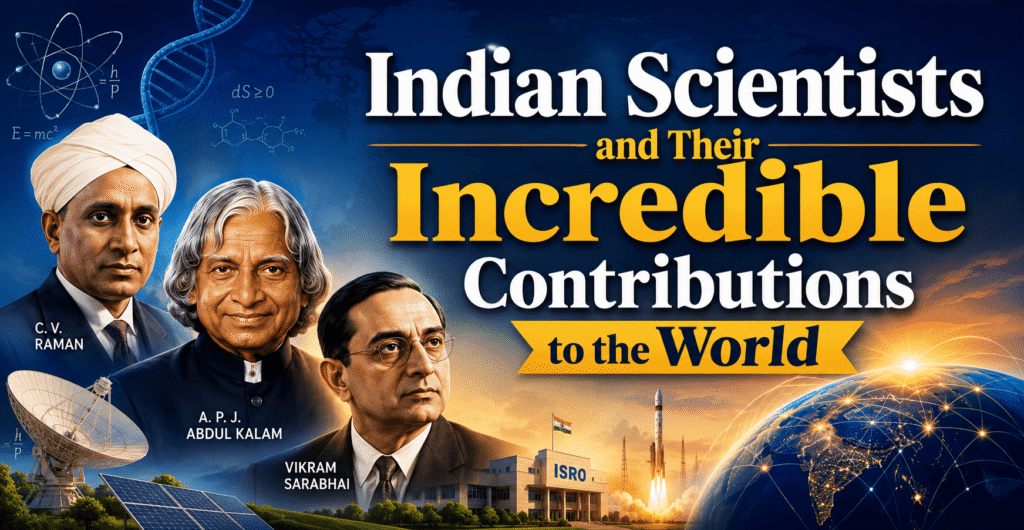
From solving impossible maths problems to unlocking the secrets of stars, DNA and atoms, Indian scientists have made discoveries that changed the way we understand the world. Their ideas have helped shape medicine, agriculture, physics, space exploration and technology, improving millions of lives across the globe.
India has produced some of history’s brightest scientific minds. Many of them overcame challenges, worked with limited resources and dared to ask questions that no one else had answered. Their discoveries continue to inspire students, researchers and innovators today. Take a look at ten remarkable Indian scientists whose groundbreaking work transformed science and left a lasting impact on the world:
Indian Scientists Who Changed the World: Discoveries That Shaped History
1. C. V. Raman: The Indian scientist who discovered why light changes direction
Sir Chandrasekhara Venkata Raman was one of India’s greatest physicists. In 1928, he discovered that when light passes through a transparent material, a small part of it changes its wavelength. This became known as the Raman Effect.
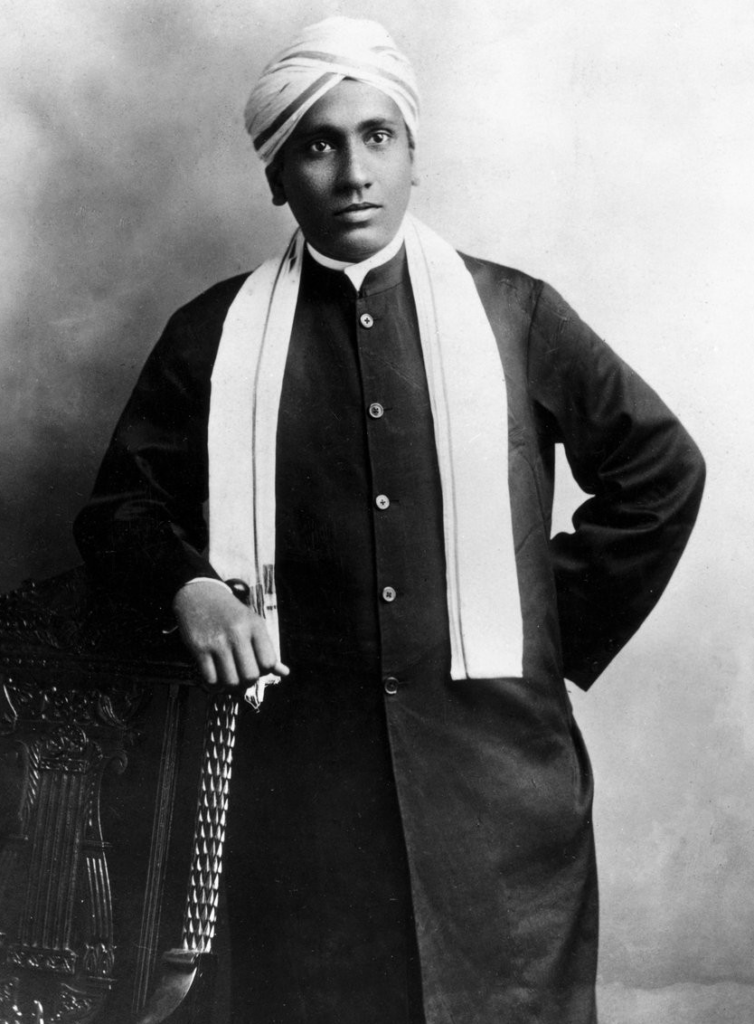
The Raman Effect is now widely used to identify chemicals and materials. It has important applications in:
- Medicine
- Chemistry
- Forensic science
- Environmental research
- Space exploration
Achievement: Won the 1930 Nobel Prize in Physics, becoming the first Asian scientist to receive a Nobel Prize in a science category while working in Asia.
2. Satyendra Nath Bose: The physicist whose work changed quantum science
Satyendra Nath Bose made groundbreaking contributions to quantum mechanics, the branch of physics that explains how tiny particles behave. He worked with Albert Einstein to develop Bose-Einstein statistics, which describe a special group of particles now called bosons, named in his honour.
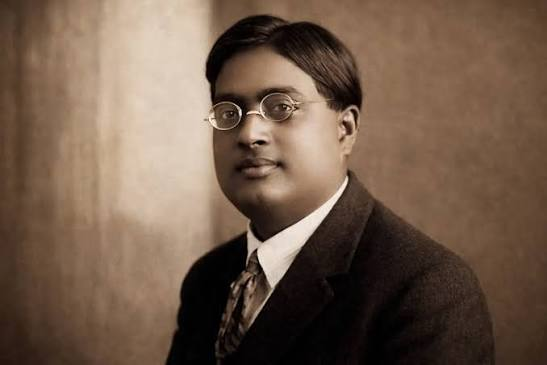
Today, bosons help scientists understand:
- Lasers
- Superconductors
- Particle physics
- The Higgs boson, often called the God Particle
3. Subrahmanyan Chandrasekhar: The scientist who explained how stars live and die
Subrahmanyan Chandrasekhar studied how stars change over billions of years. He discovered the Chandrasekhar Limit, which explains the maximum mass a white dwarf star can have before collapsing into a neutron star or black hole.
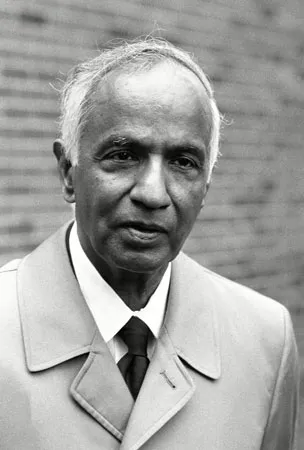
His work helped astronomers understand:
- Stellar evolution
- Black holes
- Supernova explosions
- The life cycle of stars
Achievement: Awarded the 1983 Nobel Prize in Physics.
4. Srinivasa Ramanujan: The mathematical genius who amazed the world
Srinivasa Ramanujan showed extraordinary mathematical talent from a young age, despite having little formal training. He made remarkable discoveries in:
- Number theory
- Infinite series
- Continued fractions
- Mathematical analysis
Many of his formulas are still studied and used today.
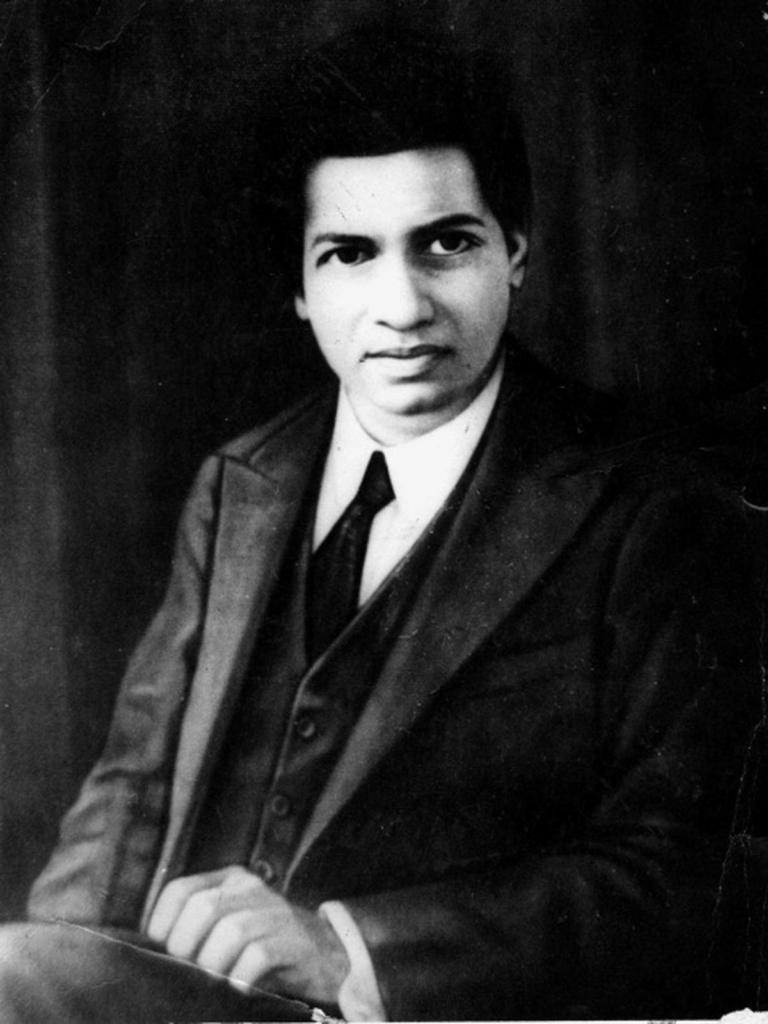
Ramanujan’s work continues to influence:
- Computer science
- Cryptography
- Engineering
- Advanced mathematics
5. A. P. J. Abdul Kalam: The scientist who inspired a nation
Dr A. P. J. Abdul Kalam was an aerospace scientist who played a major role in India’s missile and space programmes.
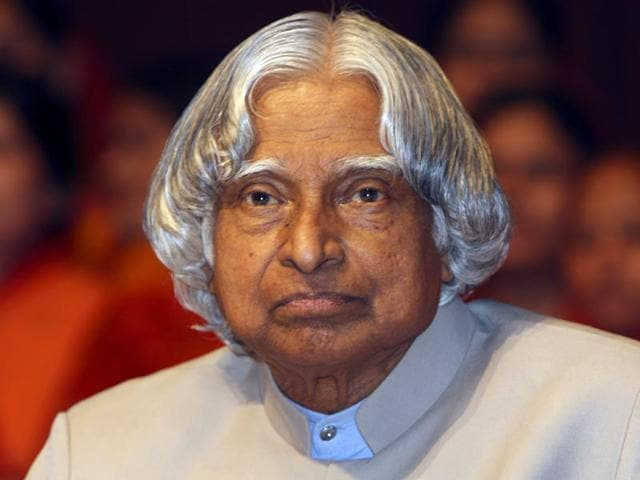
He contributed to the development of:
- Satellite Launch Vehicle (SLV-III)
- Ballistic missile technology
- India’s strategic defence programmes
Later, he became the 11th President of India and was loved as the People’s President.
Beyond science, he inspired millions of students to dream big, work hard and believe in the power of education.
6. Har Gobind Khorana: The Nobel Prize-winning genetic scientist
Har Gobind Khorana helped scientists understand how the genetic code works. His research showed how DNA and RNA direct cells to build proteins, which are essential for life.
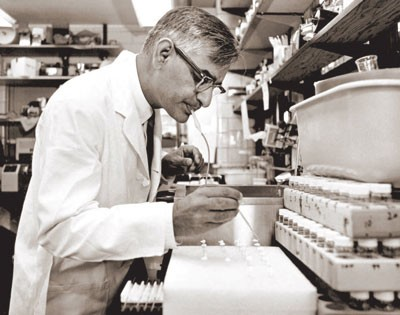
His discoveries advanced:
- Genetics
- Biotechnology
- Medicine
- Modern biology
Achievement: Shared the 1968 Nobel Prize in Physiology or Medicine.
7. Vikram Sarabhai: The father of India’s space programme
Dr Vikram Sarabhai believed that space technology could improve people’s lives. He founded key institutions, including the Indian Space Research Organisation (ISRO), and promoted the use of satellites for communication, education and weather forecasting.
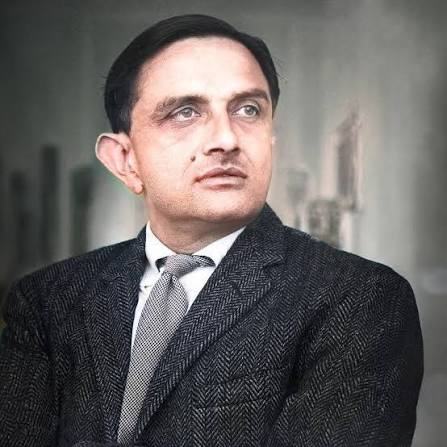
His vision laid the foundation for India’s successful space missions, including:
- Chandrayaan
- Mangalyaan
- Aditya-L1
- Gaganyaan preparations
8. M. S. Swaminathan: The scientist who helped India grow more food
Dr M. S. Swaminathan was an agricultural scientist who played a leading role in India’s Green Revolution. He worked to introduce high-yield crop varieties and modern farming practices, helping increase wheat and rice production.
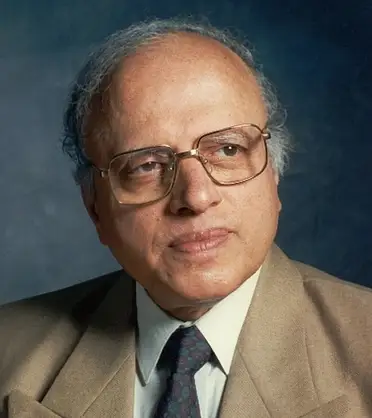
His work helped:
- Improve food security
- Reduce hunger
- Support millions of farmers
- Strengthen India’s agricultural growth
9. Homi J. Bhabha: The pioneer of India’s nuclear science
Dr Homi Jehangir Bhabha is known as the Father of India’s Nuclear Programme. He founded important scientific institutions, including:
- Tata Institute of Fundamental Research (TIFR)
- Bhabha Atomic Research Centre (BARC)
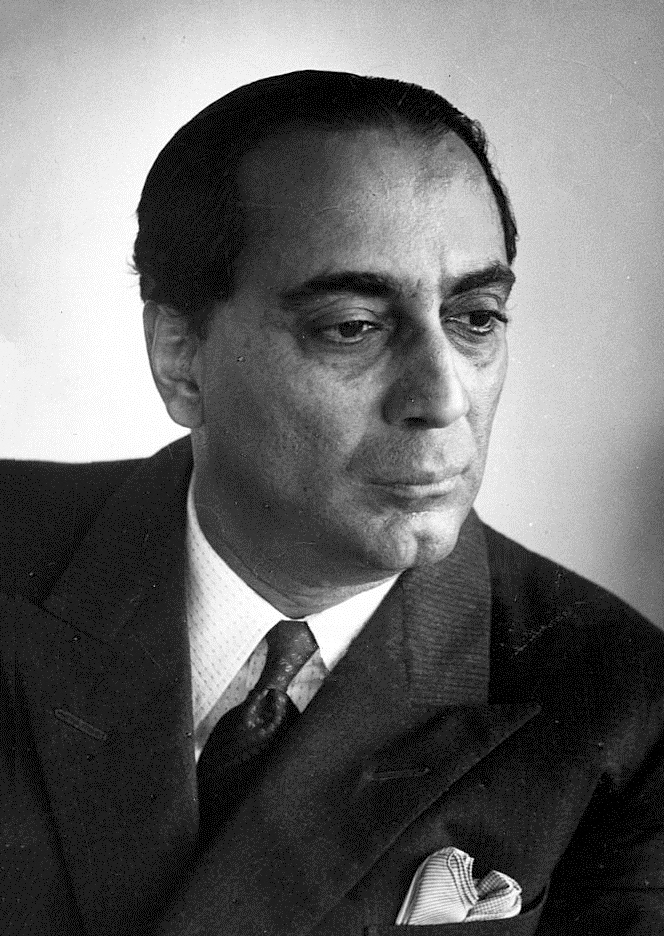
His leadership helped India build a strong foundation in:
- Nuclear research
- Atomic energy
- Scientific education
- Advanced technology
10. Venkatraman Ramakrishnan: The scientist who unlocked one of life’s biggest mysteries
Venkatraman Ramakrishnan studied the ribosome, a tiny structure inside every living cell that builds proteins. Understanding the ribosome has helped scientists develop better medicines and antibiotics.
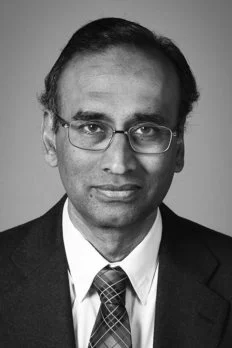
His research has improved our understanding of:
- Human biology
- Disease
- Drug development
- Molecular biology
Achievement: Won the 2009 Nobel Prize in Chemistry.
Did You Know?
- India celebrates National Science Day every year on 28 February to honour C. V. Raman’s discovery of the Raman Effect.
- ISRO, founded under Vikram Sarabhai’s leadership, has become one of the world’s leading space agencies.
- The particle called a boson is named after Satyendra Nath Bose.
- Srinivasa Ramanujan filled notebooks with thousands of mathematical formulas, many of which are still being studied today.
- The Green Revolution helped India become one of the world’s largest producers of wheat and rice.
Also check out: Shrinivas Kulkarni: Indian-Origin Space Scientist Wins UK’s Highest Astronomy Award
FAQs About Indian Scientists
Who is the greatest Indian scientist of all time?
Answer: There is no single greatest Indian scientist. C. V. Raman, Srinivasa Ramanujan, Vikram Sarabhai, A. P. J. Abdul Kalam and Homi J. Bhabha are among India’s most influential scientists because of their remarkable contributions to science and society.
Who was the first Indian scientist to win a Nobel Prize?
Answer: Sir C. V. Raman became the first Indian scientist to win a Nobel Prize in science when he received the Nobel Prize in Physics in 1930 for discovering the Raman Effect.
How many Indian scientists have won Nobel Prizes?
Answer: Several scientists of Indian origin have won Nobel Prizes in scientific fields. These include C. V. Raman (Physics), Har Gobind Khorana (Physiology or Medicine), Subrahmanyan Chandrasekhar (Physics) and Venkatraman Ramakrishnan (Chemistry).
Why are Indian scientists famous around the world?
Answer: Indian scientists are recognised for their discoveries in physics, mathematics, biology, agriculture, medicine, nuclear science and space research. Their work has advanced scientific knowledge and improved lives across the world.
Who is known as the Father of India’s Space Programme?
Answer: Dr Vikram Sarabhai is known as the Father of India’s Space Programme because he laid the foundation for India’s space research and helped establish ISRO.
Who is called the Missile Man of India?
Answer: Dr A. P. J. Abdul Kalam earned the title Missile Man of India for his leadership in developing India’s missile technology and contributing to its space and defence programmes.
Which Indian scientist made India self-sufficient in food production?
Answer: Dr M. S. Swaminathan played a leading role in India’s Green Revolution, helping increase food production through improved crop varieties and modern farming practices.
Which Indian mathematician amazed the world with self-taught discoveries?
Answer: Srinivasa Ramanujan became one of history’s greatest mathematicians despite having little formal training. His work continues to influence mathematics and computer science today.
Who discovered the Raman Effect, and why is it important?
Answer: Sir C. V. Raman discovered the Raman Effect in 1928. It helps scientists identify different substances and is widely used in chemistry, medicine, forensic science and materials research.
How have Indian scientists contributed to modern science?
Answer: Indian scientists have made important contributions to quantum physics, genetics, astronomy, agriculture, mathematics, nuclear energy, molecular biology and space exploration. Their discoveries continue to shape research and technology worldwide.
Also learn all about: The Amazing Inventions & Discoveries with fun Flash Cards
Subscribe to The Junior Age Newspaper – click here. Know more fun facts on The Junior Age’s YouTube!