
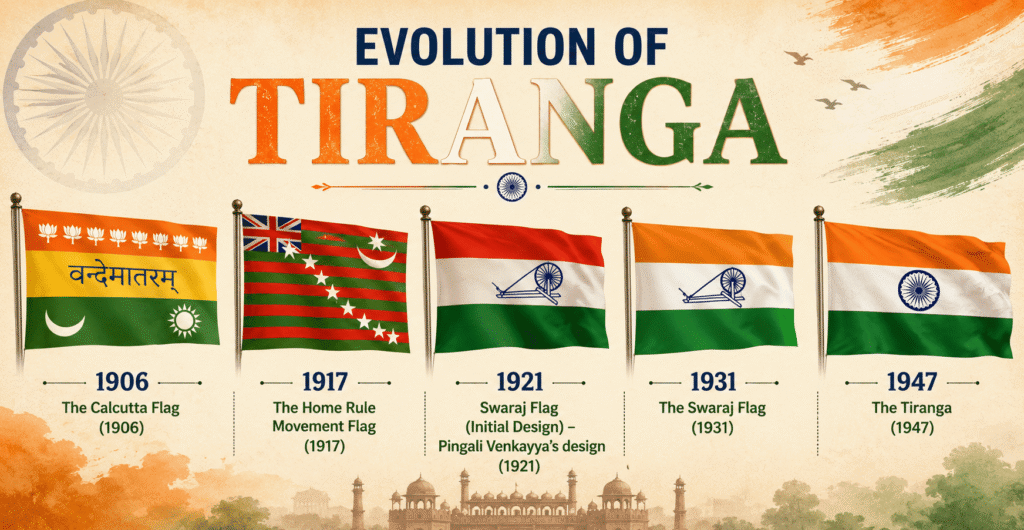
The Tiranga, India’s National Flag, is one of the country’s most respected national symbols. Every time it flutters in the sky, it reminds us of freedom, unity and the sacrifices made by countless freedom fighters. But did you know the Indian flag did not always look the way it does today? Before the Tiranga was officially adopted in 1947, several versions of the flag were created over four decades. Each design reflected India’s growing dream of independence and helped shape the flag we proudly salute today. Let’s explore the fascinating evolution of the Tiranga, understand what its colours mean and discover the story behind the Ashoka Chakra.
The Evolution of the Tiranga
The Calcutta Flag (1906)
The first widely recognised Indian national flag was unfurled on August 7, 1906, at Parsee Bagan Square (now Greer Park) in Kolkata.
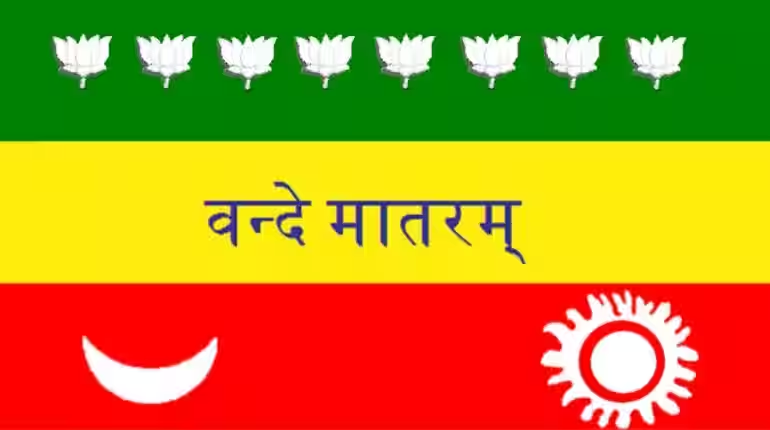
It featured three horizontal stripes of green, yellow and red. The green stripe had eight white lotus flowers, representing the eight provinces of British India. The yellow stripe carried the words Vande Mataram in Devanagari script, while the red stripe displayed a sun and a crescent moon.
In 1907, freedom fighter Bhikaji Cama, along with Vinayak Damodar Savarkar and Shyamji Krishna Varma, displayed a modified version of the Indian flag at the International Socialist Congress in Stuttgart, Germany.
Why was it important?
- It was one of the earliest flags created to represent India.
- It became a symbol of the growing freedom movement.
- It inspired later designs of the national flag.
The Home Rule Movement Flag (1917)
During the Home Rule Movement, Dr Annie Besant and Bal Gangadhar Tilak introduced another flag in 1917.
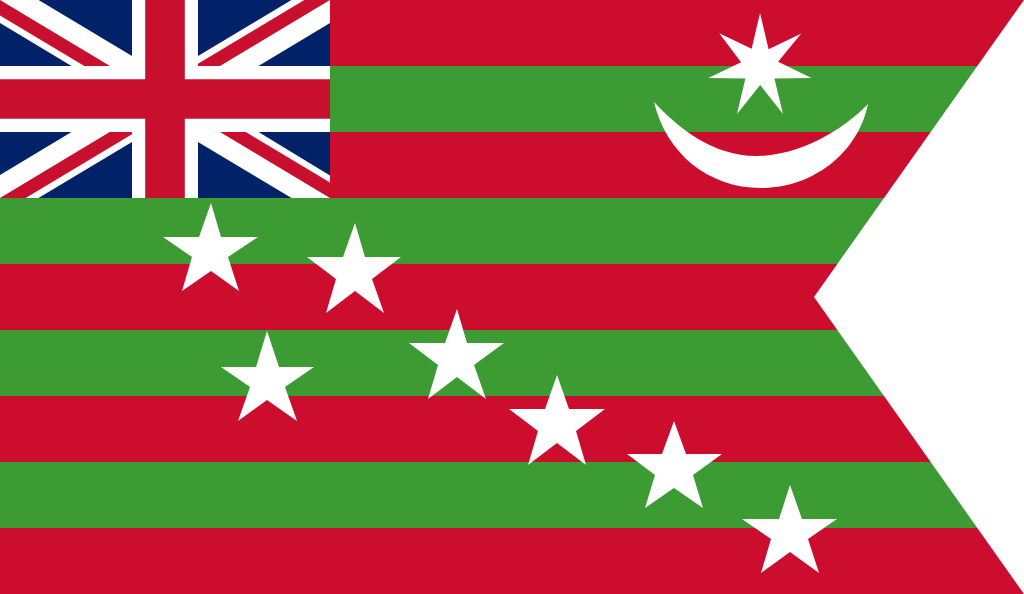
It featured five red and four green stripes, the Union Jack in the top corner, a crescent and star, and seven white stars representing the Saptarishi (Great Bear) constellation.
Why was it important?
- It represented the demand for self-rule.
- It reflected the political movements of the time.
- It paved the way for future national flag designs.
Swaraj Flag (Initial Design) – Pingali Venkayya’s design (1921)
In 1921, freedom fighter and flag designer Pingali Venkayya presented a new flag to Mahatma Gandhi during a Congress meeting in Bezwada (now Vijayawada).
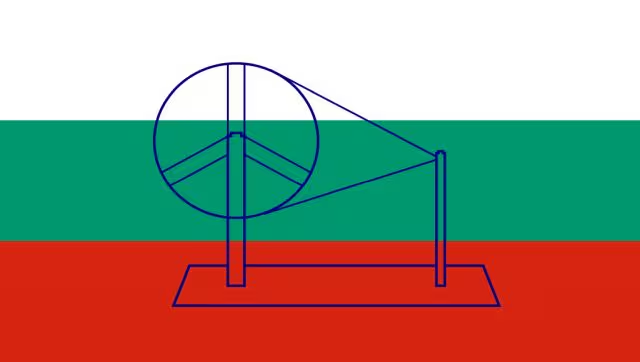
The original design had red and green stripes to represent India’s two major communities. Mahatma Gandhi suggested adding a white stripe to represent all other communities and peace. He also proposed adding a spinning wheel (charkha), symbolising self-reliance and the Swadeshi movement.
Why was it important?
- It introduced the famous three-colour layout.
- The charkha became a symbol of self-reliance.
- It reflected the ideals of unity and equality.
The Swaraj Flag (1931)
In 1931, the Indian National Congress officially adopted a new flag with saffron, white and green horizontal stripes and a blue charkha in the centre.
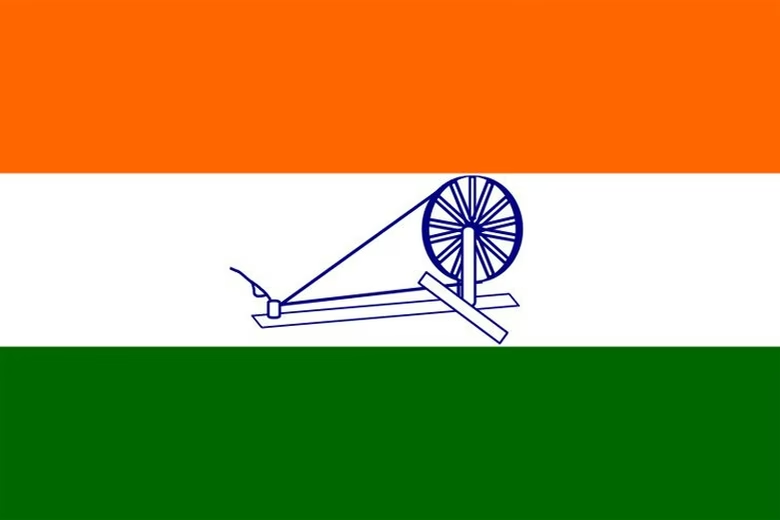
This design is considered the direct predecessor of today’s Tiranga.
Why was it important?
- It removed religious associations from the colours.
- It gave each colour a national meaning rather than representing communities.
- It became the symbol of India’s freedom movement.
The Tiranga (1947)
On July 22, 1947, the Constituent Assembly adopted the present National Flag of India, just weeks before Independence. The biggest change was replacing the charkha with the navy blue Ashoka Chakra, taken from the Lion Capital of Ashoka at Sarnath.
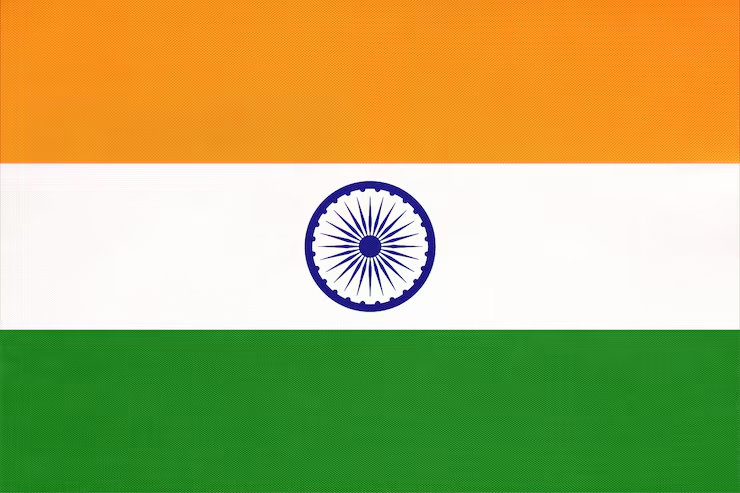
India officially began using the Tiranga on August 15, 1947, when the country became independent.
What do the colours of the Tiranga mean?
The three colours of the National Flag each have a special meaning.
Saffron
- Represents courage and sacrifice.
- Encourages selfless service to the nation.
White
- Symbolises peace, truth and honesty.
- Reminds people to follow the path of justice.
Green
- Represents faith, prosperity and growth.
- Reflects India’s rich land, agriculture and progress.
The story of the Ashoka Chakra
The Ashoka Chakra is the navy blue wheel at the centre of the National Flag. It has 24 equally spaced spokes and is inspired by the Wheel of Dharma found on the Lion Capital of Ashoka at Sarnath.
It replaced the charkha because it represents law, justice, righteousness and continuous progress. The wheel also reminds us that a nation should always keep moving forward.
Why is it important?
- It symbolises progress and positive change.
- It reminds citizens to keep working towards a better future.
- The 24 spokes are often associated with virtues such as courage, patience, kindness, honesty and self-discipline.
Frequently asked questions about the Tiranga
1. Who designed the National Flag of India?
Answer: Pingali Venkayya designed the flag that became the basis of India’s National Flag. The final version with the Ashoka Chakra was adopted by the Constituent Assembly on July 22, 1947.
2. Why does the Tiranga have three colours?
Answer: The saffron, white and green colours represent courage and sacrifice, peace and truth, and faith, prosperity and growth.
3. Why was the charkha replaced by the Ashoka Chakra?
Answer: The Ashoka Chakra was chosen because it symbolises justice, righteousness and continuous progress, making it suitable for a modern democratic nation.
4. What does the Ashoka Chakra represent?
Answer: The 24-spoked wheel represents movement, justice, righteousness and the idea that a nation should always keep progressing.
5. When was the Tiranga adopted?
Answer: The Constituent Assembly adopted the National Flag on July 22, 1947. It first became India’s official flag on August 15, 1947.
6. Why is the Indian flag called the Tiranga?
Answer: The word Tiranga means three colours in Hindi, referring to the saffron, white and green stripes of the National Flag.
7. What is the Flag Code of India?
Answer: The Flag Code of India is a set of rules that explains how the National Flag should be displayed and respected.
You may also like to read:
- National Symbols of India Explained for Kids
- Top 50: The Firsts of India Every Child Should Know!
- Ultimate Patriotic Movies To Watch With Kids
- The Jallianwala Bagh Massacre: A Story Every Child Should Know
- Subhas Chandra Bose: Life, Struggle, and Legacy of Netaji
- All You Need To Know About The Key Figures in India’s Freedom Struggle
- Everything You Need To Know About India’s Republic Day
- Everything You Need To Know About The Constitution Of India
- Independent India’s Historic Milestones
Also, learn all about India with – Exploring India Flash Cards
Subscribe to The Junior Age Newspaper – click here. Know more fun facts on The Junior Age’s YouTube!