
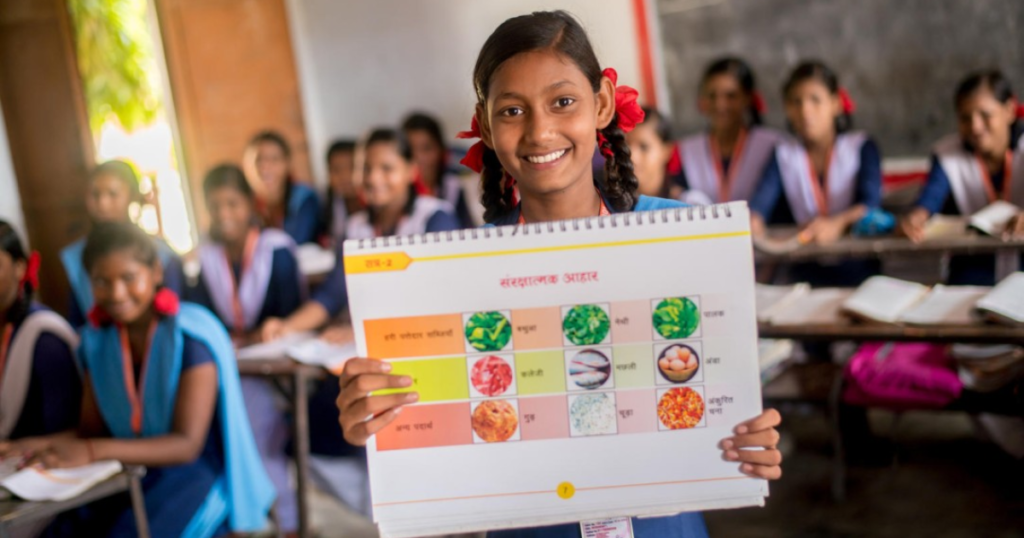
Imagine learning how to read a food label, understand what your body needs and make smarter food choices as part of a regular school lesson. A new set of recommendations in India could make this possible. A policy report led by the Indian Council of Medical Research-National Institute of Nutrition (ICMR-NIN), along with UNICEF India and the Public Health Foundation of India (PHFI), has called for skill-based nutrition education for students in Grades 1 to 12.
Nutrition lessons could come to schools
The recommendations suggest giving students 45–60 minutes of nutrition education each week. Lessons could cover healthy diets, reading food labels, understanding where food comes from and making informed food choices. Schools could also make nutrition learning more practical by using sugar, oil and salt boards to show students how much of these ingredients are found in common foods.
The recommendations go beyond classroom lessons. Schools are also encouraged to provide at least 60 minutes of structured physical activity each day, improve canteens and offer healthier choices such as fruits, sprouts, nuts, buttermilk, millets and whole grains.
The report also suggests regular family nutrition sessions, healthier lunchbox habits and stronger awareness of unhealthy food marketing aimed at children.
Why does this matter?
The recommendations come as India faces a growing problem of childhood overweight and obesity. The World Obesity Atlas 2026 estimates that about 41 million children aged 5–19 in India were living with overweight or obesity in 2025. Of these, around 14 million were living with obesity.
Schools could play an important role because children spend a large part of their growing years there. The report notes that around 246 million children are enrolled in 1.47 million schools across India. The recommendations are proposals, not a new compulsory school subject yet. They suggest that the Union Education Ministry and Health and Family Welfare Ministry issue a joint directive to bring structured nutrition education into school timetables.
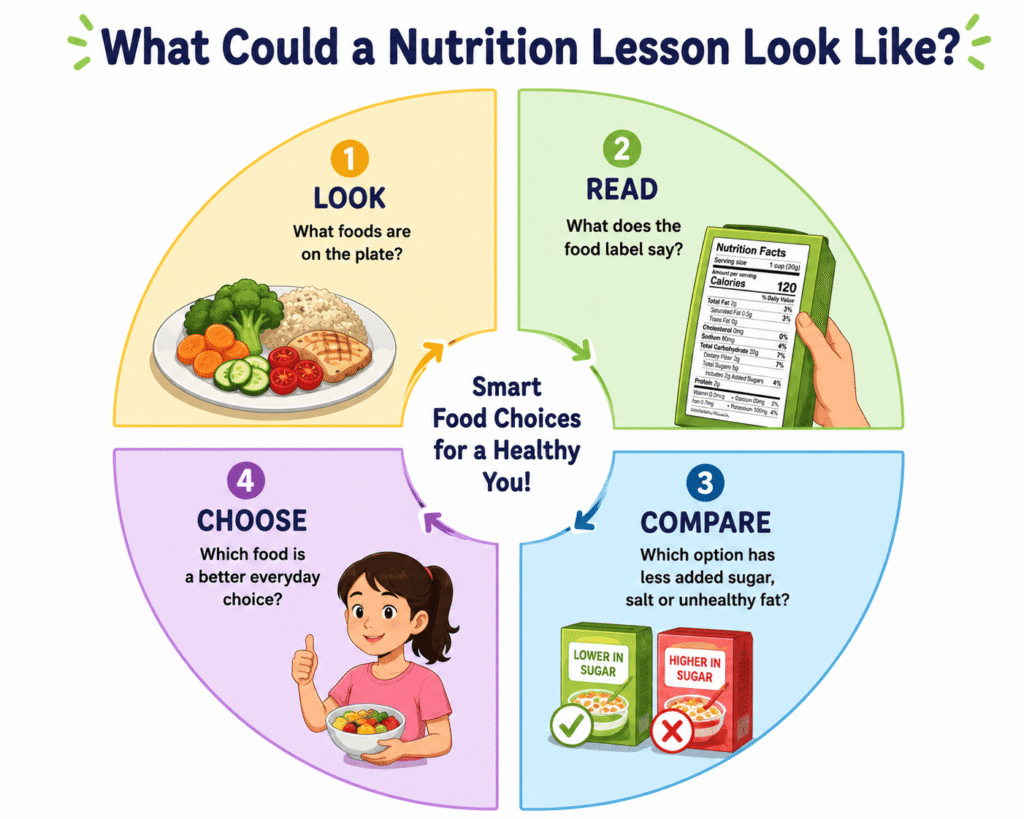
What could students learn?
- Healthy diets: How different foods help the body grow and stay healthy.
- Food labels: How to understand ingredients and nutrition information on packaged foods.
- Food systems: How food travels from farms and producers to our plates.
- Smart choices: How to compare foods and make informed everyday choices.
Healthier food at school
The recommendations also call for changes to school food environments. Canteens could offer more fresh and nutritious choices while reducing fried and packaged foods. Schools could also create healthy snack corners or special healthy meal days. Another recommendation is to make nutritious choices more affordable than unhealthy ones, so students are encouraged to choose them.
Did you know? The recommendations also call for at least 60 minutes of structured physical activity every day for students, including those in Grades 11 and 12.
This story connects with:
Also read:
- WHO Urges Schools Worldwide: Eat Healthy, Stay Strong!
- Heatwave Alert! What Are The Best Summer Foods For Kids?
- CBSE Introduces Posters to Raise Awareness on Oily Food Dangers
- World’s First Junk Food Law
Subscribe to The Junior Age Newspaper – click here. Know more fun facts on The Junior Age’s YouTube!