
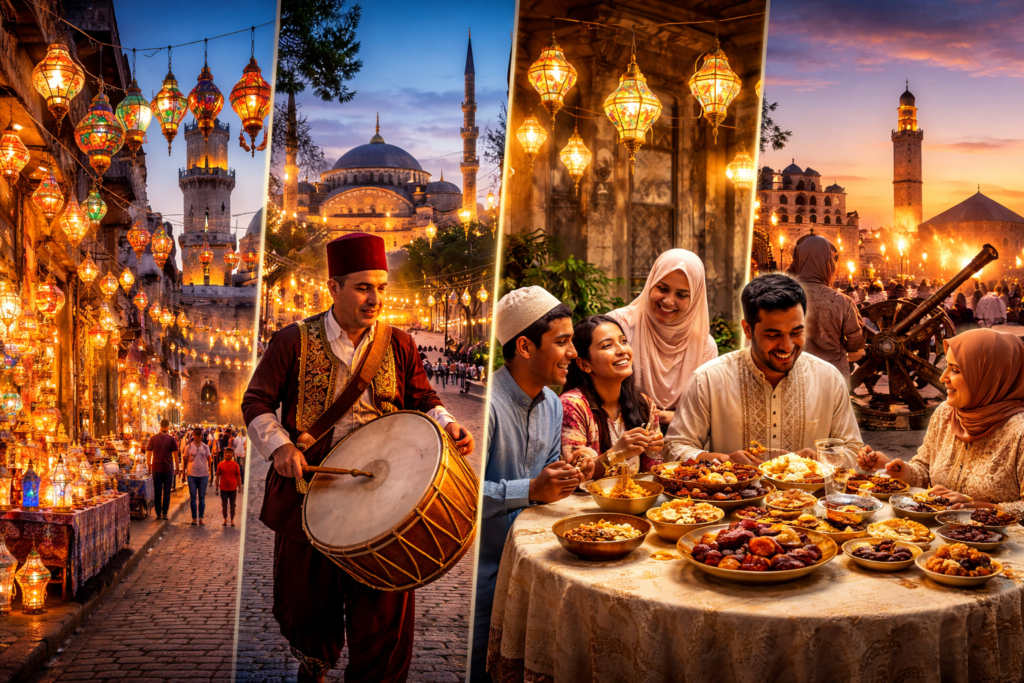
Ramadan around the world is a beautiful reminder that while Muslims share the same faith and fasting practices, every country celebrates the holy month with its own special traditions. From vibrant markets in India to glowing lanterns in Egypt and joyful drum beats in Turkey, Ramadan traditions reflect local culture, food, and community spirit. During Ramadan, Muslims fast from dawn to sunset, offer prayers, and spend time with each other. The families prepare for the month, gather for iftar, and mark the nights can look quite different across regions.
Let’s explore Ramadan celebrations around the world:
India: Vibrant Ramadan markets and community iftar
In India, Ramadan is marked by lively evening markets and community gatherings after sunset. Cities such as Hyderabad, Lucknow, and Old Delhi’s Jama Masjid area become famous for their Ramadan food streets, where families buy dishes like haleem, kebabs, samosas, and dates for iftar. Many mosques and neighbourhood groups also organise community iftar meals, where people from different backgrounds sit together to break the fast, reflecting India’s long tradition of shared culture and hospitality during the holy month.
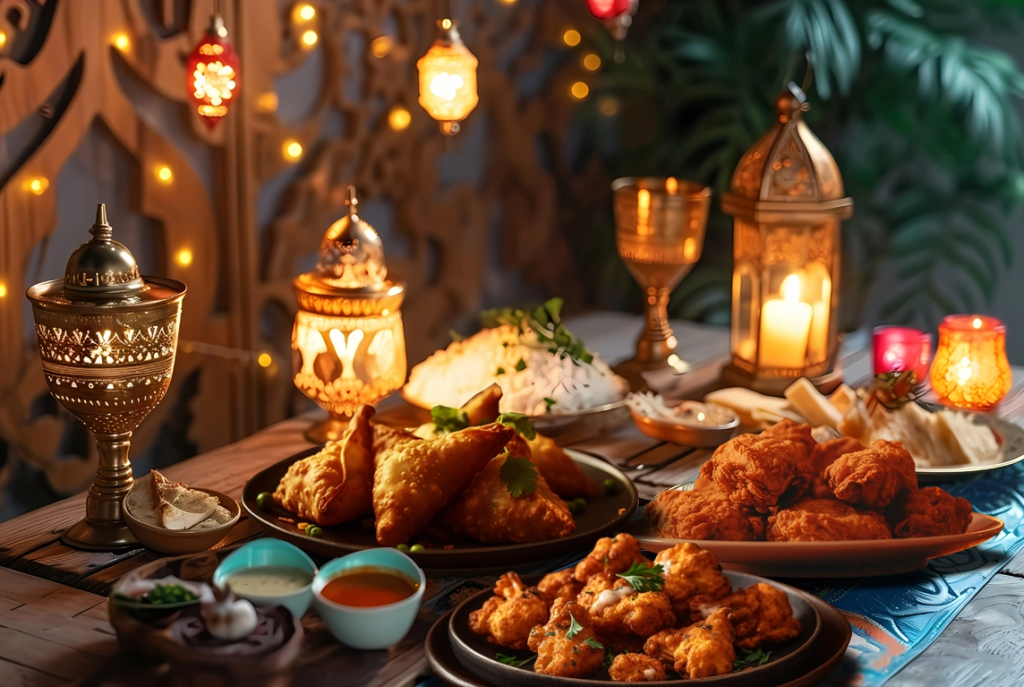
Egypt: Streets glowing with Ramadan lanterns
In Egypt, colourful lanterns called Fanous Ramadan light up homes, markets, and streets during the holy month. This tradition dates back more than a thousand years to the Fatimid Caliphate when lanterns were used to welcome the Caliph in Cairo. Today, children carry bright lanterns while families decorate homes and gather for large iftar meals.
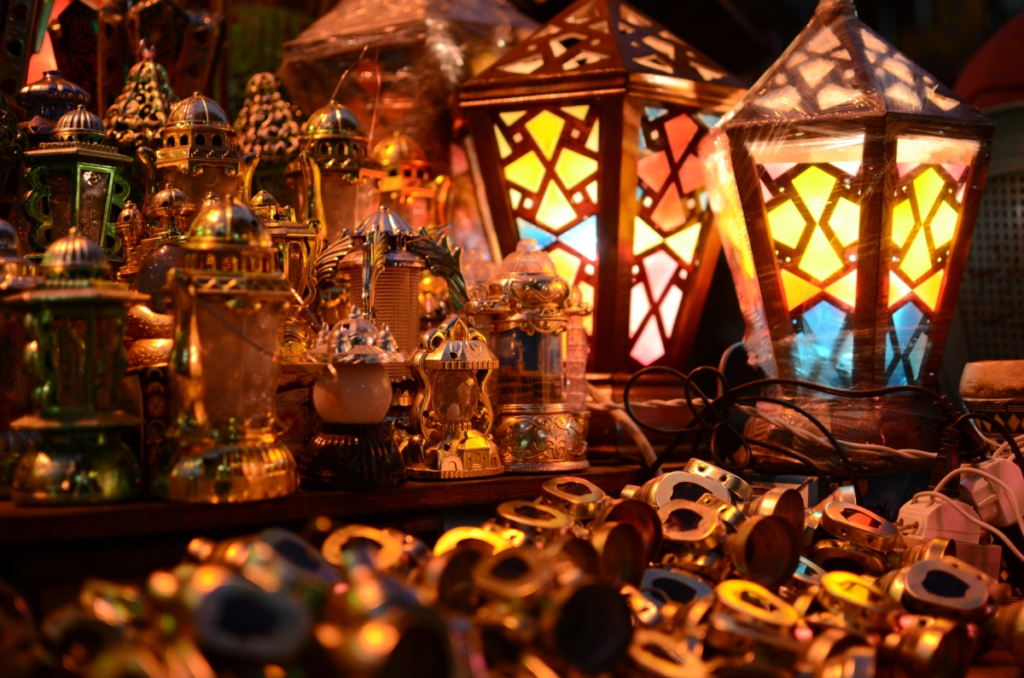
Turkey: Drummers wake people for Sehri
In Turkey, traditional Ramadan drummers walk through neighbourhoods before dawn to wake people for sehri, the early morning meal before fasting begins. This custom goes back to the Ottoman Empire, when drummers were needed before alarm clocks existed. Many drummers still wear traditional Ottoman clothing and greet families with cheerful songs.
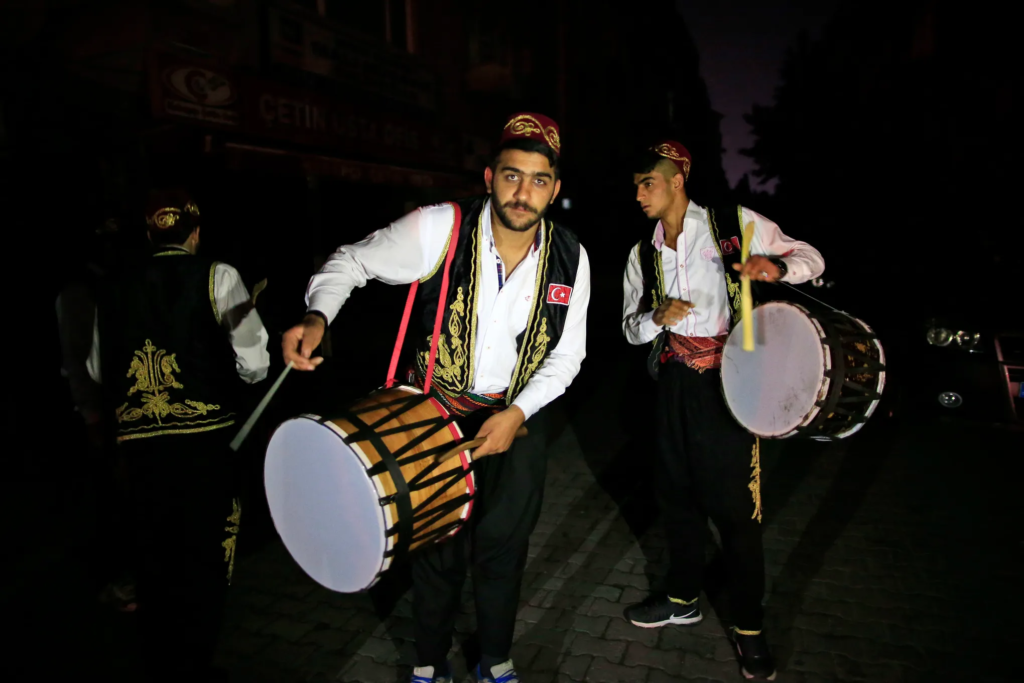
Indonesia: Joyful community traditions
Indonesia, the world’s largest Muslim-majority country, celebrates Ramadan with community events. Before the month begins, many families take part in Padusan, a ritual cleansing bath symbolising spiritual preparation. Large neighbourhood gatherings called bukber short for buka bersama, meaning breaking fast together, are also very popular.

Morocco: Cannon signals sunset
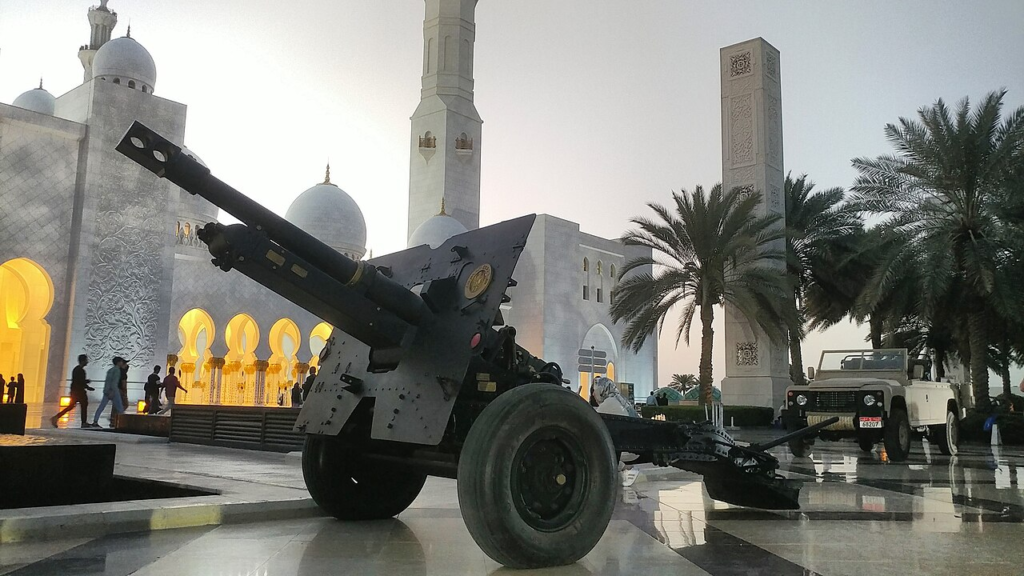
In many Moroccan cities, a Ramadan cannon is fired at sunset to announce the time to break the fast. The tradition began centuries ago during the rule of the Alaouite dynasty. Families then gather for iftar meals that often include dates, soup called Harira, and sweet pastries.
United Arab Emirates: The musaharati tradition
In parts of the United Arab Emirates, a traditional caller known as a musaharati walks through neighbourhoods before dawn. Carrying a drum, he calls out to remind people to wake up for the pre-fast meal. This centuries-old tradition continues in some communities as a cultural symbol of Ramadan.

Although fasting and prayer remain the same everywhere, cultural traditions developed over time through local history, climate, and food habits. These customs make Ramadan around the world both spiritually meaningful and culturally rich. They also highlight a shared value found in every country celebrating Ramadan: gathering with family, helping neighbours, and showing generosity to those in need.
Subscribe to The Junior Age Newspaper – click here. Know more fun facts on The Junior Age’s YouTube!