
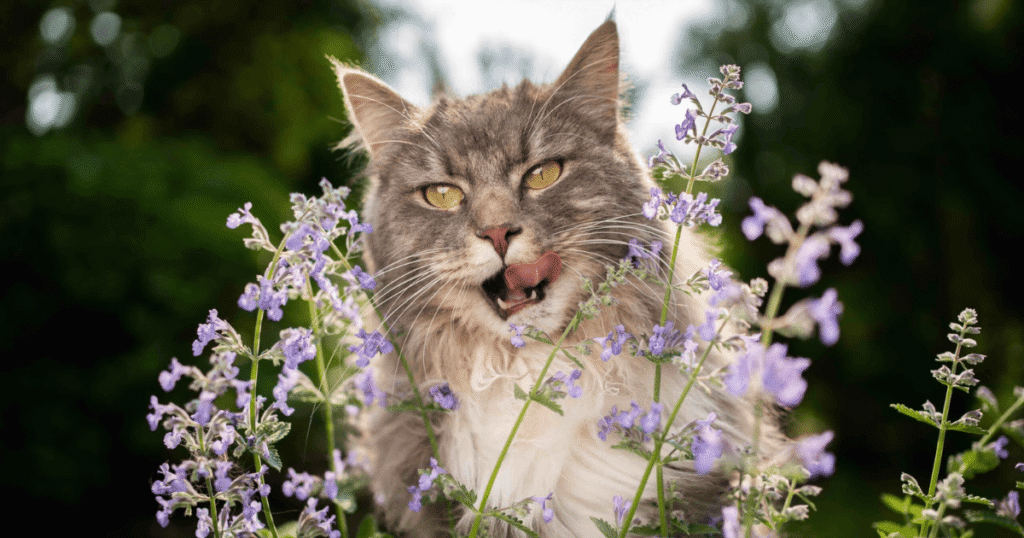
Most people know catnip as the herb that sends cats into a playful frenzy. But scientists have discovered that this ordinary plant could do something far more important. It may help protect people from mosquito bites and save lives in countries where mosquito-borne diseases are common. Researchers in Uganda and Wales have developed a low-cost mosquito repellent made from catnip. The breakthrough could give millions of people a cheaper way to protect themselves from diseases like malaria while also creating new opportunities for local farmers.
Know how catnip became a powerful mosquito repellent to fight malaria:
The study was carried out by scientists from Uganda and Wales and presented at the Society for Experimental Biology Conference in Italy. Researchers tested lotions containing different amounts of nepetalactone, the natural compound found in catnip. They discovered that a lotion containing 6% nepetalactone was highly effective at keeping mosquitoes away during both laboratory experiments and real-world field tests in Uganda.
Today, many mosquito repellents use DEET, one of the world’s most common insect-repelling chemicals. While DEET works well, it can be too expensive for many families and farmers in low-income countries. Catnip, on the other hand, grows easily in Uganda. Its oil can be extracted locally, making it a much more affordable and sustainable option. Scientists hope the new catnip lotion will soon be produced commercially in Uganda, helping both communities and local farmers.
Why this discovery matters:
Mosquitoes spread dangerous diseases, including malaria, which remains one of the world’s deadliest illnesses. According to global health estimates, malaria infected about 282 million people and caused around 610,000 deaths worldwide in 2024. Affordable mosquito protection can play an important role in reducing these numbers.
If the catnip-based repellent becomes widely available, it could help protect millions of people while reducing dependence on costly imported products.
About catnip
Catnip, or Nepeta cataria, is a leafy herb from the mint family. Its leaves and stems contain nepetalactone, a natural compound with two very different effects.
On cats
Many cats become excited when they smell catnip. They may roll around, rub against the plant, purr, jump, or become playful for about 10 to 15 minutes. However, not every cat reacts to catnip. Around 30% to 50% of cats do not respond because the trait is inherited genetically.
On mosquitoes
The same natural compound acts as a mosquito repellent. Instead of attracting insects, it helps keep them away, making catnip a promising plant-based alternative to some chemical repellents. Scientists believe this surprising discovery shows how nature can provide simple solutions to big health challenges.
Also check out: Wild Animals Flash Cards
Did you know?
- Catnip affects many cats, but it naturally repels mosquitoes.
- The same plant that makes cats playful could help protect people from mosquito bites.
- Catnip belongs to the mint family.
- Scientists hope catnip repellent will be made locally in Uganda, creating jobs as well as protecting lives.
Read all about: 40 Rare Species Added To Global Protection List
Subscribe to The Junior Age Newspaper – click here. Know more fun facts on The Junior Age’s YouTube!