
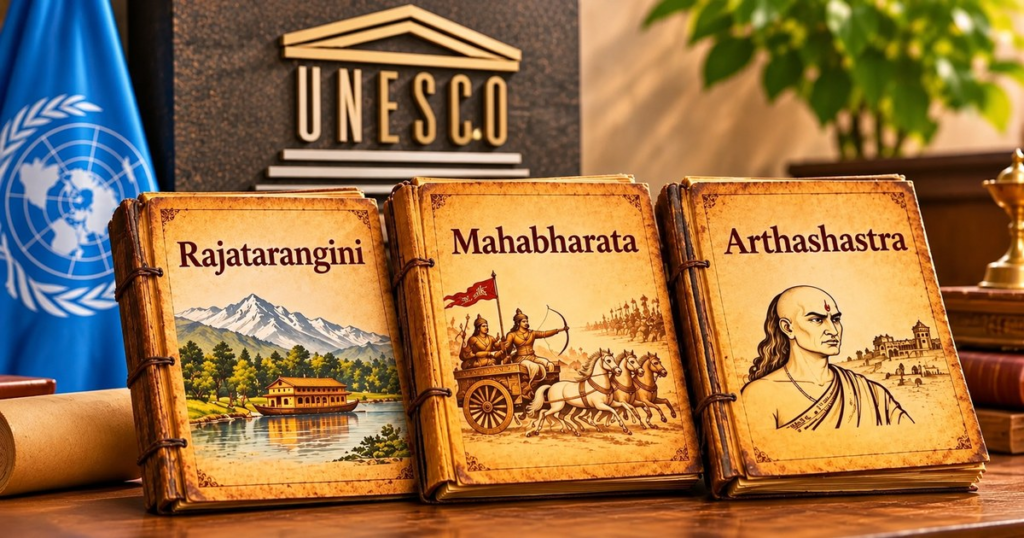
Three important manuscripts from India’s literary and historical heritage have received international recognition. The manuscripts of the Mahabharata, Arthashastra and Rajatarangini were added to UNESCO’s Memory of the World Asia-Pacific Regional Register following a meeting in Jakarta, Indonesia, on 5 November 2026. The recognition celebrates India’s rich history, literature and ancient knowledge. The three manuscripts are preserved in institutions in Pune, Mysuru and Srinagar.
What makes these three manuscripts – Mahabharata, Rajatarangini and Arthashastra special?
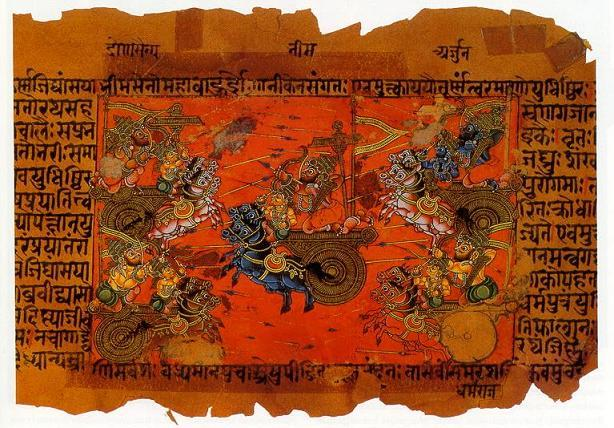
1. Mahabharata: An epic of ancient India
The Mahabharata is one of the world’s longest epic poems. Traditionally attributed to Vyasa, it tells the story of the Pandavas and Kauravas and explores themes such as duty, justice and right and wrong. The recognised manuscript is around 400 years old, written on birch bark in the Sharada script. It is preserved at the Bhandarkar Oriental Research Institute in Pune, Maharashtra.
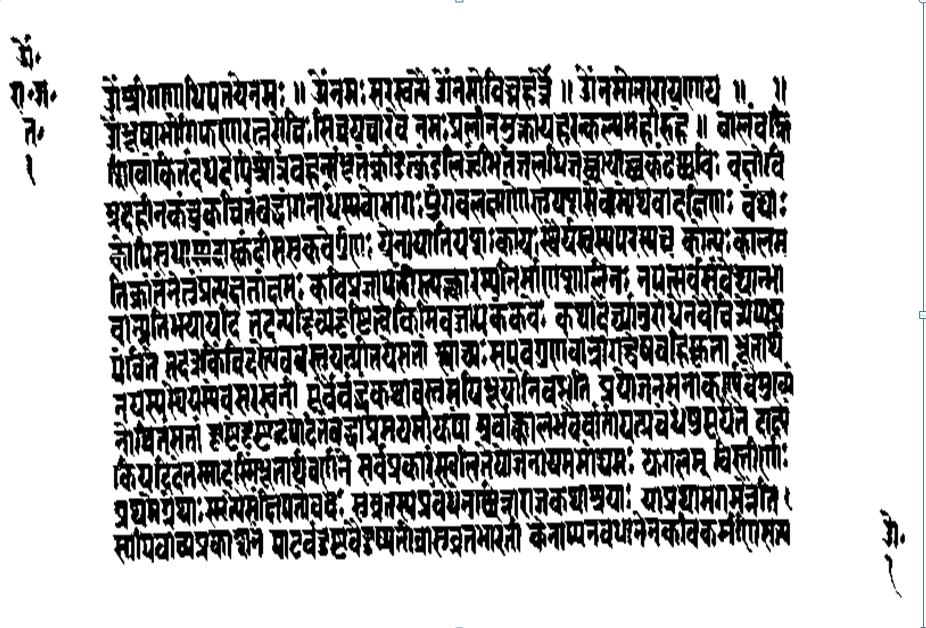
2. Arthashastra: A guide to governance
Traditionally attributed to Kautilya, also known as Chanakya, the Arthashastra is an ancient Sanskrit text about governing a kingdom. It discusses economics, administration, diplomacy, law and military strategy. The recognised manuscript dates back to the 16th century. Written on palm leaves in the Grantha script, it is preserved at the Oriental Research Institute in Mysuru, Karnataka.
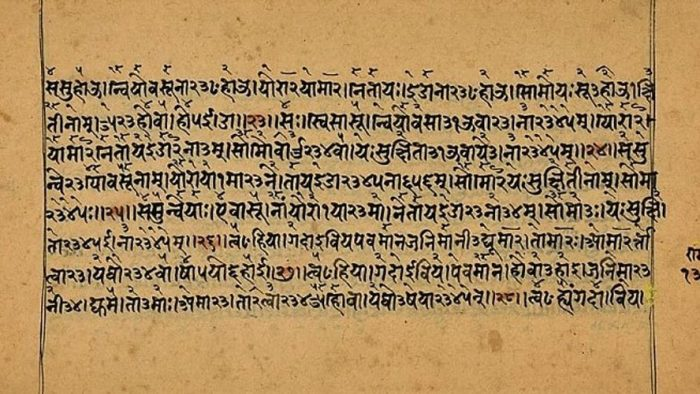
3. Rajatarangini: The history of Kashmir
Written by the 12th-century historian Kalhana, Rajatarangini records the lives and reigns of Kashmir’s kings and rulers. It is an important historical account of the region’s political and cultural past. The recognised manuscript is written in the Sharada script on old Kashmiri paper. It is preserved at the Oriental Research Library in Srinagar.
What is UNESCO’s Memory of the World Register?
Launched in 1992, UNESCO’s Memory of the World Programme aims to protect important documentary heritage, including rare manuscripts, books, maps, photographs and historical records. With these three additions, India now has six entries in UNESCO’s Asia-Pacific Regional Register. The recognition highlights the importance of preserving historical documents so future generations can learn from them.
Frequently asked questions
1. Which three Indian manuscripts received UNESCO recognition in 2026?
The manuscripts of the Mahabharata, Arthashastra and Rajatarangini were added to UNESCO’s Memory of the World Asia-Pacific Regional Register.
2. Who wrote the Arthashastra?
The Arthashastra is traditionally attributed to Kautilya, also known as Chanakya or Vishnugupta. It explains ancient ideas about administration, economics and governance.
3. Who was Kalhana?
Kalhana was a 12th-century Sanskrit historian who wrote Rajatarangini. His work records the history of Kashmir’s rulers and important events in the region.
4. What is the Sharada script?
Sharada is an ancient writing system that was used in parts of northern India, particularly Kashmir. It was used to write Sanskrit and other languages.
5. Why does UNESCO recognise historical manuscripts?
Historical manuscripts preserve knowledge, stories, languages and records from the past. UNESCO’s recognition encourages their protection and helps more people learn about their historical importance.
Did you know? The Arthashastra discusses ideas such as taxation, trade, diplomacy, espionage and city planning. It offers a fascinating glimpse into how kingdoms were organised in ancient India.
Also read about: Independent India’s Historic Milestones
Subscribe to The Junior Age Newspaper – click here. Know more fun facts on The Junior Age’s YouTube!