
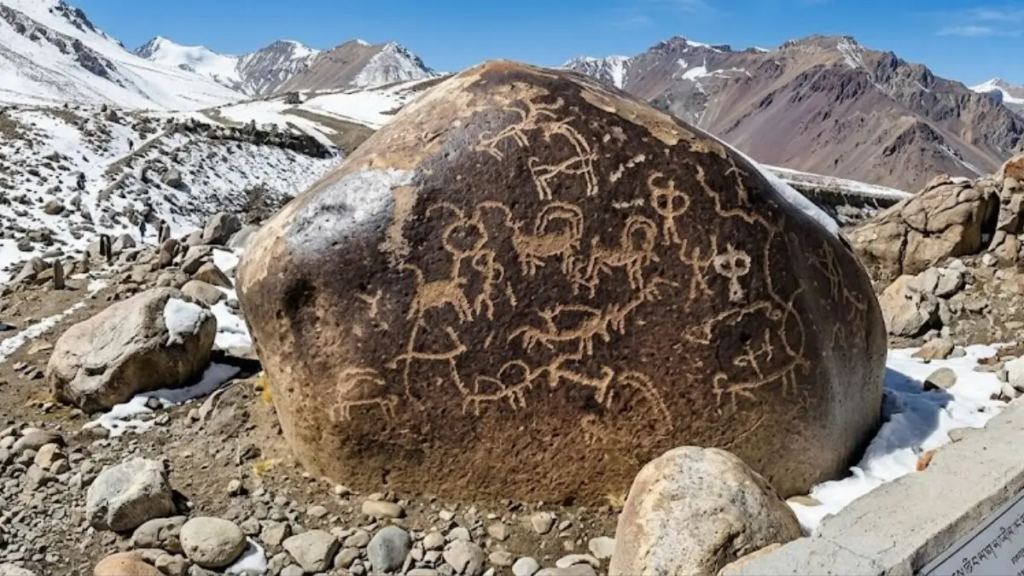
India is taking a major step to preserve its ancient heritage with the creation of the country’s first Petroglyph Conservation Park in Ladakh. The project focuses on protecting thousands of historic rock carvings known as petroglyphs, which offer a rare glimpse into human life from prehistoric times. These carvings, etched onto rock surfaces by early humans, record stories of animals, hunting scenes, and later Buddhist culture across thousands of years.
India’s First Petroglyph Conservation Park to Protect Ancient Rock Art:
The new conservation park is being developed along the Indus River in Ladakh to safeguard these fragile artworks from growing threats such as tourism, road construction, and environmental damage. Experts say many of the carvings date back to the Palaeolithic Age, while others belong to later historical periods. With nearly 400 known petroglyph sites across Ladakh, many located in remote and vulnerable areas, authorities plan to carefully relocate endangered carvings to the protected park where they can be preserved and studied.
The project will be carried out with the support of the Archaeological Survey of India and local Ladakh authorities. Specialists will identify carvings at risk of erosion or damage and move them to the conservation park. The goal is not only to protect these ancient artworks, but also to create a space where visitors, students, and researchers can learn about the early cultures that lived in the region. Petroglyphs are among the oldest forms of human storytelling. By protecting them, historians and archaeologists hope to preserve a valuable record of how early communities lived, hunted, travelled, and later developed religious traditions in the Himalayan region.
Significance of the Initiative:
- Cultural Importance: Preserves evidence of prehistoric civilisation.
- Sustainable Tourism: Promotes responsible tourism and local livelihoods.
- Educational Value: Acts as a research and learning hub.
- Strategic Relevance: Strengthens Ladakh’s identity as a global heritage destination.
Subscribe to The Junior Age Newspaper – click here. Know more fun facts on The Junior Age’s YouTube!