
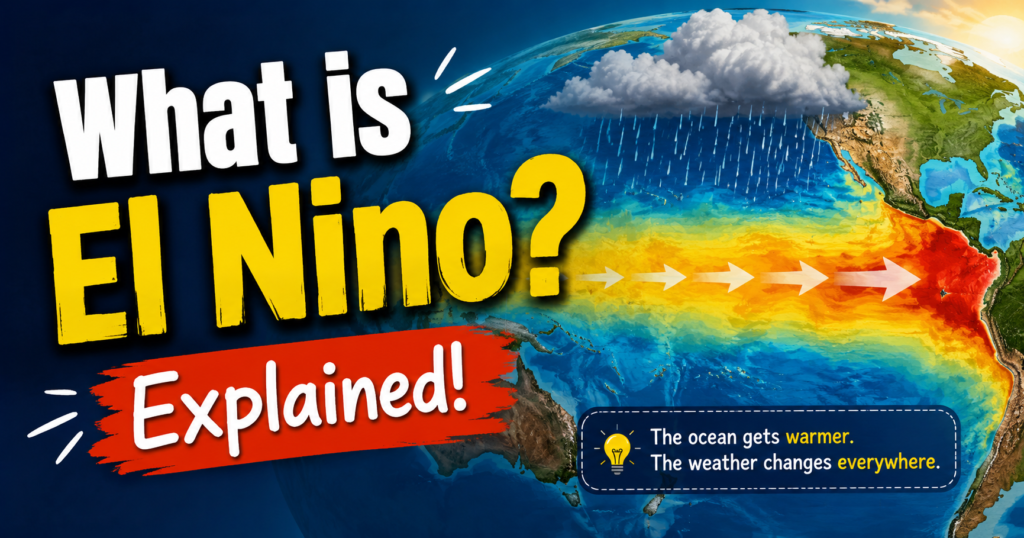
The weather around the world does not always behave the same way every year. Some years bring intense heatwaves, weaker monsoons, floods, droughts, or powerful storms. One major reason behind these sudden global weather shifts is a climate pattern called El Nino. El Nino begins in the Pacific Ocean, but its effects can spread across continents and affect millions of people, including those in India. Over the years, several major heatwaves and rainfall shortages in India have been linked to El Nino conditions. Understanding how this weather phenomenon works helps us understand how changing climate patterns and the science behind unusual weather events.
Understanding El Nino, the climate pattern and changing weather worldwide:
What is El Nino and where does it begin?
El Nino is a natural climate phenomenon that occurs when the surface waters in the central and eastern Pacific Ocean become warmer than usual. This warming changes wind patterns and atmospheric circulation, which then affects weather conditions across many countries around the world.
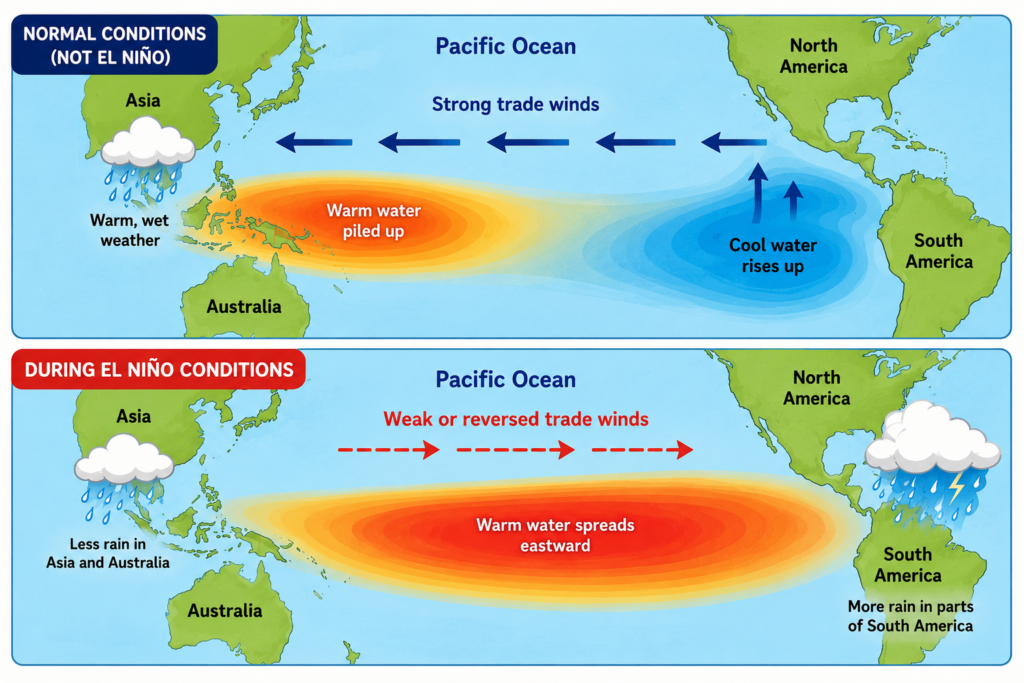
Normally, strong trade winds push warm ocean water westward towards Asia and Australia. During El Nino, these winds weaken. As a result, warm water spreads back towards the eastern Pacific Ocean near South America. This change may sound small, but it can affect air movement, clouds, rainfall, and temperatures across the globe.
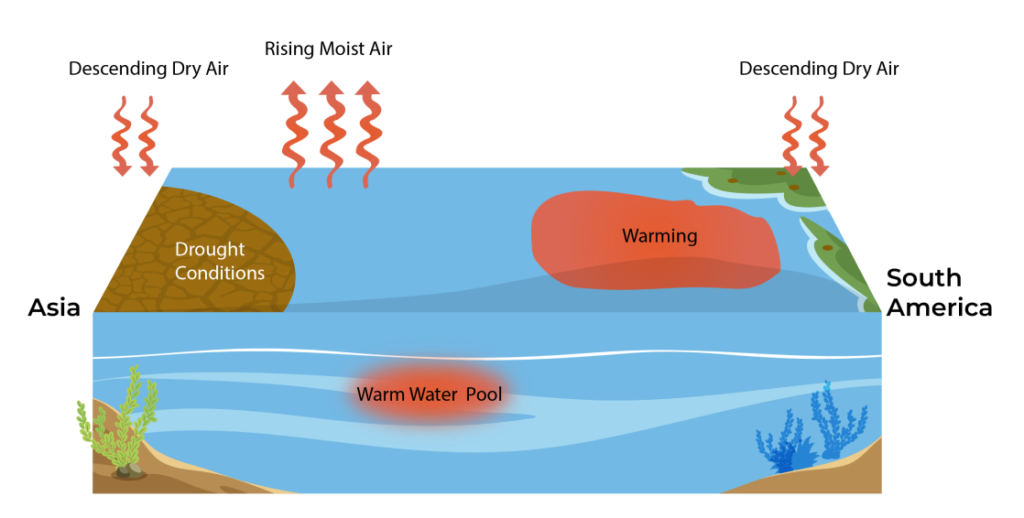
Scientists classify El Nino as part of a larger climate cycle called the El Nino Southern Oscillation, also known as ENSO. This cycle includes both warmer and cooler phases in the Pacific Ocean and plays a major role in shaping global weather patterns.
Also, read about: Heatwaves And Wildfires Threaten Animals Across The World
How does it form?
Under normal conditions, strong trade winds push warm surface water across the Pacific Ocean towards Indonesia and Australia. Cooler water rises near the western coast of South America, helping maintain balance in ocean temperatures.
In a normal year:
- Strong trade winds push warm water westward
- Cooler water rises near South America
- Rainfall forms in certain tropical regions
During El Nino:
- Trade winds weaken
- Warm water shifts eastward
- Ocean temperatures rise more than usual
- Weather patterns begin changing globally
Scientists track these temperature changes using ocean sensors, satellites, and climate data.
El Nino can influence weather in many countries at the same time. Some regions may become hotter and drier, while others may receive excessive rainfall. It can lead to:
- Heatwaves
- Droughts
- Flooding
- Forest fires
- Stronger storms
- Water shortages
Its effects can last for several months and sometimes longer.
Read about: Climate Report Reveals 2015–2025 As The Hottest Decade On Earth
How does El Nino affect India?
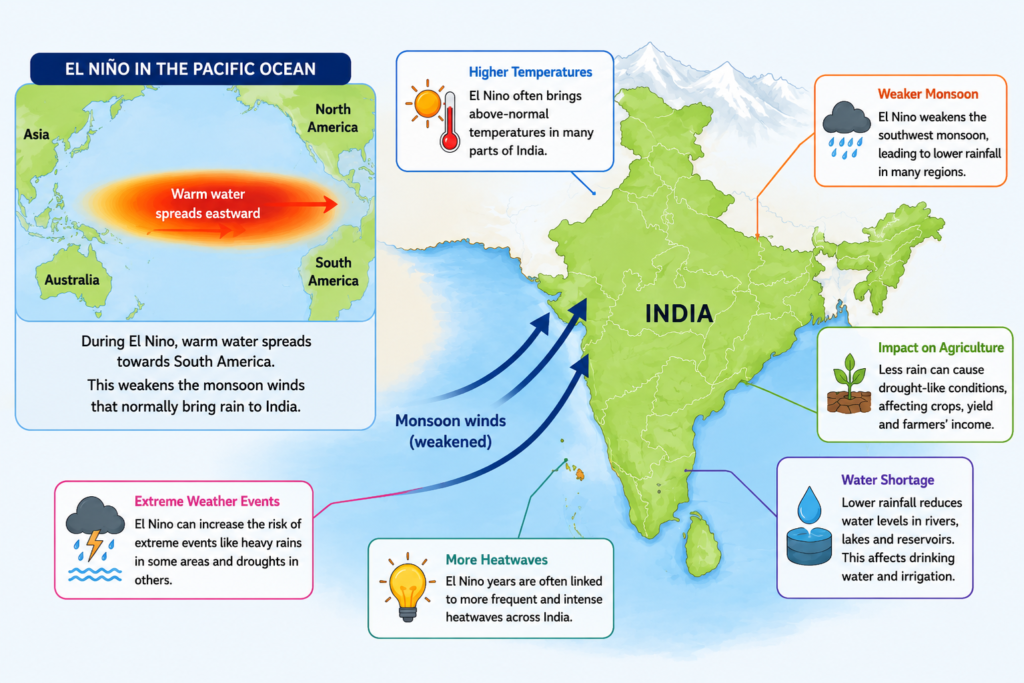
India’s southwest monsoon is closely linked to ocean and atmospheric conditions, which is why El Nino is watched very carefully by Indian weather agencies. El Nino can weaken the monsoon because changing ocean temperatures affect rainfall patterns. Possible impacts in India include:
- Reduced rainfall
- Hotter summer temperatures
- Lower water levels in reservoirs
- Pressure on farming and crops
However, not every El Nino affects India in exactly the same way. Scientists continue studying how strongly each event may influence the monsoon.
Also, read about: Extreme Heatwave: 95 Of The World’s 100 Hottest Cities Are In India
What happens around the world during El Nino years?
The impact of El Nino can be seen across many continents. Countries in South America may experience unusually heavy rainfall and flooding, while Australia and parts of Southeast Asia often face dry conditions and droughts.
Global temperatures also tend to rise during strong El Nino years because warmer ocean waters release more heat into the atmosphere. Marine ecosystems can be affected too, especially fish populations that depend on cooler ocean waters. In some regions, dry weather increases the risk of wildfires and forest fires. Several record-breaking warm years around the world have occurred during strong El Nino events, making it one of the most closely monitored climate patterns globally.
Is El Nino connected to climate change?
El Nino itself is a natural weather phenomenon and has existed for thousands of years. However, scientists believe climate change may increase the intensity of some El Nino-related weather events. As Earth’s average temperatures continue rising, heatwaves, heavy rainfall events, and drought conditions can become more severe during El Nino years. Researchers are still studying how climate change may influence the frequency and strength of future El Nino events, but many experts agree that warming temperatures can amplify extreme weather impacts.
Can El Nino be predicted?
Scientists can often spot signs of El Nino months in advance by studying:
- Ocean temperatures
- Wind patterns
- Satellite observations
- Climate models
However, forecasting this is not always easy. Its exact strength and effects can still change over time. Scientists around the world are carefully monitoring Pacific Ocean temperatures because recent warming has been happening faster than expected. Some experts believe a strong El Nino event could develop if ocean temperatures rise far above normal levels. Researchers use something called the Niño3.4 index to measure warming in the Pacific Ocean.
Weather agencies such as the National Oceanic and Atmospheric Administration and the Australian Bureau of Meteorology regularly track these changes. Experts are also concerned because Earth is already warming due to climate change. A strong El Nino combined with rising global temperatures could make some years among the hottest ever recorded.
FAQs
- What is El Nino in simple words?
El Nino is a climate pattern where parts of the Pacific Ocean become warmer than usual. This warming changes weather patterns across different countries.
- Does El Nino affect India?
Yes. El Nino can weaken India’s monsoon season and may lead to lower rainfall and hotter temperatures.
- How often does El Nino occur?
El Nino usually happens every 2 to 7 years, although the strength of each event can vary.
- Why do scientists track El Nino?
Scientists track El Nino because it can affect farming, rainfall, temperatures, storms, and water supplies worldwide.
- Is El Nino caused by climate change?
El Nino is a natural climate pattern. However, scientists believe climate change may influence how extreme its effects become.
Also,read: 2025: The Third-Warmest Year Ever Recorded!
Subscribe to The Junior Age Newspaper – click here. Know more fun facts on The Junior Age’s YouTube!