
Education shapes the way children grow, think, communicate, and understand the world around them. Yet millions of children across the world still do not have access to safe schools, trained teachers, books, technology, or regular learning opportunities. According to the United Nations Educational, Scientific and Cultural Organization, also known as UNESCO, hundreds of millions of children and young people globally are still unable to meet basic reading and maths standards. In some regions, children lack internet access, digital devices, or electricity. Experts warn that without strong education systems, countries may face higher unemployment, poverty, inequality, and slower economic growth in the future. To address this growing global challenge, the United Nations included Sustainable Development Goal 4 as one of the 17 Sustainable Development Goals adopted in 2015. Sustainable Development Goal 4 focuses on ensuring inclusive, equitable, and quality education for all people by the year 2030.
Sustainable Development Goal 4: Quality education and equal learning opportunities
What are the Sustainable Development Goals?
The Sustainable Development Goals are 17 global goals adopted by all United Nations member countries in 2015. These goals aim to make the world fairer, safer, healthier, and more sustainable by the year 2030. The 17 goals focus on important world issues such as:
- Poverty
- Hunger
- Education
- Clean water
- Climate change
- Gender equality
- Peace and justice
Each goal focuses on solving a different global problem. Sustainable Development Goal 4 specifically focuses on improving education and making sure every child and adult has access to quality learning opportunities.
Read more about 17 Sustainable Development Goals Explained: How The World Plans A Better Future By 2030
Sustainable Development Goal 4 – Quality Education
Sustainable Development Goal 4 aims to ensure inclusive and equitable quality education and promote lifelong learning opportunities for all. The goal focuses on helping every child receive a proper education, regardless of gender, income level, disability, language, or location. Sustainable Development Goal 4 supports early childhood education, primary and secondary schooling, technical training, higher education, and adult learning. It also encourages countries to improve schools, train teachers, increase literacy, and make education affordable and accessible for everyone.
The goal is important because education helps people build skills, find jobs, make informed decisions, improve health, reduce poverty, and contribute positively to society. Schools, governments, teachers, international organisations, families, and communities all play an important role in achieving Sustainable Development Goal 4.
Also read about – No Poverty SDG 1: Everything You Need to Know About the World’s First Global Goal
Why is SGD 4 important?
Education helps children learn reading, writing, maths, science, communication, creativity, and problem-solving skills. These skills are important for daily life and future careers. Children who receive quality education are more likely to live healthier lives, earn better incomes, and support their communities. However, many challenges still affect education worldwide. Some children must work instead of attending school. Others live in conflict zones where schools have been damaged or closed. In some countries, girls still face barriers to education because of social or cultural discrimination.
Lack of education can also increase poverty and inequality. Children who cannot read or write may struggle to find stable jobs later in life. Poor education systems can affect a country’s economy, healthcare, technology development, and social progress. Climate disasters, migration, and digital inequality also create learning gaps. While some students can access online lessons and modern classrooms, others may study without electricity, internet access, or proper school supplies.
And, read more about – Sustainable Development Goal 2: Ending Hunger For A Better Future
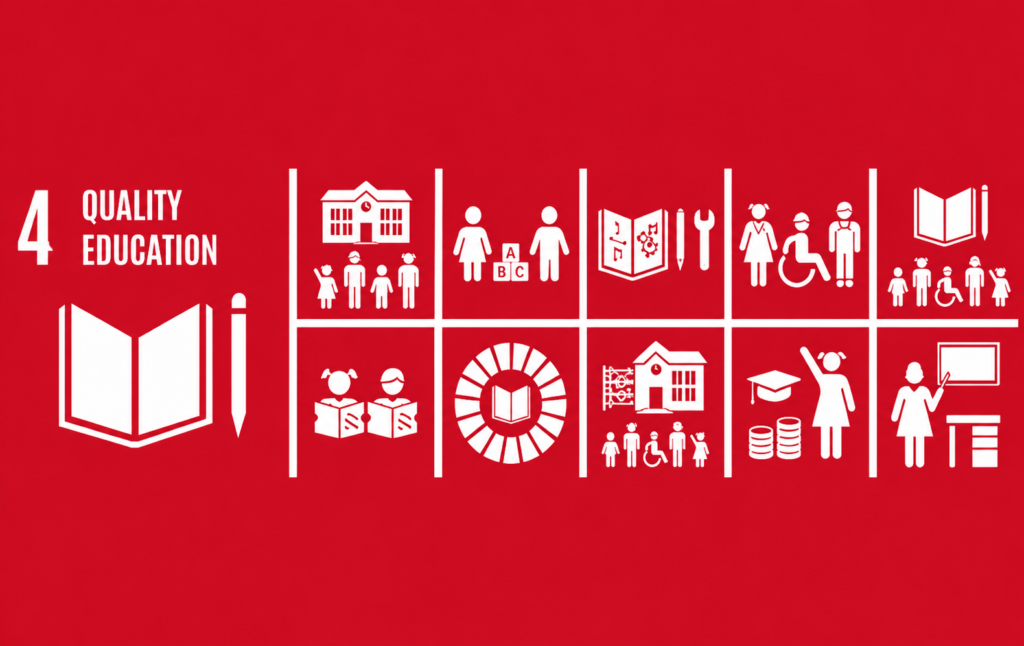
Main targets of Sustainable Development Goal 4
The United Nations has created official targets under Sustainable Development Goal 4 to improve global education systems and learning opportunities.
1. Free primary and secondary education
This target aims to ensure that all girls and boys complete free, equitable, and quality primary and secondary education that leads to effective learning outcomes.
2. Access to early childhood education
This target focuses on giving young children access to quality early childhood development, care, and pre-primary education before they begin primary school.
3. Equal access to affordable technical and higher education
This target encourages countries to provide equal access to universities, colleges, and technical training for all people, including vulnerable groups.
4. Skills for employment and decent jobs
This target aims to increase the number of young people and adults who have useful technical and vocational skills for employment and entrepreneurship.
5. End discrimination in education
This target works to remove gender inequality and ensure equal access to education for persons with disabilities, indigenous communities, and vulnerable children.
6. Improve literacy and numeracy
This target aims to help young people and adults achieve literacy and numeracy skills so they can participate fully in society.
7. Education for sustainable development and global citizenship
This target encourages education about sustainability, human rights, peace, cultural diversity, and responsible global citizenship.
8. Safe and inclusive schools
This target focuses on building and improving schools that are safe, inclusive, disability-friendly, and effective learning environments for all students.
9. Scholarships for developing countries
This target encourages developed countries to provide scholarships that help students from developing nations access higher education and training.
10. Increase the number of qualified teachers
This target aims to increase the supply of trained and qualified teachers through international cooperation and teacher training programmes.
Also, read about – All About Sustainable Development Goal 3: Good Health And Well-Being
How are countries trying to improve education?
Countries, organisations, and communities are working together to improve education systems and increase learning opportunities worldwide.
Government actions
- Building new schools in rural and remote areas
- Providing free textbooks and school meals
- Offering scholarships and financial support
- Expanding digital learning programmes
- Improving teacher training systems
International organisations
Organisations such as United Nations, UNESCO, and UNICEF support countries through funding, research, school programmes, and educational campaigns.
Schools and teachers
- Encouraging inclusive classrooms
- Supporting children with disabilities
- Using creative learning methods
- Promoting reading and digital skills
- Providing emotional and mental health support
Technology and innovation
Technology is helping children access online lessons, digital libraries, educational apps, and virtual classrooms. Some countries are also using solar-powered classrooms and mobile schools in remote areas.
NGOs and community groups
Many non-governmental organisations help children by providing books, uniforms, transport, tutoring, and safe learning spaces.
What can children do to help?
Children can also support the goals of Sustainable Development Goal 4 through simple everyday actions.
- Respect and support classmates from different backgrounds
- Share books and school supplies with others
- Help younger children with reading or homework
- Participate in school awareness campaigns
- Learn about global education challenges
- Use technology responsibly for learning
- Encourage friends to stay in school
- Value education and attend school regularly
- Speak kindly and include everyone during classroom activities
Frequently asked questions about SDG Goal 4
1. What does SDG stand for?
SDG stands for Sustainable Development Goals. These are 17 global goals created by the United Nations.
2. When were the Sustainable Development Goals launched?
The Sustainable Development Goals were officially adopted by United Nations member countries in 2015.
3. What is the main aim of Sustainable Development Goal 4?
The main aim is to provide inclusive and quality education and lifelong learning opportunities for everyone.
4. Why is education important for children?
Education helps children gain knowledge, skills, confidence, and opportunities for a better future.
5. What does inclusive education mean?
Inclusive education means all children can learn together, including children with disabilities and different backgrounds.
6. What is lifelong learning?
Lifelong learning means people continue learning new skills and knowledge throughout their lives.
7. Which organisation leads global education efforts?
UNESCO is one of the main international organisations leading global education efforts.
8. How does education help reduce poverty?
Education improves job opportunities, increases income potential, and helps people make informed life decisions.
Subscribe to The Junior Age Newspaper – click here. Know more fun facts on The Junior Age’s YouTube!