
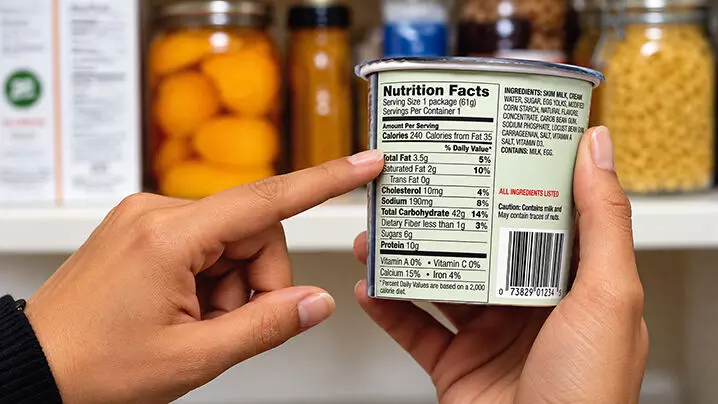
Have you ever picked up a packet of chips, biscuits or a sugary drink and wondered how much sugar, salt or fat it contains? India could soon make that information much easier to spot. The Supreme Court of India has been pushing the government and the Food Safety and Standards Authority of India (FSSAI) to introduce clear front-of-pack food warning labels on packaged foods that contain high amounts of certain nutrients. The aim is to help people, especially children and families, understand what they are eating and make more informed food choices.
What are food warning labels?
Food warning labels are clear symbols or words placed on the front of a food packet to alert shoppers when a product contains high amounts of nutrients such as sugar, salt or saturated fat. Instead of turning the packet around and searching through a small nutrition table, shoppers could see an easy-to-understand warning as soon as they pick up the product.
What could the new warning label look like?
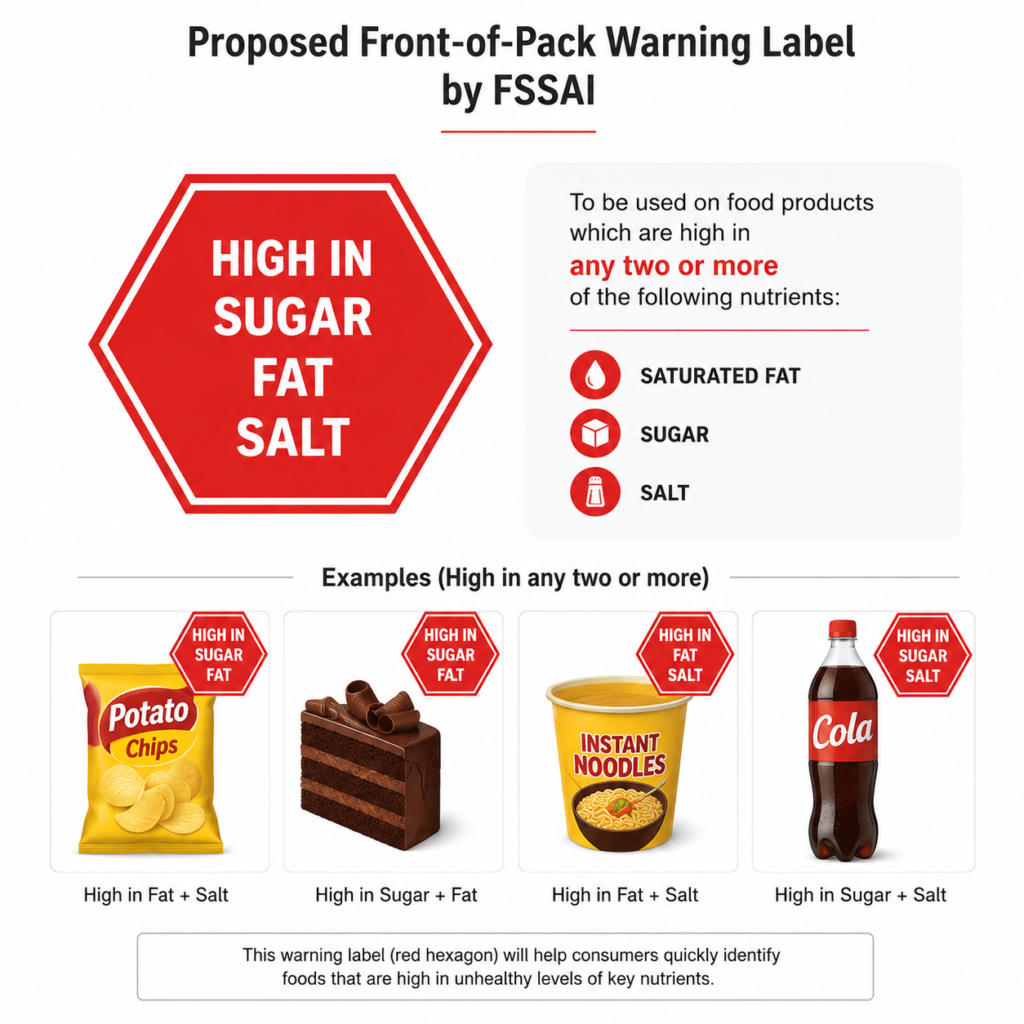
FSSAI has proposed a red, hexagonal warning label for certain packaged foods. Depending on what the food contains, the label could say things such as:
- High sugar
- High salt
- High fat
- Highly sweetened beverages
The proposal is based on thresholds linked to the Dietary Guidelines for Indians, 2024, prepared by the Indian Council of Medical Research and the National Institute of Nutrition.
Why is the Supreme Court pushing for these labels?
The Supreme Court has expressed concern about the health effects of foods containing high amounts of sugar, salt and saturated fat. During hearings in August, the court particularly highlighted the importance of protecting children’s health. The court also said that the right to health is connected to the Right to Life under Article 21 of the Constitution and pointed to Article 47, which asks the State to improve public health.
The issue began with a public interest case seeking clearer warnings on packaged foods. The Supreme Court has repeatedly questioned the delay in introducing an effective front-of-pack warning system.
How would the proposed system work?
FSSAI has suggested introducing the warning labels in two phases.
Phase 1
Initially, a product would receive a red warning if it contains high amounts of at least two of the nutrients covered by the proposal.
Phase 2
Later, the warning would be extended to products that are high in even one of these nutrients. The idea behind the two-step approach is to give food companies time to adjust their products and packaging.
FSSAI’s current proposal includes exemptions for single-ingredient foods and foods that are naturally high in fat, sugar or salt, such as ghee, edible oil, salt, sugar, jaggery and honey, subject to other food-safety and labelling rules.
Did you know? Some countries, including Chile and Mexico, already use prominent front-of-pack warning labels to alert shoppers about foods high in nutrients such as sugar, salt and saturated fat.
FAQs on food warning labels
1. What are food warning labels?
Food warning labels are notices placed prominently on food packaging to alert consumers when a product contains high amounts of certain nutrients, such as sugar, salt or saturated fat.
2. What is a front-of-pack food label?
A front-of-pack label is nutrition information displayed on the front of a food packet, where shoppers can see it easily without turning the packet around.
3. What is FSSAI?
FSSAI stands for the Food Safety and Standards Authority of India. It is India’s food regulator and is responsible for setting standards and regulating food safety.
4. What is the red label on food packets in India?
FSSAI has proposed a red hexagonal warning label for certain packaged foods that are high in specified nutrients. Depending on the product, it could carry warnings such as HIGH SUGAR, HIGH SALT or HIGH FAT.
5. Will food warning labels become mandatory in India?
FSSAI has proposed making the front-of-pack warning system part of food labelling rules, but the proposed system is not yet mandatory nationwide. The matter is still being considered.
6. Which foods will get red warning labels?
Under the current proposal, certain packaged foods that cross specified thresholds for sugar, salt or saturated fat would receive warnings. The exact products covered will depend on the final rules.
7. What does HIGH SUGAR mean on a food packet?
It means the product contains a high amount of sugar according to the nutritional threshold set under the applicable food-labelling rules. It does not mean that the food contains no other nutrients.
8. What does HIGH SALT mean on a food packet?
It means the product contains a high amount of salt according to the relevant nutritional threshold. Eating too much salt over time can increase health risks.
9. What does HIGH FAT mean on a food packet?
It means the product contains a high amount of the type of fat covered by the warning rules. The current proposal focuses on saturated fat among the nutrients of concern.
Also learn about:
Subscribe to The Junior Age Newspaper – click here. Know more fun facts on The Junior Age’s YouTube!