
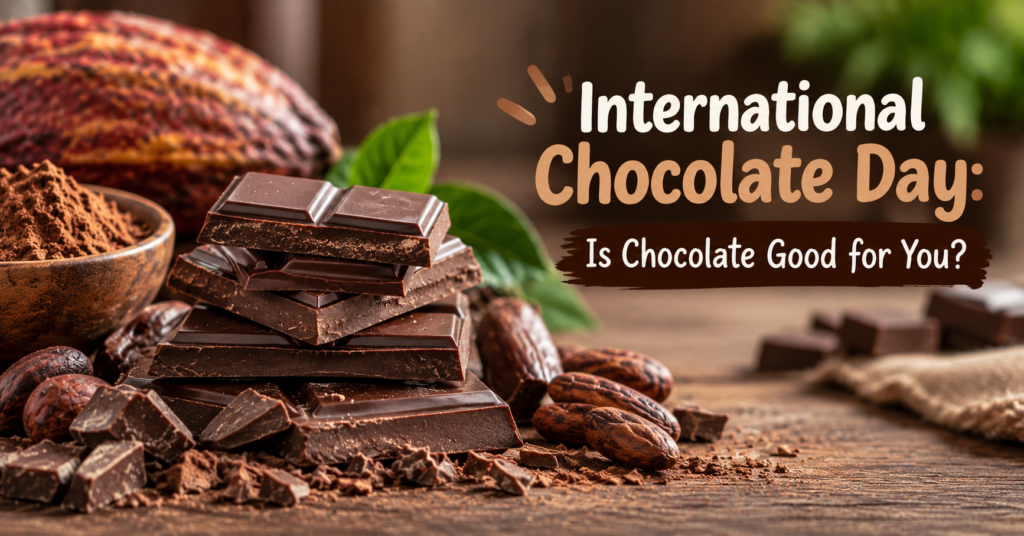
Chocolate has been making people smile for centuries, and it even has its own day. International Chocolate Day is observed every year on September 13, giving people a chance to celebrate chocolate, discover its history and learn more about this much-loved treat. Cocoa contains natural plant compounds called flavanols, which scientists have studied for their possible health effects. However, many chocolate products are also high in sugar and saturated fat. So, on International Chocolate Day, let’s explore the facts, benefits and common myths about chocolate.
Why is International Chocolate Day celebrated?
International Chocolate Day is observed every year on September 13, giving people a chance to celebrate chocolate and learn about its origins. The date is linked to the birthday of Milton S. Hershey, who was born on September 13, 1857.
The day celebrates chocolate in its many forms and highlights the journey from the cacao tree and cocoa beans to chocolate bars. Cacao has been used by ancient Mesoamerican civilisations for thousands of years. Different chocolate products contain different amounts of cocoa, sugar and fat, so their possible benefits vary.
5 benefits of chocolate
These benefits are mainly linked to cocoa-rich dark chocolate, not every chocolate product. Processing can also reduce flavanol levels.
1. Chocolates are rich in antioxidants
Cocoa contains flavanols and other plant compounds with antioxidant properties. Dark chocolate usually contains more cocoa than milk or white chocolate, but it can still be high in sugar and fat.
2. Chocolates may improve mood
Studies suggest that cocoa-rich products may give the mood a short-term lift. This may be due to cocoa compounds as well as chocolate’s taste and texture. However, chocolate is not a treatment for sadness or stress.
3. It provides quick energy
Chocolate contains carbohydrates, including sugar, which provide quick energy. However, fruit, whole grains, nuts and other nutritious foods are better everyday energy sources.
4. Cocoa flavanols support blood flow
Research suggests cocoa flavanols may support blood-vessel function and healthy blood flow. These findings do not mean that eating chocolate prevents disease.
5. Dark chocolate contains minerals
Cocoa contains minerals such as iron, magnesium, copper and manganese. Still, chocolate should not replace nutritious foods needed for children’s growth and development.

Now, let’s bust some common chocolate myths.
5 chocolate myths busted!
Myth 1: White chocolate is real chocolate.
Truth: It comes from the cacao bean but is different from dark and milk chocolate.
White chocolate contains cocoa butter, which comes from cocoa beans, along with sugar and milk. It does not contain cocoa solids, which give dark and milk chocolate their colour and strong cocoa flavour.
Myth 2: More sugar means better chocolate.
Truth: More sugar only makes chocolate sweeter.
It does not automatically improve quality. Less-sweet chocolate may allow the natural cocoa flavour to stand out. Taste is a matter of personal preference.
Myth 3: Chocolate has no health benefits.
Truth: Cocoa contains plant compounds that scientists have studied for possible health effects.
Cocoa flavanols may have antioxidant properties and may affect mood and blood-vessel function. However, not every chocolate product is healthy, as cocoa, sugar and fat levels vary.
Myth 4: Chocolate makes children hyperactive.
Truth: There is no simple evidence that chocolate or sugar causes hyperactivity.
Children’s behaviour is influenced by many factors. Excitement after eating chocolate does not automatically mean chocolate caused it.
Myth 5: Dark chocolate is healthy, so you can eat as much as you want.
Truth: Dark chocolate should still be eaten in moderation.
It may contain more cocoa flavanols than milk or white chocolate, but it can also be high in calories, fat and sugar. The amount matters too.
Note: Too much chocolate isn’t healthy
Many chocolate products are high in added sugar and saturated fat. Eating too much can make it harder to maintain a balanced diet. A small amount can be enjoyed as a treat, but chocolate should not replace fruits, vegetables, whole grains, pulses, nuts and other nutritious foods.

FAQs – International Chocolate Day
When is International Chocolate Day?
International Chocolate Day is observed on September 13 every year. In 2026, it falls on Sunday, September 13.
Why is International Chocolate Day celebrated on September 13?
The date is associated with the birthday of chocolate pioneer Milton S. Hershey, who was born on September 13, 1857. However, the exact origins of the observance are not completely clear.
Is International Chocolate Day the same as World Chocolate Day?
No. International Chocolate Day is observed on September 13, while World Chocolate Day is celebrated on July 7. They are separate chocolate-themed observances.
What are the benefits of dark chocolate?
Dark chocolate contains cocoa flavanols and other plant compounds with antioxidant properties. Cocoa flavanols have also been studied for their possible effects on blood-vessel function and mood.
Is chocolate healthy for kids?
Chocolate can be enjoyed as an occasional treat, but children need a balanced diet containing a variety of nutritious foods. Many chocolate products are high in sugar and saturated fat.
Is white chocolate made from cocoa beans?
White chocolate contains cocoa butter, which comes from cocoa beans, but it does not contain cocoa solids. This makes it different from dark and milk chocolate.
Does chocolate make children hyperactive?
There is no simple scientific evidence that chocolate or sugar directly causes hyperactivity in children. Behaviour is influenced by many factors.
Does chocolate improve your mood?
Some research suggests cocoa-rich products may have short-term effects on mood, but scientists are still studying exactly how these effects work.
Does chocolate give you energy?
Yes. Chocolate contains carbohydrates, including sugars, that the body can use for energy. However, nutritious foods such as fruit and whole grains are better everyday sources of energy and nutrients.
Why is too much chocolate unhealthy?
Many chocolate products contain significant amounts of added sugar and saturated fat. Eating too much can make it harder to maintain a balanced diet.
What are cocoa flavanols?
Cocoa flavanols are naturally occurring plant compounds found in cocoa. They have antioxidant properties and have been studied for their possible effects on blood vessels, mood and other body functions.
Is dark chocolate better than milk chocolate?
Dark chocolate generally contains more cocoa and cocoa flavanols than milk chocolate, but its nutritional value varies by product. It can still contain significant amounts of sugar, fat and calories.
Also learn about:
Subscribe to The Junior Age Newspaper – click here. Know more fun facts on The Junior Age’s YouTube!