
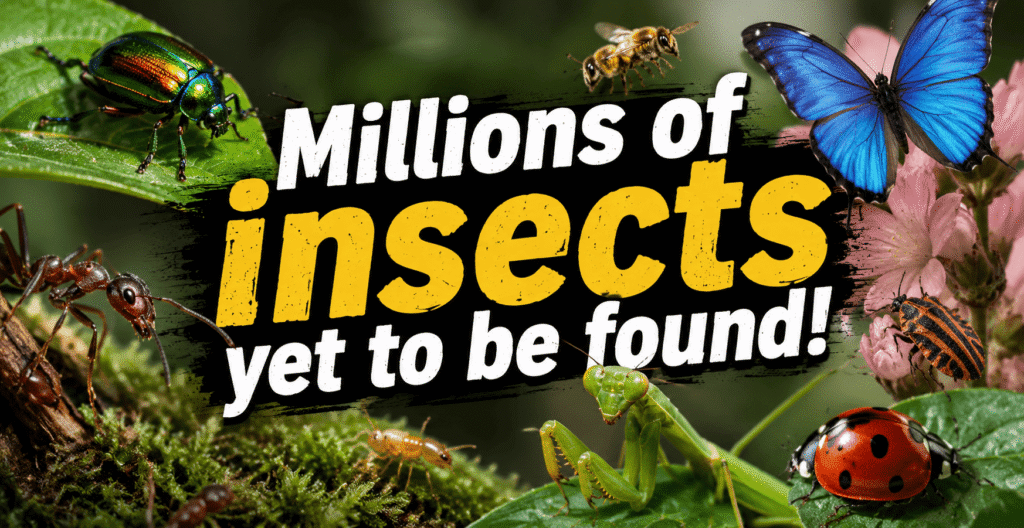
Imagine walking through a rainforest filled with buzzing bees, colourful butterflies, tiny beetles, and insects so small that they are almost impossible to spot. Even though scientists have been studying insects for hundreds of years, they believe we have discovered only a small fraction of the species living on Earth. In fact, millions of insects may still be waiting to be found.
A new scientific study suggests that our planet could be home to between 14 million and 20 million insect species, making insects even more diverse than researchers once believed.
Scientists think millions of insect species are still unknown
According to a study published in the Proceedings of the National Academy of Sciences (PNAS), Earth may have 14 million to 20 million insect species. This is more than three times the earlier estimate of around 6 million species. So far, scientists have officially identified only about 1 million insect species. That means up to 95% of the world’s insects may still be unknown to science. The discovery shows just how much there is still to learn about life on our planet.
How did scientists reach this new estimate?
Researchers carried out their study in the rich tropical rainforests of Costa Rica, one of the world’s most biodiverse countries. They carefully examined insect populations living in rainforest trees and used the information to estimate how many different insect species could exist across the globe. Although it is impossible to count every insect on Earth, advanced scientific methods allowed the researchers to make their most accurate estimate yet.
Why are scientists worried?
While discovering that millions of insect species may exist is exciting, scientists are also concerned that many of them could disappear before they are ever discovered. Insect populations are declining in many parts of the world because of:
- Habitat loss from deforestation and urban development
- Climate change
- Pollution
- Overuse of pesticides
- Loss of natural ecosystems
If these threats continue, some species could become extinct before scientists even know they exist.
Why are insects so important?
Although insects are small, they are among the most important living creatures on Earth. They help keep ecosystems healthy by performing jobs that many other animals cannot. Insects help by:
- Pollinating flowers, fruits, and crops
- Recycling dead plants and animals
- Improving soil health
- Providing food for birds, reptiles, frogs, and mammals
- Helping forests and farms stay healthy
Without insects, many plants and animals, including humans, would struggle to survive.
Also read about: No Longer The Most Feared: The Ultimate Predator Dethroned?
Protecting tiny creatures with a huge impact
Scientists say protecting insects also means protecting forests, farms, rivers, and other ecosystems that support life on Earth. By reducing pollution, protecting natural habitats, and using fewer harmful pesticides, people can help ensure that these tiny creatures continue playing their vital role in nature. With millions of insect species still waiting to be discovered, the next great scientific discovery could be hiding in a rainforest, a meadow, or even your own garden.
Did you know?
Scientists estimate there are more than 10 quintillion (10,000,000,000,000,000,000) individual insects alive on Earth at any given time!
Also check out: Wild Animals Flash Cards
Subscribe to The Junior Age Newspaper – click here. Know more fun facts on The Junior Age’s YouTube!