
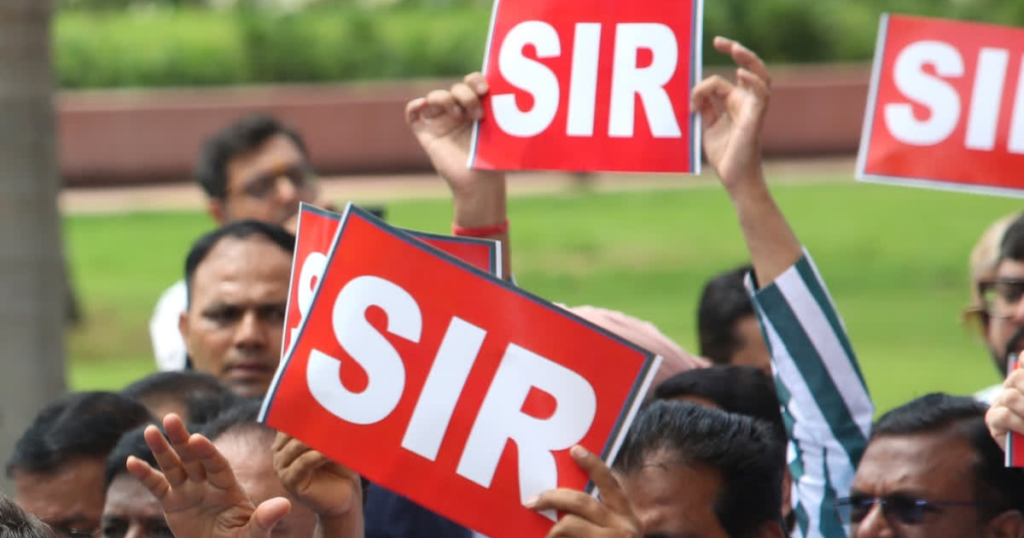
India has been witnessing protests over changes to voter lists, with young people and opposition groups raising concerns about whether every eligible citizen will be able to vote. At the centre of the debate is a process called the Special Intensive Revision (SIR), which aims to check and update electoral rolls. The protests have brought an important question into the spotlight: how can India keep its voter lists accurate while ensuring that no eligible voter is left out? Let us understand everything about the voter list protests!
All About The Voter List Protests And What is SIR?
What is SIR?
SIR, or Special Intensive Revision, is an exercise conducted by the Election Commission of India to check and update voter lists. It involves verifying voter details and checking entries that may be incorrect, duplicated or no longer valid.
The aim is to maintain accurate electoral rolls. However, the process has faced criticism over concerns about how names are verified and whether eligible voters could be left out.
Why are young Indians protesting?
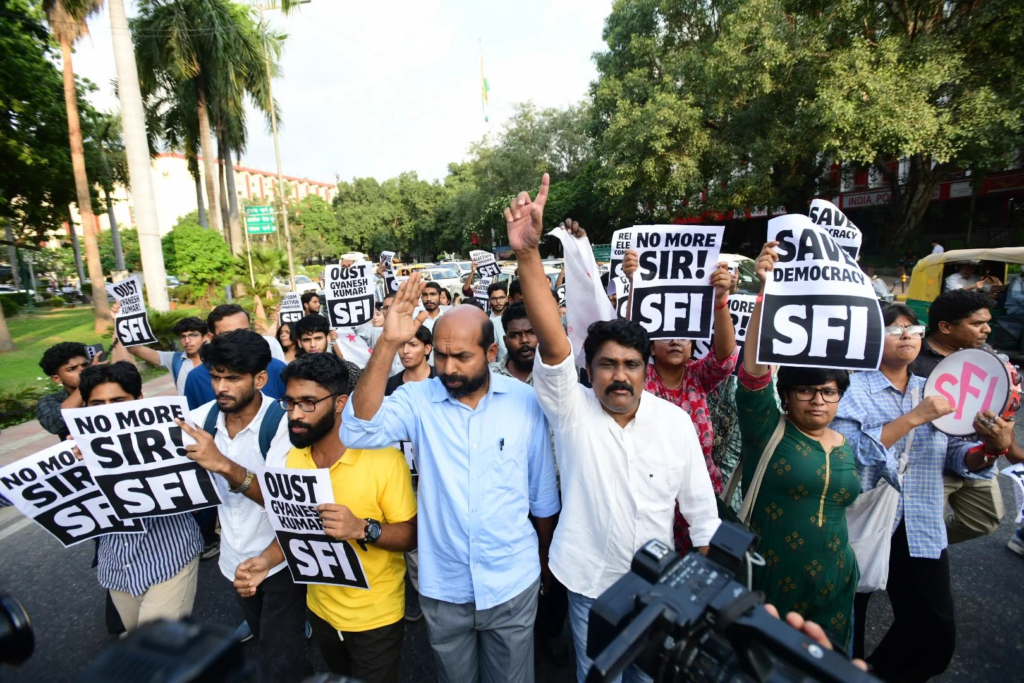
Young people, student groups and opposition parties have raised concerns about the revision process. The youth-led Cockroach Janta Party has also joined the protests. Here are the main issues behind the demonstrations:
- Missing names: Protesters fear that some eligible voters may have been left off the revised lists.
- Fairness and transparency: Critics want the Election Commission to explain how names are checked and removed.
- Accountability: Protesters have demanded the resignation of Chief Election Commissioner Gyanesh Kumar.
- The right to vote: Demonstrators argue that every eligible citizen must have a fair chance to participate in elections.
The Election Commission’s position is that the revision is intended to identify and correct problems in voter lists. The disagreement centres on whether the process is being carried out fairly and whether mistakes could prevent eligible people from voting.
According to reporting by Reuters on October 13, 2026, the controversy has led to protests in several parts of India. The debate is continuing, and allegations made by protesters should not be treated as proven findings.
What is a voter list, and why does it matter?
A voter list, also called an electoral roll, is the official record of people registered to vote in a particular area.
Imagine your school is holding an election for its student council. If your name is missing from the list of students allowed to vote, you may not be able to cast your vote, even if you are eligible. A similar problem can arise in public elections. Accurate voter lists help ensure that eligible citizens can vote and that electoral records are reliable.
In India, citizens generally become eligible to register as voters when they turn 18, provided they meet the other legal requirements.
What does the Election Commission do?
The Election Commission of India is the constitutional body responsible for supervising elections to Parliament, state legislatures and the offices of the President and Vice-President. Its responsibilities include preparing and updating electoral rolls, organising elections and helping ensure that elections follow the law.
The Commission says voter-list revision is necessary to maintain accurate records. Critics, meanwhile, want stronger safeguards to prevent eligible voters from being wrongly excluded. Both accuracy and inclusion matter. A voter list should not contain invalid entries, but it must also protect the right of every eligible citizen to vote.
Do we have the right to protest in India?
Yes. Article 19(1)(a) of the Constitution of India protects citizens’ freedom of speech and expression. Article 19(1)(b) protects their right to assemble peacefully and without arms.
These rights allow people to express disagreement, raise questions and take part in peaceful demonstrations.
However, these freedoms are subject to reasonable restrictions permitted by the Constitution and the law. For example, authorities can impose lawful restrictions to protect public order and safety.
Peaceful protest is one way people can make their concerns heard in a democracy.
What happens if someone’s name is missing from the voter list?
A missing name should not be ignored. People need to check their registration status and follow the official process for correcting or restoring their details. The Election Commission’s Voters’ Services Portal provides facilities for checking voter information and applying for registration.
For the SIR process, voters should follow the instructions issued by the Election Commission and their relevant state election authorities. The required steps may depend on the stage of revision and the person’s circumstances. Checking the official list is important because a name missing from a draft list does not automatically establish that the person is permanently ineligible to vote.
Why do voter list protests matter to children?
You may not be old enough to vote yet, but understanding democracy helps you become an informed citizen. Democracy is not only about choosing leaders. It is also about fairness, equal participation, accountability and respecting different opinions.
The debate over voter lists highlights an important lesson: elections must be organised carefully, and eligible citizens must have a fair opportunity to take part. Young people can contribute by learning about public issues, asking thoughtful questions, checking facts before sharing news and discussing disagreements respectfully.
The big takeaway from the voter list protests:
India’s voter-list protests are about more than paperwork. They raise questions about how a democracy can maintain accurate records while protecting every eligible citizen’s right to vote. A fair election needs reliable voter lists, transparent procedures and ways to correct mistakes. It also needs citizens who stay informed and express their views peacefully.
Remember: In a democracy, every eligible vote matters, and asking questions is an important part of being an informed citizen.
Also read: Top 50: The Firsts of India Every Child Should Know!
Learn about: How Indian Parliament works | Lok Sabha and Rajya Sabha – Explained
Subscribe to The Junior Age Newspaper – click here. Know more fun facts on The Junior Age’s YouTube!