
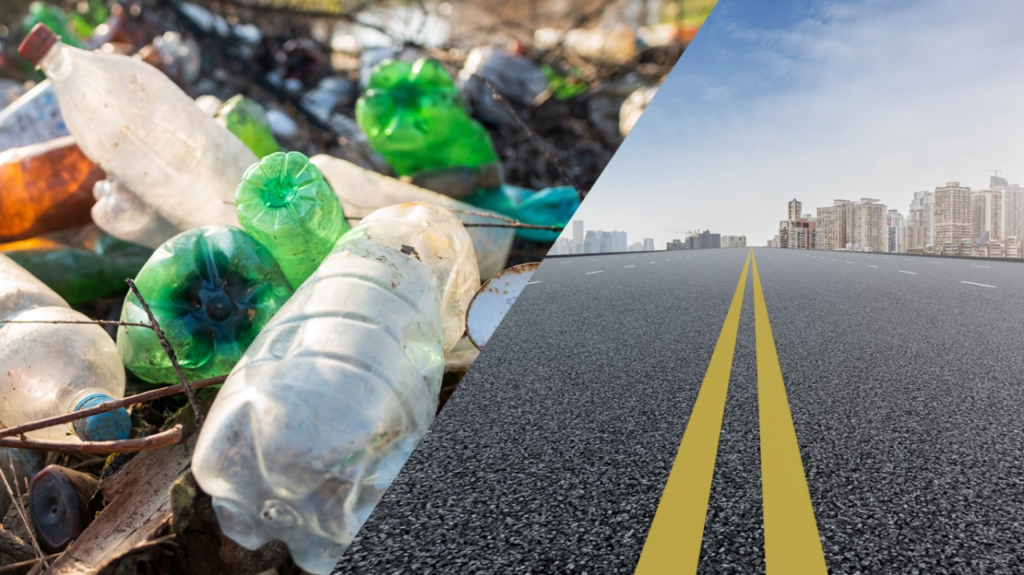
Plastic pollution is one of the biggest environmental problems facing oceans today. Every year, millions of tonnes of plastic waste end up in the sea, harming marine life and polluting coastlines. Now, scientists are exploring creative ways to reuse this waste instead of letting it pile up in landfills or drift in the ocean. One promising idea is turning plastic waste into roads, giving discarded materials a new and useful purpose. Researchers in Hawaii have launched an innovative project that recycles ocean plastic and mixes it with materials used to make road surfaces. The experiment aims to clean up plastic pollution while also creating stronger and more durable roads.
Turning Plastic Waste into Roads:
Scientists at the Center for Marine Debris Research at Hawaii Pacific University in Honolulu are leading a project called Nets-to-Roads, which focuses on recycling plastic waste collected from the ocean and beaches around Hawaii. So far, the team has collected around 90 tonnes of plastic waste, including discarded fishing nets and plastic bottles. Instead of sending the waste to landfills, researchers sort it and reuse plastics made from polyethylene, a strong material commonly found in milk bottles, yoghurt containers and fishing gear.
After being collected and sorted by marine biologists, the plastic is sent to the United States mainland, where it is shredded and ground into tiny pieces. These pieces are then mixed with materials used to make asphalt, the black surface layer used for roads. Some of this recycled material has already been used to build and test road sections in Hawaii, marking the first time ocean plastic has been recycled in this way for road construction.
Scientists are also studying whether these roads release microplastics, which are extremely tiny plastic fragments that can harm ecosystems. Early results from the tests suggest that the recycled roads do not release more microplastics than normal roads, which is encouraging for future projects. If the technology proves successful, the Nets-to-Roads project could provide a new way to reduce ocean plastic pollution while building long-lasting roads, helping both the environment and infrastructure.
Subscribe to The Junior Age Newspaper – click here. Know more fun facts on The Junior Age’s YouTube!