
Hunger is still one of the world’s biggest problems. Millions of people across the globe do not get enough healthy food every day. Some children go to school hungry, while many families struggle to grow or buy nutritious meals. At the same time, huge amounts of food are wasted every year. This is why countries around the world are working together to solve the problem through the Sustainable Development Goals. Sustainable Development Goal 2 focuses on ending hunger, improving nutrition, and making sure everyone has access to safe and healthy food. The goal also supports farmers, protects food supplies, and encourages better farming methods that are safer for people and the planet. With climate change, rising food prices, droughts, floods, and conflicts affecting food production, SDG 2 has become more important than ever before.
Understanding Sustainable Development Goal 2: Zero hunger
What are the Sustainable Development Goals?
The Sustainable Development Goals are 17 global goals adopted by all United Nations member countries in 2015. These goals aim to make the world fairer, safer, healthier, and more sustainable by the year 2030. The 17 goals focus on important world issues such as:
- Poverty
- Hunger
- Education
- Clean water
- Climate change
- Gender equality
- Peace and justice
Each goal focuses on solving a different global problem. Sustainable Development Goal 2 focuses on ending hunger and improving food security around the world.
Sustainable Development Goals – Goal 2: Zero hunger
Sustainable Development Goal 2, also called Zero Hunger, aims to end hunger for everyone by 2030. The goal works towards making sure all people, especially children, have enough nutritious food to live healthy lives. SDG 2 also supports sustainable agriculture. This means growing food in ways that protect nature, use fewer harmful chemicals, save water, and help farmers earn a fair income. The goal is led globally by the United Nations along with governments, farmers, scientists, and aid organisations.
Read more about 17 Sustainable Development Goals Explained: How The World Plans A Better Future By 2030
Why is Sustainable Development Goal 2 important?
Food is a basic human need. Without enough healthy food, children may find it difficult to grow, learn, stay healthy, or concentrate in school. Hunger can also increase poverty, illness, and inequality. According to the Food and Agriculture Organization and other UN agencies, hundreds of millions of people worldwide still face hunger and food insecurity. Climate change, wars, natural disasters, and rising costs of living are making the problem even harder to solve.
SDG 2 is important because it aims to:
- Make sure no one sleeps hungry
- Improve nutrition for children and families
- Support farmers and food workers
- Increase food production safely
- Protect crops, soil, and water resources
- Reduce malnutrition and food shortages
Main targets of Sustainable Development Goal 2
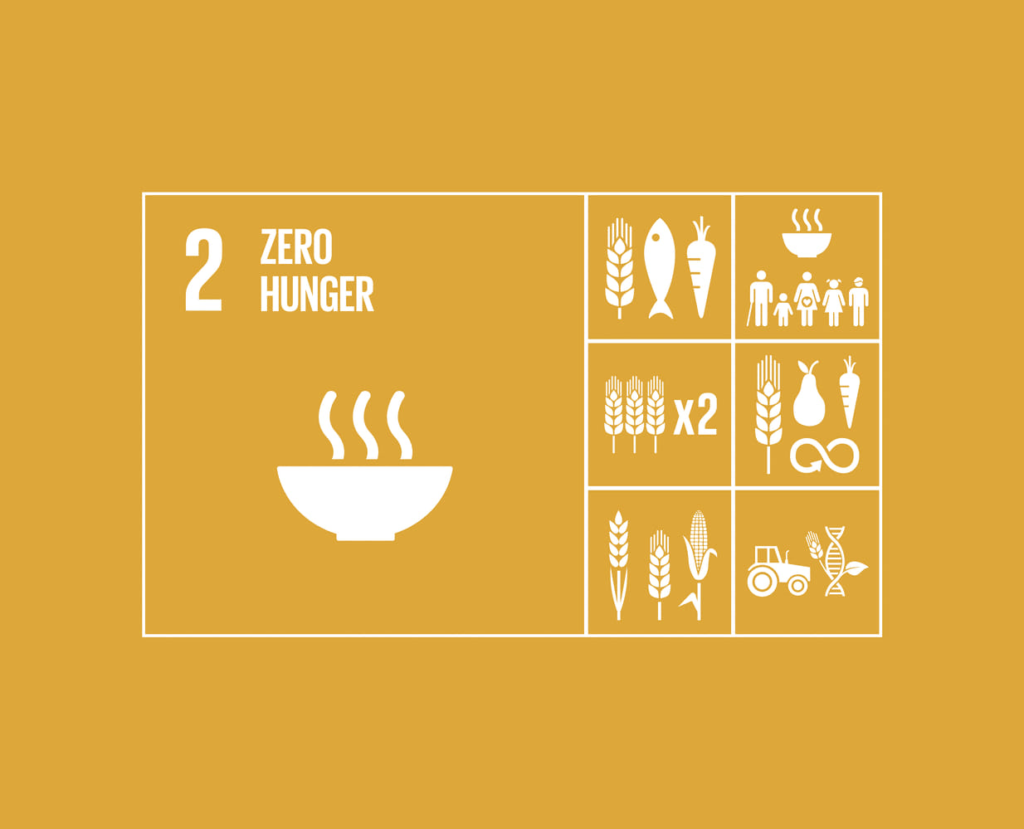
Sustainable Development Goal 2 has 8 major targets that countries are working to achieve by 2030. These targets focus on ending hunger, improving nutrition, supporting farmers, and building sustainable food systems.
1. End hunger and ensure access to safe food
The first target aims to make sure all people, especially poor and vulnerable groups, have access to safe, nutritious, and sufficient food throughout the year.
2. End all forms of malnutrition
This target focuses on improving nutrition for children, pregnant women, and older people. It also aims to reduce stunting, wasting, and undernourishment in children.
3. Double the productivity and incomes of small-scale food producers
Countries are working to help small farmers, fishers, and food producers grow more food and earn better incomes through training, technology, and equal opportunities.
4. Promote sustainable food production systems
This target encourages farming methods that protect the environment, improve soil quality, save water, and help communities adapt to climate change and natural disasters.
5. Maintain genetic diversity of seeds, plants, and animals
The goal aims to protect traditional seeds, crops, farm animals, and biodiversity so future generations continue to have reliable and diverse food sources.
6. Increase investment in rural infrastructure and agricultural research
Governments and organisations are investing in farming research, irrigation systems, technology, roads, and storage facilities to improve food production worldwide.
7. Correct and prevent trade restrictions and distortions in world agricultural markets
This target works towards fairer global food trade systems so farmers and countries can trade agricultural products more equally and efficiently.
8. Ensure stable food commodity markets and reduce extreme food price fluctuations
Countries are trying to improve food market information and reduce sudden price rises that can make food too expensive for families during crises.
How are countries trying to reduce hunger?
Many countries are taking steps to fight hunger and improve nutrition. Governments, charities, schools, and international organisations are working together in different ways. Some common actions include:
- Providing free or low-cost school meals
- Supporting farmers with modern equipment and training
- Building food storage systems to reduce waste
- Giving emergency food aid during disasters and conflicts
- Improving farming research and technology
- Encouraging climate-friendly farming methods
- Running nutrition programmes for children and mothers
Organisations such as the World Food Programme also deliver food and emergency support to millions of people during crises.
What can children do to help Sustainable Development Goal 2?
Children can also play an important role in supporting Zero Hunger goals through small daily actions. Here are a few ways children can help:
- Avoid wasting food at home or school
- Learn about healthy eating and nutrition
- Share extra food through local donation drives
- Support local farmers and fresh produce
- Grow plants or vegetables at home or in school gardens
- Spread awareness about hunger and food waste
- Participate in community food collection programmes
Even small actions can help create a kinder and more sustainable world.
Frequently asked questions about SDG Goal 2
1. What does Zero Hunger mean?
Zero Hunger means making sure every person in the world has enough healthy and nutritious food every day.
2. When was SDG 2 launched?
Sustainable Development Goal 2 was officially adopted in 2015 as part of the United Nations Sustainable Development Goals.
3. Why is hunger still a global problem?
Hunger continues because of poverty, climate change, conflicts, natural disasters, rising food prices, and unequal access to resources.
4. What is sustainable agriculture?
Sustainable agriculture means growing food in ways that protect nature, save resources, and support farmers for the long term.
5. Which organisation leads global hunger relief efforts?
Several organisations work on hunger issues, including the United Nations, the Food and Agriculture Organization, and the World Food Programme.
6. Can food waste increase hunger problems?
Yes. Wasting food means fewer resources are available for people who need them. Reducing food waste can help improve food availability.
7. How does hunger affect children?
Hunger can affect children’s health, growth, learning ability, energy levels, and overall development.
8. What year do countries hope to achieve SDG 2 by?
Countries aim to achieve Sustainable Development Goal 2 by the year 2030.
Subscribe to The Junior Age Newspaper – click here. Know more fun facts on The Junior Age’s YouTube!