
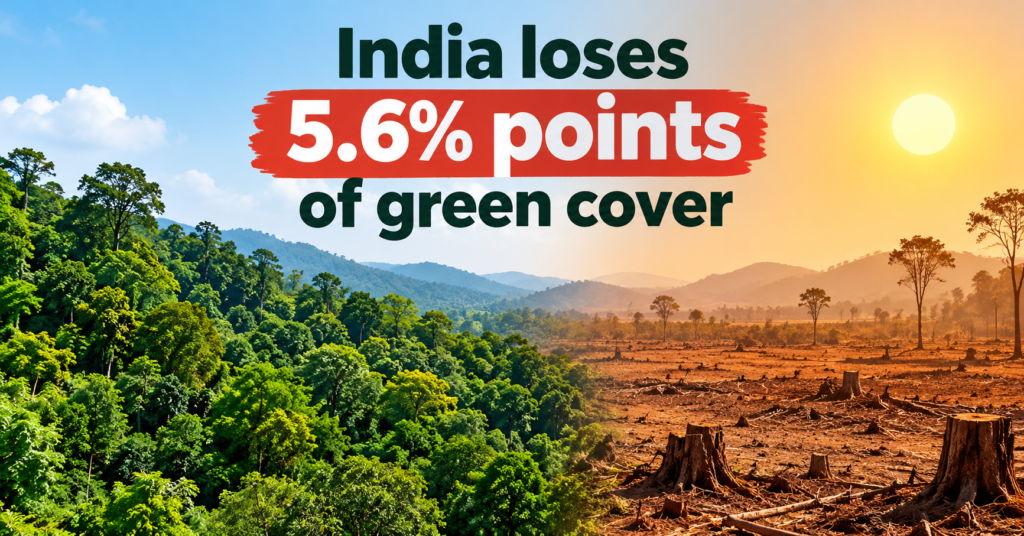
India’s green cover, the land covered by trees, plants and other vegetation, fell from 36.95% in 2001 to 31.35% in 2025, according to a study released by climate research organisation Climate Trends on October 26, 2026. The study found that areas with less greenery generally experienced higher summer temperatures, highlighting the role of vegetation in keeping the land cool.
India’s green cover declines as summer temperatures rise
What did the study find?
- 5.6% points lost: India’s green cover fell from 36.95% to 31.35% between 2001 and 2025.
- 1°C to 2.5°C hotter: Non-green areas were generally warmer in summer than green-covered areas.
- 0.26°C temperature rise: Areas that lost green cover recorded an average increase of 0.26°C in summer temperatures.
Where did green cover decline?
The loss was concentrated in western India, the Indo-Gangetic Plain and parts of central and peninsular India. Some areas in the Northeast, Himalayan foothills and parts of southern and eastern India recorded small gains.
How do trees help cool the land?
- Provide shade: Trees block direct sunlight from heating the ground.
- Release water vapour: Plants release moisture into the air through a process called transpiration, which helps cool their surroundings.
- Retain moisture: Vegetation helps keep the land cooler by retaining moisture.
Protecting existing greenery and restoring damaged natural landscapes can help communities cope with extreme heat. However, trees alone cannot stop climate change, so wider action to reduce global warming is also needed.
FAQs about India’s green cover
- What is green cover?
Green cover refers to land covered by vegetation, including trees, shrubs, grass and other plants. - How much did India’s green cover decline?
It fell from 36.95% of the country’s land area in 2001 to 31.35% in 2025, a drop of 5.6 percentage points. - Does losing green cover make an area hotter?
The study found that areas experiencing green-cover loss recorded an average summer temperature rise of 0.26°C. Non-green landscapes were generally 1°C to 2.5°C warmer than green-covered areas. Other factors, including wider climate warming, also affect temperatures. - Which parts of India lost green cover?
The decline was concentrated in western India, the Indo-Gangetic Plain and parts of central and peninsular India. - How do plants cool their surroundings?
Trees provide shade, while plants release water vapour through transpiration. Vegetation also helps retain moisture, reducing the heating of the land surface. - Can planting more trees solve climate change?
Trees and other vegetation can help reduce local heat and support biodiversity. However, planting trees alone cannot stop climate change. Protecting existing natural ecosystems and reducing greenhouse gas emissions are also important.
Did you know?
The study found that green-covered and non-green landscapes differed in average summer temperature by as much as 2.5°C. This shows how much vegetation can influence local heat.
Also Read:
- What Is El Niño and What Are Its Effects? Explained!
- India Sees Hottest August in 125 Years
- How Climate Change Affects India: What Every Child Should Know!
- What Is Climate Change? Explained for Kids
Subscribe to The Junior Age Newspaper – click here. Know more fun facts on The Junior Age’s YouTube!