
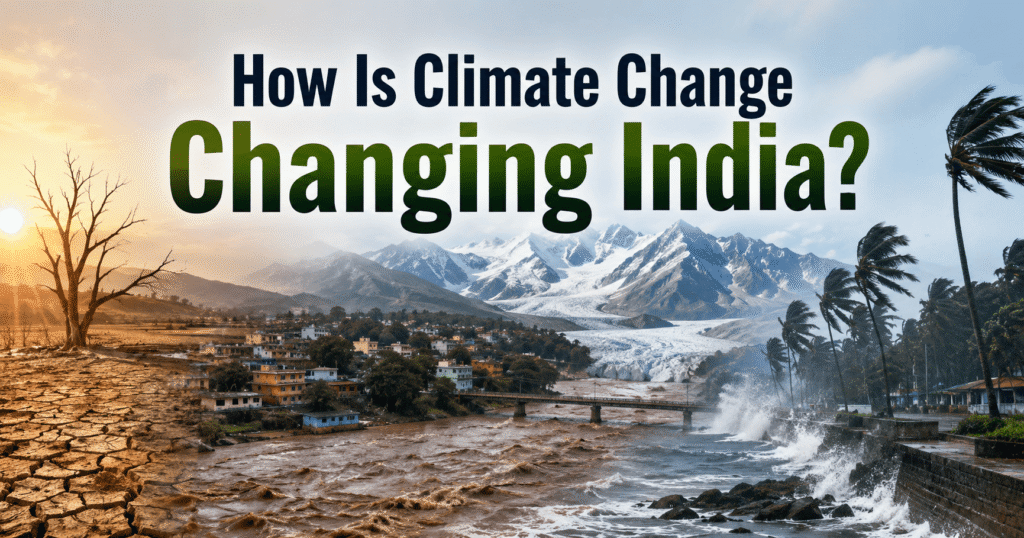
Climate change isn’t just happening in faraway countries. It’s changing the weather, rivers, forests and even the way people live right here in India. From hotter summers and heavier rainfall to melting Himalayan glaciers, India is already experiencing the effects of a warming planet. Understanding how climate change affects India helps us prepare for the future and protect our environment.
If you’re new to this topic, start with our guide – What Is Climate Change? Explained for Kids, which explains why Earth’s climate is changing.
Why is India vulnerable to climate change?
India is one of the world’s most geographically diverse countries. It has snowy mountains, long coastlines, deserts, forests and fertile plains. This variety makes India beautiful, but it also means different regions face different climate challenges. Millions of people also depend on farming, rivers and seasonal rainfall, making changes in the climate especially important.
Hotter summers and more heatwaves – how climate change affects India
Many parts of India are experiencing longer and hotter summers than they did a few decades ago. Heatwaves are becoming more frequent in several states, making it difficult for people to work outdoors and for children to play safely during the hottest part of the day. Schools sometimes adjust outdoor activities when temperatures become extreme.
Want to know why this is happening? Read our article: Why Summers Are Getting Hotter.
Changing rainfall patterns
India depends heavily on the monsoon for farming and water supplies.
Climate change is making rainfall less predictable. Some places receive very heavy rain in a short time, leading to floods, while others may experience long dry spells or droughts.
This can affect:
- Farming and food production
- Drinking water supplies
- Rivers and reservoirs
- Everyday life in towns and villages
Melting Himalayan glaciers
The Himalayas are often called India’s water towers because many major rivers begin there. As temperatures rise, glaciers are melting faster. In the short term, this can increase the risk of floods. Over many years, shrinking glaciers could reduce the amount of water flowing into important rivers during certain seasons.
Rising sea levels along the coast
India has a coastline of more than 7,500 kilometres. As sea levels slowly rise, some coastal communities face a greater risk of flooding and erosion. Stronger cyclones can also cause more damage when they reach the shore.
Read about: How is climate change affecting India.
How climate change affects wildlife
India is home to incredible wildlife, including Bengal tigers, Asian elephants, snow leopards and one-horned rhinoceroses.
Changing temperatures and habitats can make it harder for some animals to find food, water and safe places to live. Forest fires, droughts and floods can also damage ecosystems that wildlife depends on.
Can India reduce the effects of climate change?
Yes. India is taking several steps to lower pollution and build a cleaner future. These include:
- Expanding solar and wind energy
- Planting and protecting forests
- Promoting electric vehicles
- Conserving water
- Encouraging cleaner technologies
While governments and scientists play a major role, families and schools can also help through everyday actions.
Discover simple ideas in our guide: What Kids Can Do to Help the Planet.
If you enjoyed reading this, you may also like: What Is El Nino And What Are Its Effects? Explained!
Subscribe to The Junior Age Newspaper – click here. Know more fun facts on The Junior Age’s YouTube!