
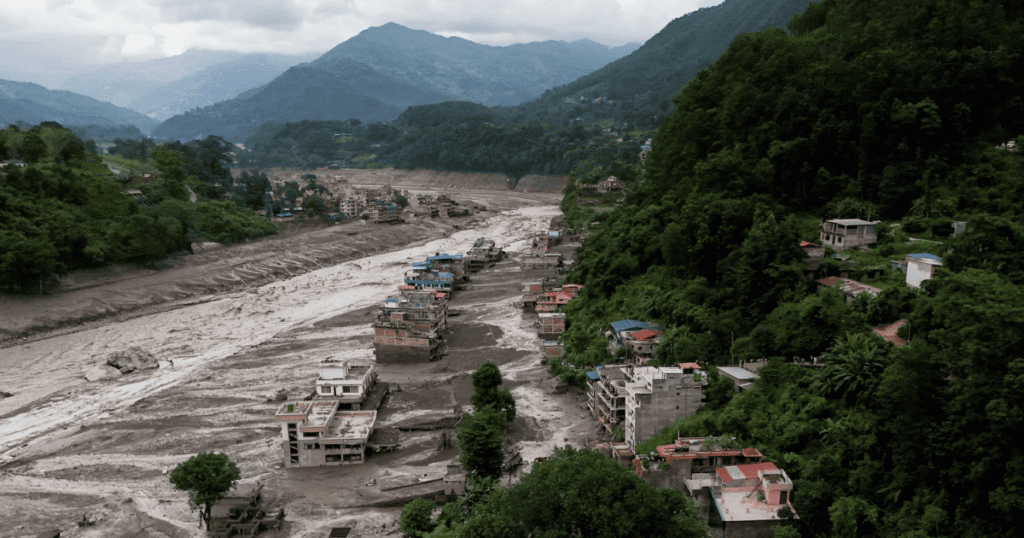
A huge mass of glacier ice, rock and snow collapsed in the Himalayas on August 26, 2026, triggering devastating flash floods in parts of Nepal and Tibet. The collapse happened near Langtang Lirung in Nepal’s Langtang National Park, close to the China border. The falling ice and rock rushed into the valley and sent water, mud and debris downstream at great speed. The floods destroyed or damaged homes, roads, bridges, villages, hydropower projects and border facilities. More than 90,000 people were affected, and thousands of people were reported dead or missing as rescue operations continued.
What caused the floods in Nepal and Tibet?
Scientists initially thought the shaking recorded in the area might have been an earthquake. However, the United States Geological Survey (USGS) later found that the event was caused by the huge glacier-related collapse itself.
The falling mass generated seismic energy equal to a magnitude 5.2 earthquake. In other words, the ground shook because of the massive collapse and debris flow, rather than because an earthquake caused the collapse.
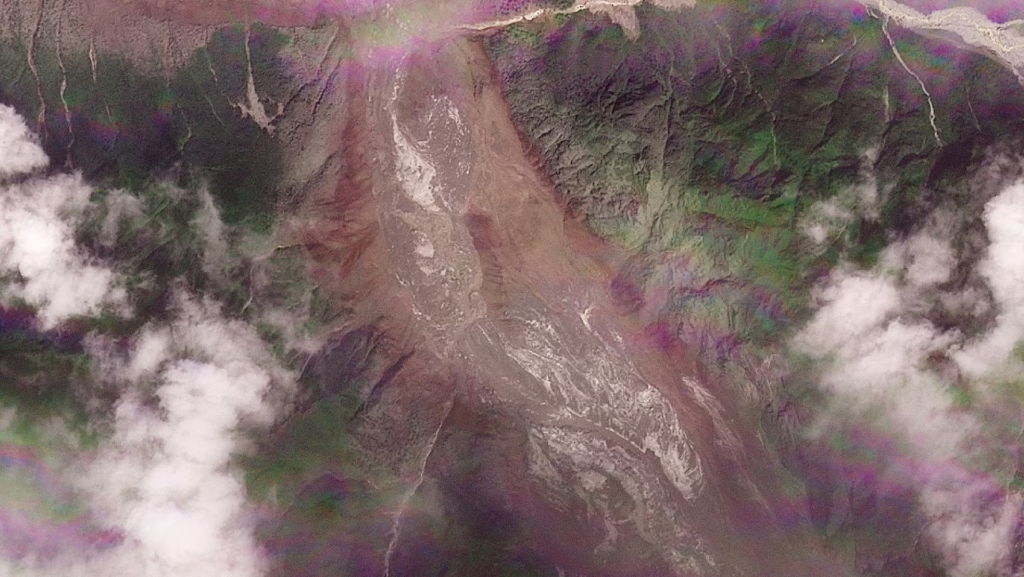
Satellite images showed that a large section of glacier and the rock beneath it had fallen from the Langtang Lirung area. The resulting debris flow travelled about 100 kilometres downstream.
Credit: REUTERS
How did India help during the floods in Nepal?
India sent emergency supplies and specialist teams to Nepal to support rescue and relief work. Indian Air Force flights carried 11 tonnes of relief supplies, including blankets, sleeping bags, tarpaulins, plastic sheets and hygiene materials. India had supplied 68.5 tonnes of relief material by then. India also sent tunnel rescue experts and forensic specialists with equipment for DNA analysis. Equipment for temporary bridges was also sent to help restore damaged transport links.
Rescue workers have been using helicopters, excavators and other equipment to reach people in remote and badly damaged areas. Thousands of security personnel and volunteers are involved in the continuing search and rescue effort.
Why was the disaster so powerful?
The Himalayas have steep valleys, glaciers and fast-flowing rivers. When a huge mass of ice and rock suddenly falls into a river valley, it can push enormous amounts of water, mud, ice and debris downstream within minutes. The floods in Nepal also created new risks, including debris-blocked rivers and temporary lakes that could cause further flooding.
Also read about:
- 10 Ways India Is Protecting Nature
- 7 Climate Change Myths You Should Stop Believing
- How Climate Change Affects India: What Every Child Should Know!
- What Is Climate Change? Explained for Kids
- What Is El Nino And What Are Its Effects? Explained!
- Glaciers Are Melting at an Alarming Rate!
Subscribe to The Junior Age Newspaper – click here. Know more fun facts on The Junior Age’s YouTube!