

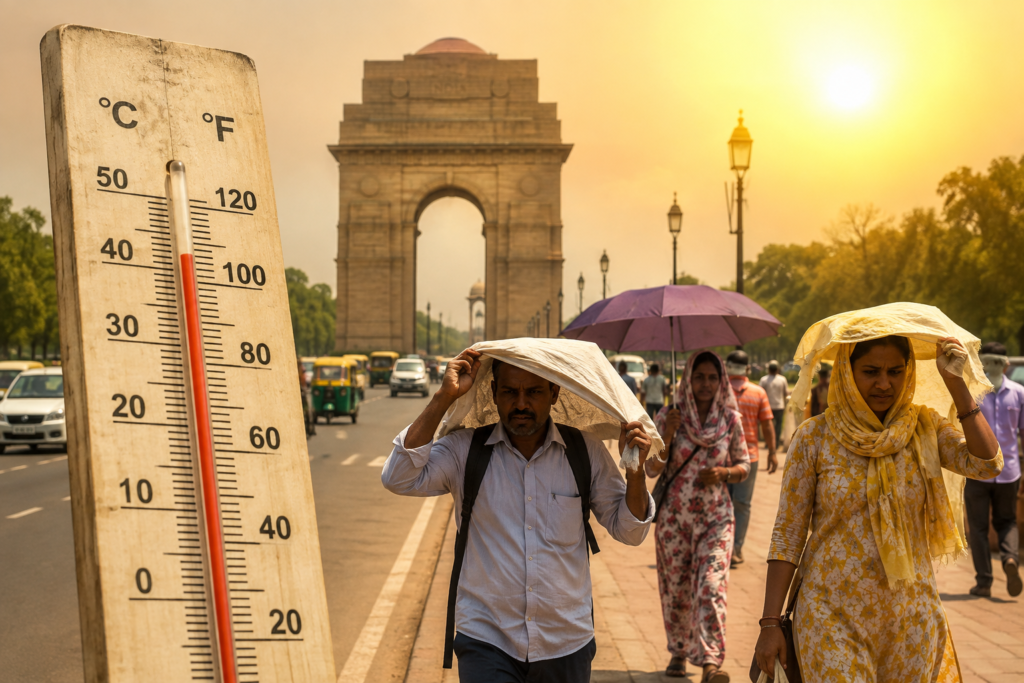
India has recorded its hottest August in 125 years, according to the India Meteorological Department (IMD). August 2026 was the warmest since weather records began in 1901, with the country’s average temperature reaching 28.01°C, about 0.67°C above the 1991-2020 average.
Why was August so hot?
One of the biggest reasons was the unusually warm nights. India’s average minimum temperature was 24.36°C, the highest ever recorded for an August since 1901. The average daytime maximum was 31.66°C, which was the fourth-highest for August.
Rainfall was also below normal. India received about 16.3% less rain than usual during August, making it one of the drier Augusts in recent years. Scientists and weather officials have linked the unusual conditions partly to El Niño, a natural climate pattern that warms parts of the Pacific Ocean and can affect India’s monsoon.
The weak monsoon and higher temperatures could create problems for water supplies and farming, particularly in areas that received much less rain than usual. The IMD has also forecast below-normal rainfall and above-average temperatures for September.
What is El Niño?
El Niño is a natural climate pattern in which parts of the Pacific Ocean become warmer than usual. This can change weather patterns around the world, including India’s monsoon.
What is a normal temperature?
A normal temperature is an average calculated from many years of weather data. Scientists compare current temperatures with this baseline to see whether a month, season or year was warmer or cooler than usual.
Also read about:
- What Is El Niño and What Are Its Effects? Explained!
- What Is Climate Change? Explained for Kids
- 10 Ways India Is Protecting Nature
- 7 Climate Change Myths You Should Stop Believing
- How Climate Change Affects India: What Every Child Should Know!
- Glaciers Are Melting at an Alarming Rate!
Subscribe to The Junior Age Newspaper – click here. Learn more fun facts on The Junior Age’s YouTube!